Anthropic just gave the world an unintended sneak peek at its most ambitious AI model to date — and the timing couldn't be worse for a company preparing to go public.
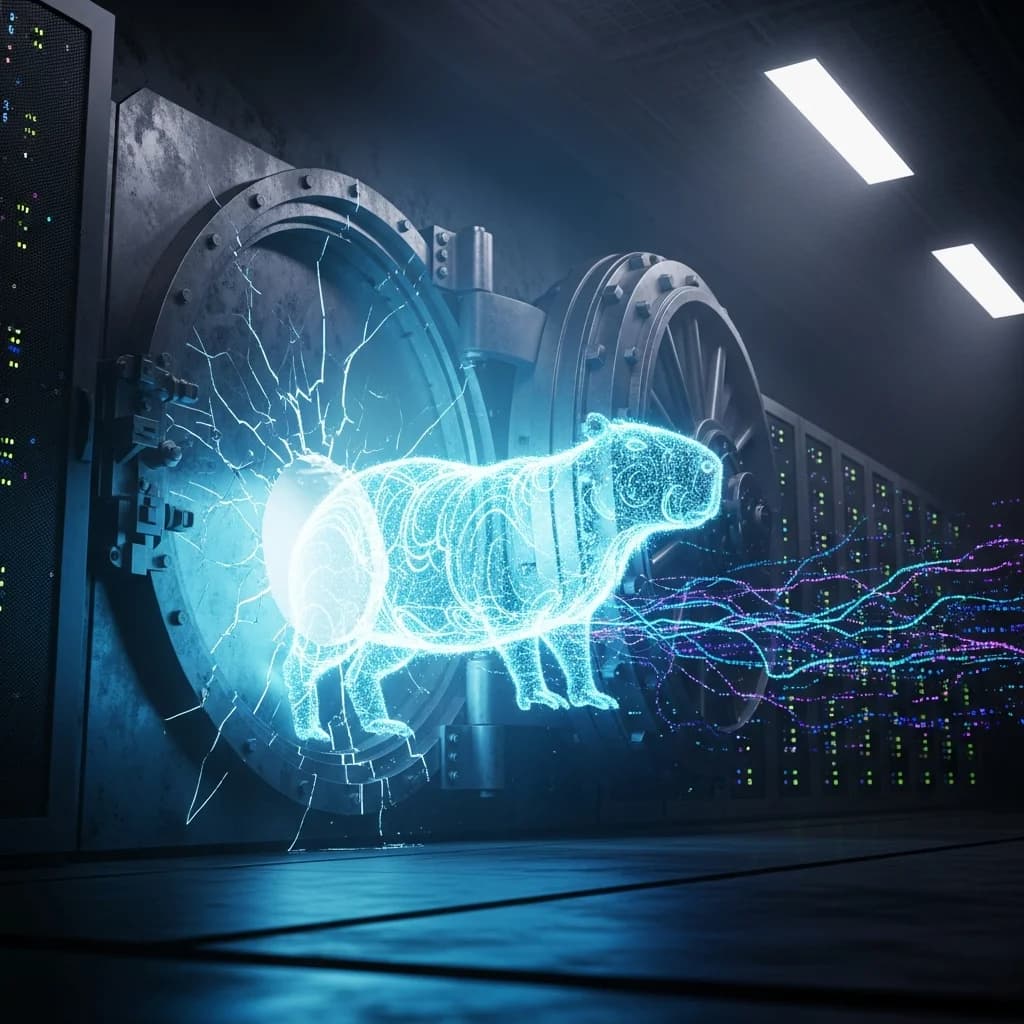
Details of a next-generation model codenamed "Mythos" and a new product tier called "Capybara" were discovered in an unsecured public data store, according to reporting by Fortune. The leak reveals that Anthropic has been quietly developing an AI system that it internally describes as a "step change" in performance — one that leapfrogs its current flagship Opus models.
What We Know About Mythos
The leaked materials describe Mythos as a fundamentally more capable system than anything in Anthropic's current lineup. While specific benchmark numbers weren't included in the exposed data, internal documents reportedly characterize the model's improvements as generational rather than incremental.
The Capybara tier — named following Anthropic's tradition of animal-themed model names like Haiku, Sonnet, and Opus — will sit at the top of the company's product hierarchy. It represents a new ceiling above Opus, which is currently Anthropic's most powerful publicly available model.
Sources familiar with the matter say Mythos is already in early-access testing with a small group of enterprise partners and safety researchers. The model is expected to undergo Anthropic's Responsible Scaling Policy evaluations before any broader release, a process that could take months depending on what capability thresholds it triggers.
A Security Lapse at the Worst Possible Time
The leak is embarrassing for Anthropic on multiple levels. The company has built its brand around safety and responsible AI development — positioning itself as the cautious counterweight to competitors like OpenAI and xAI. Having sensitive model details exposed through what appears to be a basic cloud storage misconfiguration undermines that narrative.
It's particularly bad timing given Anthropic's IPO ambitions. The company is targeting a Q4 2026 public offering that could value it at $60 billion or more, according to multiple reports. A security incident involving its crown jewel technology raises questions that potential investors will want answered.
Anthropic declined to comment on the specifics of the leak but issued a statement saying it takes "data security extremely seriously" and has "taken immediate steps to address the issue."
The Competitive Implications
If Mythos delivers on the capabilities described in the leaked documents, it could reshape the competitive landscape in frontier AI. OpenAI's GPT-5, Google's Gemini Ultra 2, and xAI's Grok 4 series are all vying for the top spot in model performance. A genuine "step change" from Anthropic would be a significant market event.
The introduction of a Capybara tier also signals Anthropic's pricing strategy going forward. With a new premium tier above Opus, the company could charge significantly more for its most capable model while potentially making current Opus-level capabilities more accessible at lower price points.
What Happens Next
Anthropic will need to accelerate its public communications around Mythos now that the cat — or rather, the capybara — is out of the bag. The company faces a delicate balancing act: acknowledging the leak without revealing more than it intended, while reassuring investors and partners that its security practices are sound.
For the broader AI industry, the leak is a reminder that even the most safety-conscious labs are vulnerable to basic operational security failures. It wouldn't be the last such incident — a separate leak exposed Claude Code's entire source code just days later. The race to build ever-more-powerful AI systems continues to accelerate, and the stakes of keeping that work under wraps have never been higher.