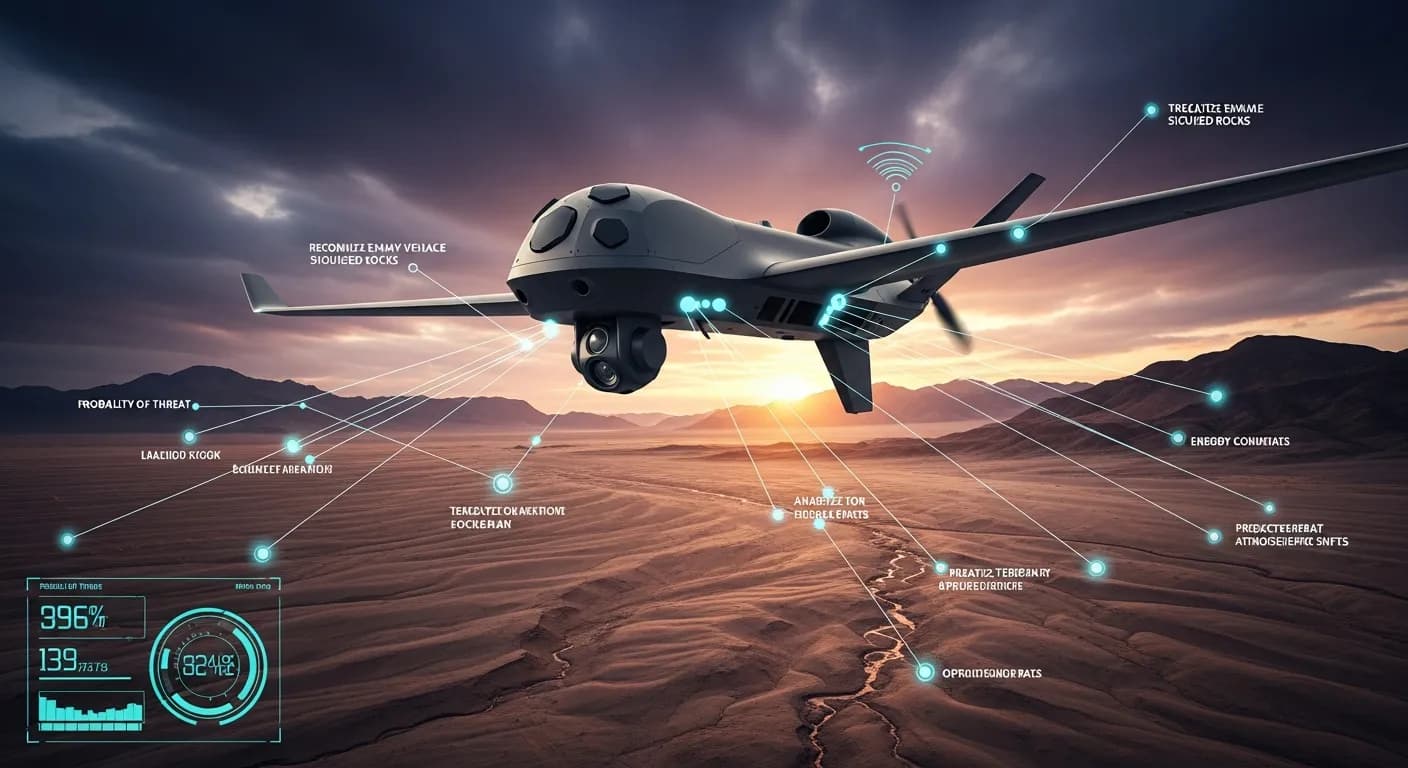
Shield AI, the San Diego-based defense AI company building autonomous pilots for military aircraft, has closed a $1.5 billion Series G round at a $12.7 billion post-money valuation. The round makes Shield AI one of the most valuable private defense technology companies in the world and signals that institutional capital is betting heavily on AI-driven autonomous warfare.
The Series G was led by Advent International and co-led by JPMorgan Chase's Strategic Investment Group, with Snowpoint Ventures, InnovationX, and Riot Ventures among the returning investors. Separately, Blackstone committed $500 million in preferred equity financing plus a $250 million delayed draw facility, bringing the total new capital to approximately $2.25 billion.
The Aechelon Acquisition
A portion of the proceeds will fund Shield AI's acquisition of Aechelon Technology, a simulation software company owned by Sagewind Capital. Aechelon builds the kind of high-fidelity flight simulators that militaries use to train pilots and — critically for Shield AI — to test autonomous aircraft behavior before live flight.
The acquisition logic is direct: Shield AI's core product is Hivemind, an AI pilot that can fly military aircraft autonomously without GPS, communications, or a remote human operator. Training and validating an autonomous combat pilot requires enormous amounts of simulated flight data across thousands of scenarios — contested airspace, electronic warfare, multi-aircraft coordination. Aechelon's simulation stack gives Shield AI that capability in-house rather than depending on third-party tools or expensive physical flight tests.
Advent's Chairman David Mussafer will join Shield AI's board, and JPMorgan Chase's Todd Combs will serve as a board observer — adding heavyweight financial and strategic oversight to a company that is clearly positioning for either an IPO or a major defense prime acquisition.
Revenue and the Defense AI Market
Shield AI is projecting more than $540 million in revenue for 2026, roughly doubling its previous year. The company's valuation has more than doubled from its Series F, reflecting both the revenue growth and the broader market's reassessment of defense AI companies in a geopolitical environment where autonomous systems are increasingly central to military strategy.
The U.S. Air Force's selection of Shield AI for its autonomous combat aircraft program was a pivotal contract win. But the market extends well beyond a single branch — autonomous drones, unmanned wingmen, and AI-powered ISR (intelligence, surveillance, and reconnaissance) platforms are procurement priorities across the Department of Defense, and allied nations are watching closely.
What the Valuation Signals
A $12.7 billion valuation for a defense AI company would have been unthinkable three years ago. The shift reflects two converging trends: the proven effectiveness of autonomous systems in recent conflicts, and the realization that traditional defense primes — Lockheed, Northrop, Raytheon — are too slow to build AI-native systems from scratch.
Shield AI's bet is that software-defined autonomous aircraft will eventually be as fundamental to military operations as GPS-guided munitions became in the 1990s. With $2.25 billion in fresh capital and simulation capabilities now in-house, the company has the resources to push that bet significantly further.