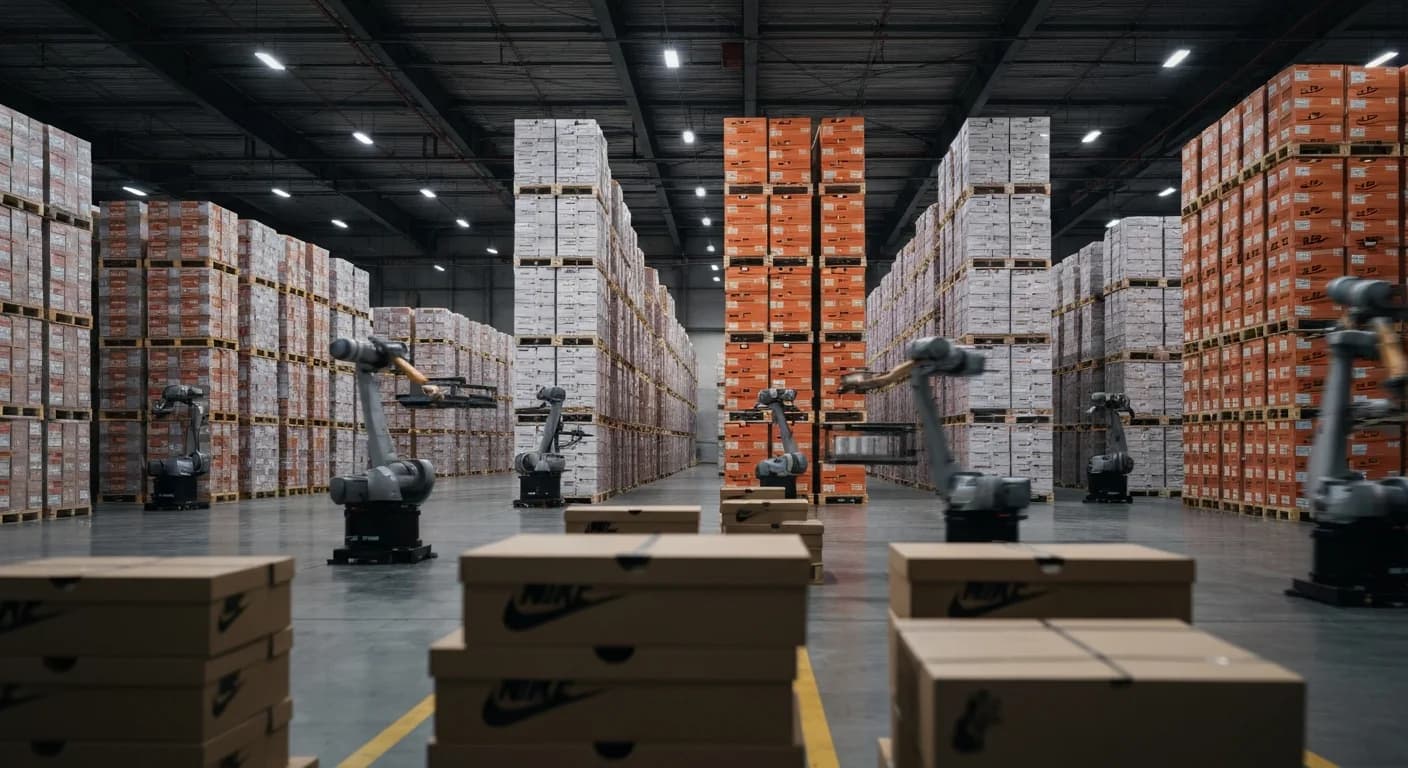
Nike is cutting 775 warehouse jobs in Tennessee and Mississippi, effective April 3rd — and it said the quiet part out loud.
"We are sharpening our supply chain footprint, accelerating the use of advanced technology and automation, and investing in the skills our teams need for the future," a Nike spokesperson told CNBC.
That statement — filed in WARN notices with state labour departments as legally required before mass layoffs — is notable not for what it reveals but for how clearly it reveals it. Nike isn't blaming macroeconomic headwinds or post-pandemic demand shifts. It's naming automation as the mechanism.
The Workers
Of the 775 affected employees, 583 are based at Nike's Memphis facilities on New Frayser Boulevard and Shelby Drive. These are distribution centre roles — the kind that require no university degree, offer steady income, and have long served as economic anchors for blue-collar communities in regions where factory employment has been declining for decades.
Memphis Mayor Paul Young acknowledged the impact: "We recognise the potential impact the recent workforce changes announced by Nike may have on our community. The City of Memphis will work to connect interested employees with opportunities across city government, including public safety and other essential roles."
Part of a Pattern
Nike isn't doing this in isolation. The same weeks have seen:
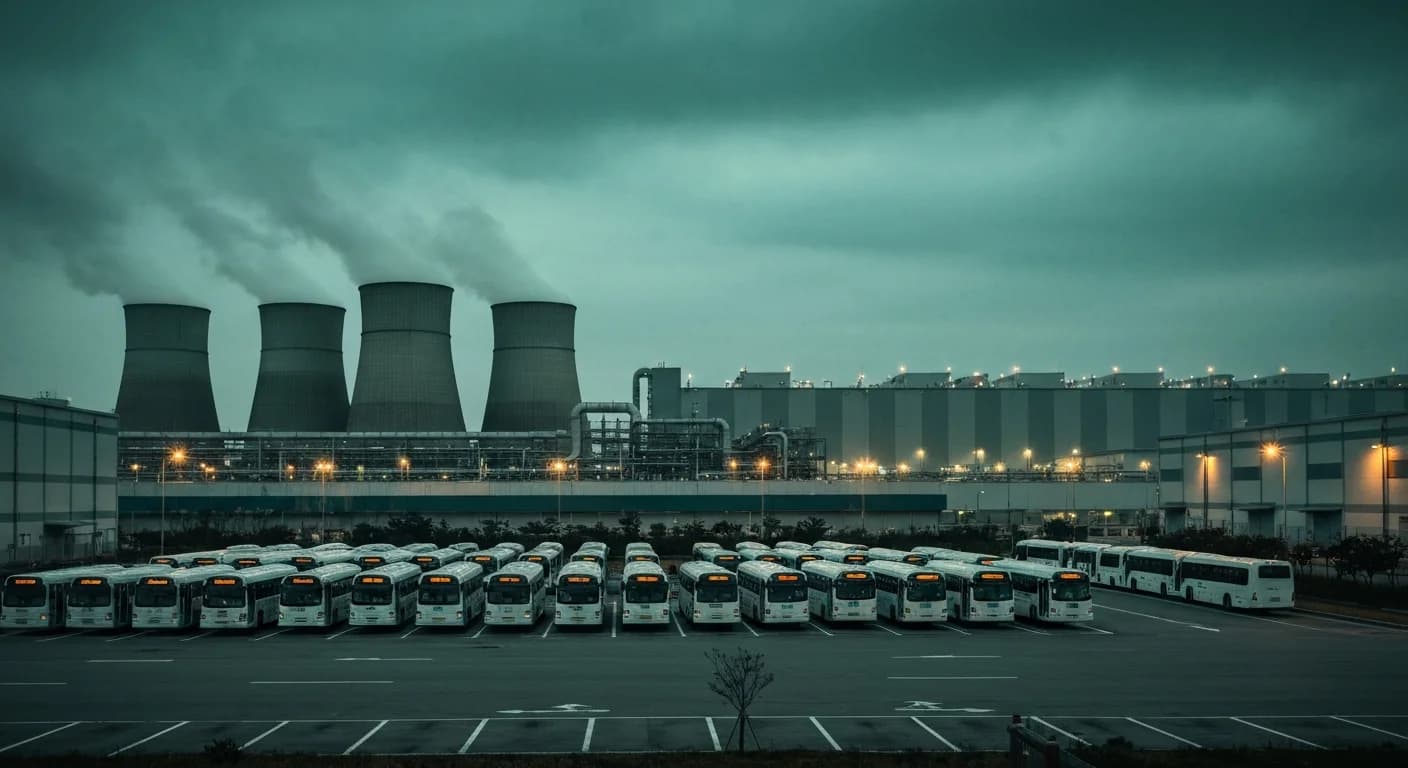
General Motors: Approximately 1,140 workers laid off at the Factory Zero electric vehicle plant in Detroit, effective January 5, 2026. WARN notices cited operational automation.
Tyson Foods: The company closed its beef processing plant in Lexington, Nebraska — eliminating around 3,200 jobs — and cut one shift at its Amarillo, Texas, facility, bringing total Tyson job losses to nearly 4,900 workers in January alone.
What's different about this wave is the language. Corporate layoff announcements have historically softened the blow with euphemisms like "workforce optimisation" or "strategic portfolio reshaping." These announcements are using the word automation. Not as a long-term aspiration. As the stated reason for today's cuts.
This matters because it marks a shift in how companies communicate about technology and employment. Saying "automation is replacing workers" is legally neutral — it's honest disclosure — but it's also politically and socially significant. It removes plausible deniability and contributes to a clearer public narrative about what's actually happening in the labour market.
The Blue-Collar AI Problem
The standard framing of AI and jobs focuses on knowledge work. Lawyers, accountants, software engineers, writers — these are the professions most frequently discussed in the context of AI displacement. But the actual job losses showing up in WARN filings in early 2026 are concentrated in distribution, logistics, food processing, and manufacturing — sectors where AI-driven robotics and automation systems have matured faster than public attention has followed.
Nike employed around 77,800 people worldwide as of May 2025. Cutting 775 is roughly 1% of its total headcount — not existential for the company, but significant at the local community level. In Memphis, those 583 jobs represent a real blow to a city that has struggled with industrial decline since the mid-20th century.
The question being asked by economists, labour advocates, and workforce planners is whether the job creation side of automation is appearing in the same communities as the job destruction. Memphis Mayor Young's answer — offering workers city government positions in public safety — suggests the local reabsorption capacity is limited.
What It Signals
Nike's layoffs are a data point, not a headline in isolation. But the explicit attribution to automation, the timing alongside similar announcements from GM and Tyson, and the April 3 effective date — arriving just as Q1 2026 ends with record VC investment in AI — paint a picture.
The capital is flowing into AI infrastructure. The job losses are showing up in distribution centres and factory floors. The communities absorbing the impact are not the ones receiving the investment.
That asymmetry won't resolve itself quietly.