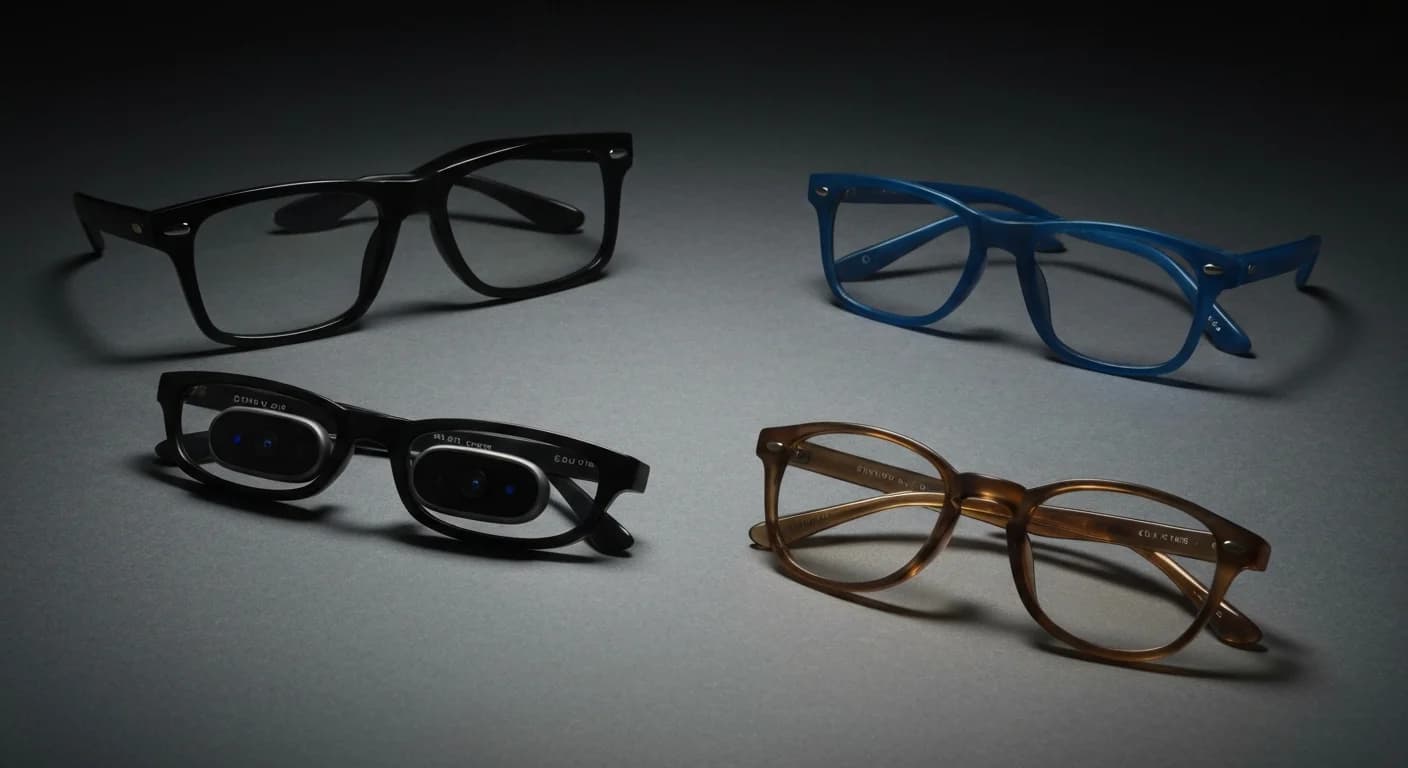
Apple is testing at least four distinct smart glasses designs as it prepares to enter the AI wearable market, according to a report today from Bloomberg's Mark Gurman. The disclosure, published in Gurman's Power On newsletter and echoed by 9to5Mac on April 12, 2026, offers the clearest look yet at how Cupertino plans to differentiate its long-rumored glasses from Meta's Ray-Ban partnership and a growing field of AI eyewear.
Four frames, premium materials
Gurman reports that the four prototype styles include a large rectangular frame reminiscent of Ray-Ban Wayfarers, a slimmer rectangular design similar to the glasses Tim Cook himself wears, and two additional options with larger and smaller oval or circular silhouettes. The strategy mirrors how Apple launched the original Apple Watch and AirPods with multiple form factors, betting that fit and style matter as much as silicon.
The main body of the glasses will reportedly be built from acetate, described in the report as a durable and luxurious material. Colorways under exploration include black, ocean blue, and light brown. Front-facing cameras are arranged in an oval pattern surrounded by indicator lights to signal when recording is active.
How they work
The glasses are positioned as smartphone accessories rather than standalone computers. They relay notifications from a paired iPhone, capture photos and video, play audio, and serve as a front end for an upgraded Siri and Apple's visual intelligence capabilities. That architecture keeps heavy compute on the phone while the glasses handle sensing and display.
Gurman's timeline puts an official announcement in late 2026 or early 2027, with an actual release targeted for spring or summer 2027. That cadence fits Apple's broader push into AI-centric hardware, which also reportedly includes AirPods with integrated cameras, a smart home display, and a camera-equipped wearable pendant.
Why the design bet matters
Apple is entering a category that Meta has effectively defined with its Ray-Ban and Oakley collaborations, and where Google, Samsung, and a cluster of startups are moving quickly. By committing to acetate frames and multiple silhouettes, Apple is signaling that it views smart glasses first as fashion objects and only second as computing devices — a reversal of the tech-forward aesthetic that has defined most competing products to date.
The report also surfaces against a broader backdrop of leadership change at Apple's AI organization, with Bloomberg separately noting that longtime AI chief John Giannandrea is leaving the company. Whether that transition accelerates or delays the glasses program is unclear, but the engineering work described in today's report suggests the hardware roadmap is already advanced.
Implications
If Apple ships on Gurman's timeline, 2027 could become the year that AI glasses move from early-adopter curiosity to mass-market product. For developers, the iPhone-tethered architecture implies a near-term opportunity to build experiences around Siri and visual intelligence APIs rather than on-device models. For competitors, Apple's multi-style approach raises the bar: a single hero device may no longer be enough to win a category where what you wear on your face is inseparable from what it can do.