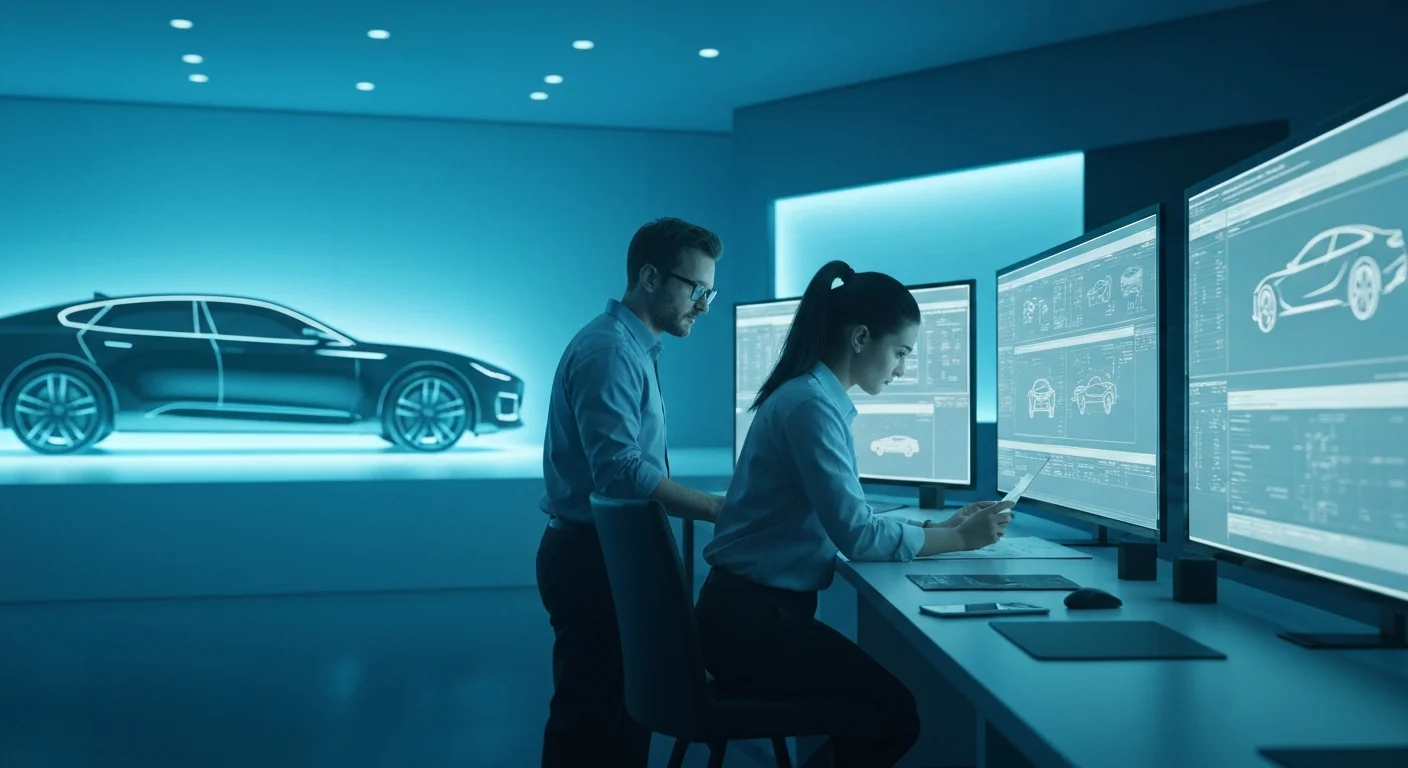
Stellantis and Microsoft unveiled a five-year strategic collaboration on April 16, 2026, pledging to co-develop more than 100 AI initiatives across the automaker's sales, customer care, and operations functions. The deal bundles generative AI, cybersecurity, and cloud modernization into a single enterprise-wide program, and signals how quickly legacy industrial players are trying to convert AI hype into production workflows.
A Sweeping Enterprise Bet
Under the agreement, joint Stellantis-Microsoft teams will build AI tools spanning product development, predictive maintenance, validation testing, and in-vehicle customer experiences such as energy-efficient driving recommendations and vehicle-health insights. Stellantis will migrate workloads to Microsoft Azure and is targeting a 60% reduction in its datacenter footprint by 2029 — an aggressive infrastructure consolidation that mirrors cost-cutting themes across the global auto industry.
On the workforce side, every Stellantis employee will get access to Copilot Chat, and the company is rolling out an initial 20,000 Microsoft 365 Copilot licenses to select roles. That pairs one of the world's largest corporate Copilot deployments with a multi-brand manufacturer that owns Jeep, Ram, Peugeot, Fiat, Citroën, Opel, and more than a dozen other marques.
Cybersecurity Moves to the Center
A notable feature of the partnership is the expansion of Stellantis' global cyber defense center, which will use AI-driven analytics to cover IT systems, connected vehicles, manufacturing sites, and digital products. As cars become rolling software platforms — with over-the-air updates, connected services, and increasingly autonomous features — automakers have grown more exposed to supply-chain and vehicle-level cyber risk. Bundling security into the AI collaboration reflects that new threat surface.
Executive Framing
"Through our collaboration with Microsoft, we are accelerating our AI momentum across the enterprise, giving our teams the tools to innovate faster and deliver the products, services and experiences customers expect from us," Ned Curic, Stellantis' Chief Engineering & Technology Officer, said in the announcement.
Judson Althoff, CEO of Microsoft's Commercial Business, framed the deal as a cross-industry showcase: "By combining Stellantis' global scale and engineering expertise with Microsoft's trusted cloud, AI and security platforms, we are delivering real value for millions of drivers worldwide."
Why It Matters
The announcement fits a broader 2026 pattern in which hyperscalers are locking in multi-year, multi-domain commitments with industrial giants rather than selling point products. For Microsoft, it reinforces Azure and Copilot as the default stack for Fortune 500 transformation programs. For Stellantis — navigating EV transition costs, tariff pressure, and a bruising competitive environment against Chinese EV makers — the hope is that embedded AI can compress engineering cycles, lower service costs, and differentiate in-vehicle experiences without further ballooning IT spend.
The test will be execution. Automakers have announced sweeping software and AI overhauls before, often with disappointing results. Converting 100-plus initiatives and 20,000 Copilot seats into measurable productivity and customer gains over the next five years is the real benchmark investors will watch.