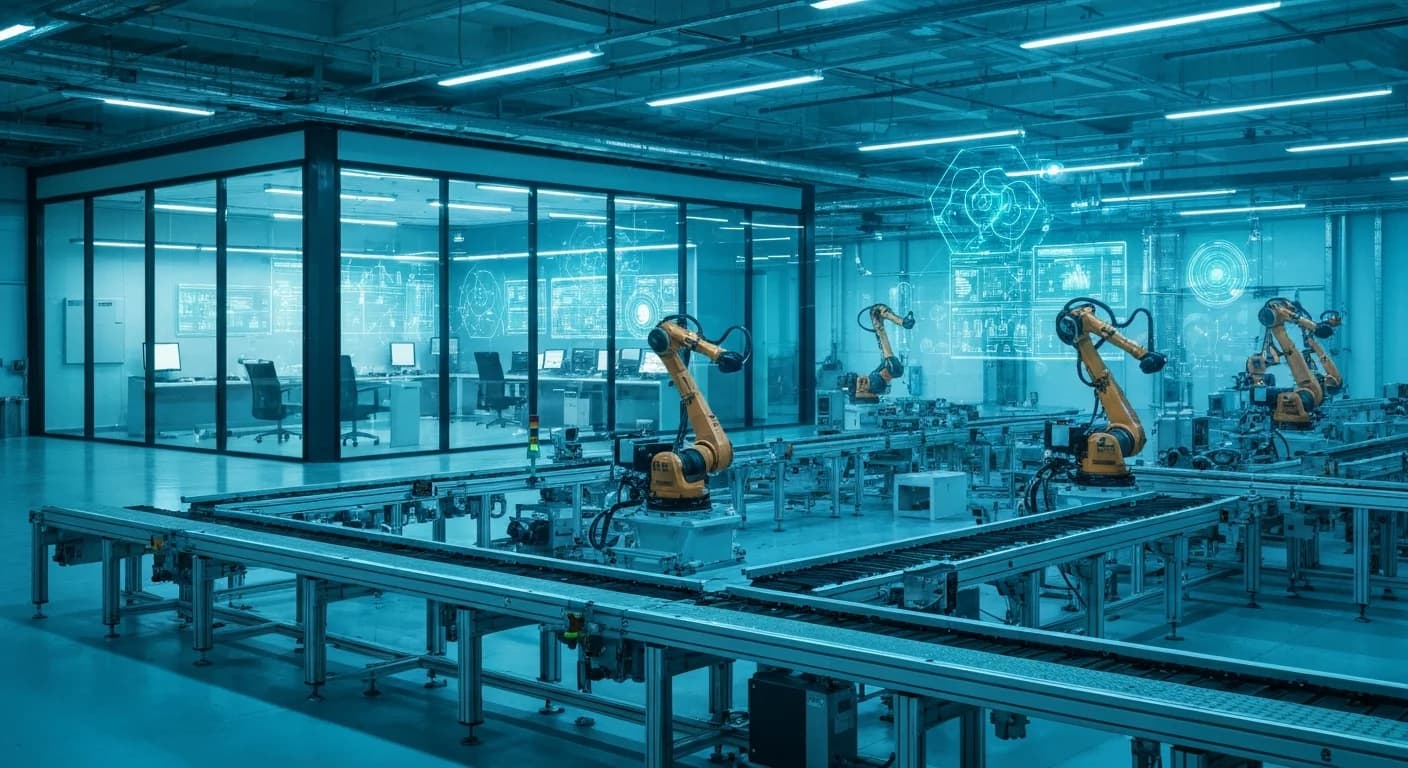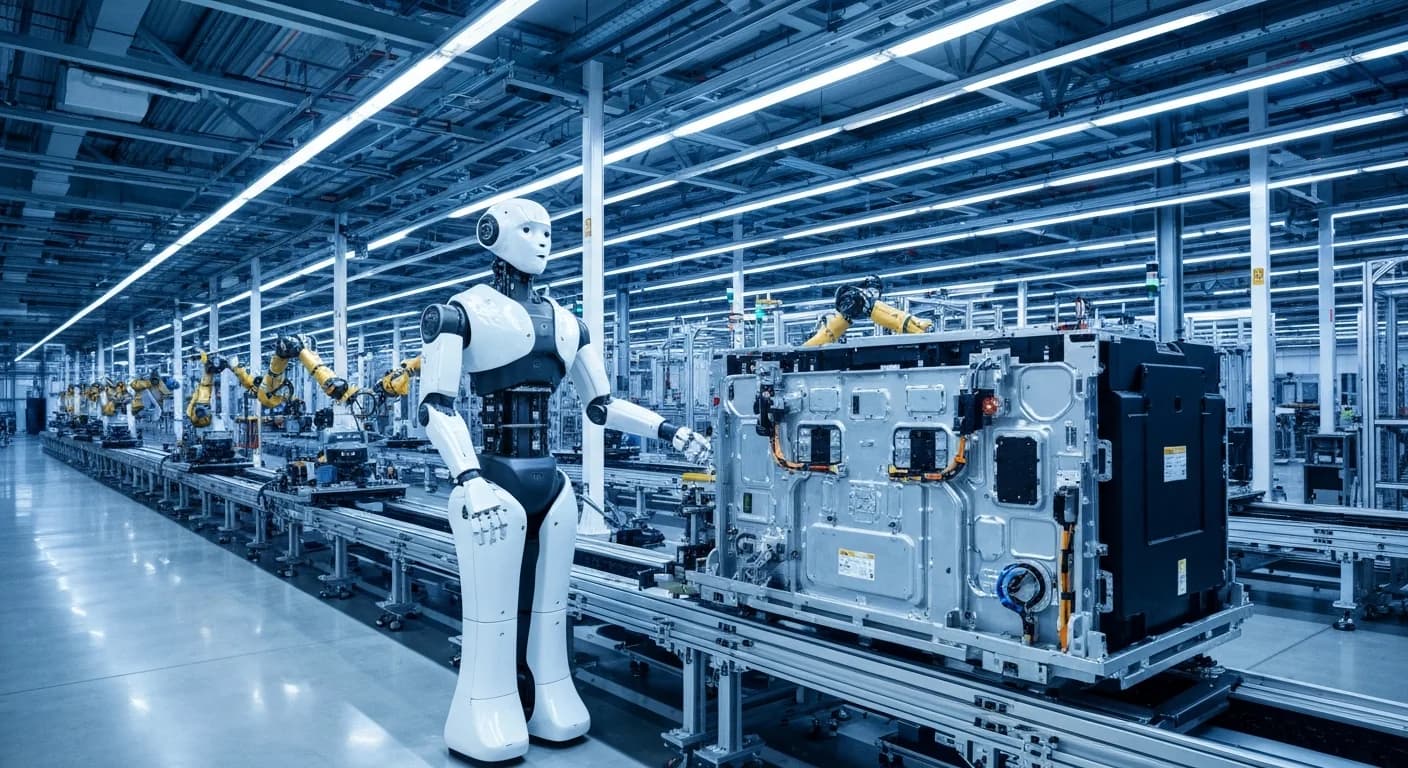
BMW Group flipped the switch on its European humanoid robot pilot today, putting Hexagon Robotics' AEON units on the production floor at its Leipzig plant as Hannover Messe 2026 opened a few hours down the autobahn with physical AI as its headline theme. It is the first time a humanoid robot has been deployed inside a European car plant — a line that industry executives have been chasing for most of the past year.
From Spartanburg to Leipzig
BMW is not arriving at this moment cold. The company ran a lengthy pilot at its Spartanburg, South Carolina facility using Figure 02 robots that, according to BMW's own numbers, helped contribute to building more than 30,000 BMW X3 vehicles, moved more than 90,000 components, and logged roughly 1.2 million steps across about 1,250 operating hours over ten months. That US programme is the empirical backbone for the European rollout, with BMW explicitly citing it as the source of the integration playbook now being applied in Saxony.
The Leipzig programme swaps Figure for AEON, a humanoid designed by Hexagon Robotics with wheel-based mobility, flexible hand and gripper attachments, AI-driven motion control, and onboard sensors that let it adapt to unpredictable factory conditions without constant human direction. BMW said two AEON units will work simultaneously across two separate use cases during the test phase, with both expected to be in regular production by year-end.
What the robots will do
BMW framed the pilot narrowly on purpose. During the summer 2026 pilot phase, AEON will focus on assembly of high-voltage batteries and on component manufacturing for exterior parts — tasks that combine heavy, awkward handling with enough variance that pure industrial automation has struggled to cover them economically. The humanoid form factor matters here because the robots can use workstations, tools and access routes originally designed for people, sidestepping the infrastructure rebuild that caged industrial arms typically require.
"Digitalisation improves the competitiveness of our production — here in Europe and worldwide," said Milan Nedeljković, BMW's board member for production, in remarks accompanying the deployment. Michael Nikolaides, senior vice president for production network and supply chain management, and Hexagon Robotics president Arnaud Robert have both publicly framed the programme as a long-term technology integration effort rather than a one-off trial.
Why Europe is watching
The timing, the day Hannover Messe opens its doors, is not accidental. German industrial giants including Siemens, SAP and Deutsche Telekom are using this week to push a joint narrative that Europe can still build a sovereign industrial AI stack instead of importing it. Chancellor Friedrich Merz met DAX CEOs at the fair on Monday to discuss scaling AI into industry, and BMW's rollout arrives as proof that the hardware, not just the slideware, is shipping.
Humanoid robotics remains an unforgiving business. Cycle times, safety certification and total cost of ownership will decide whether AEON graduates from two test units into a fleet, or quietly gets reassigned to research. BMW's measured framing — collaboration rather than replacement, pilot rather than rollout — suggests the company knows how thin the margin for error is. But as of today, Leipzig is the first European car plant where humanoids and humans share a shift.