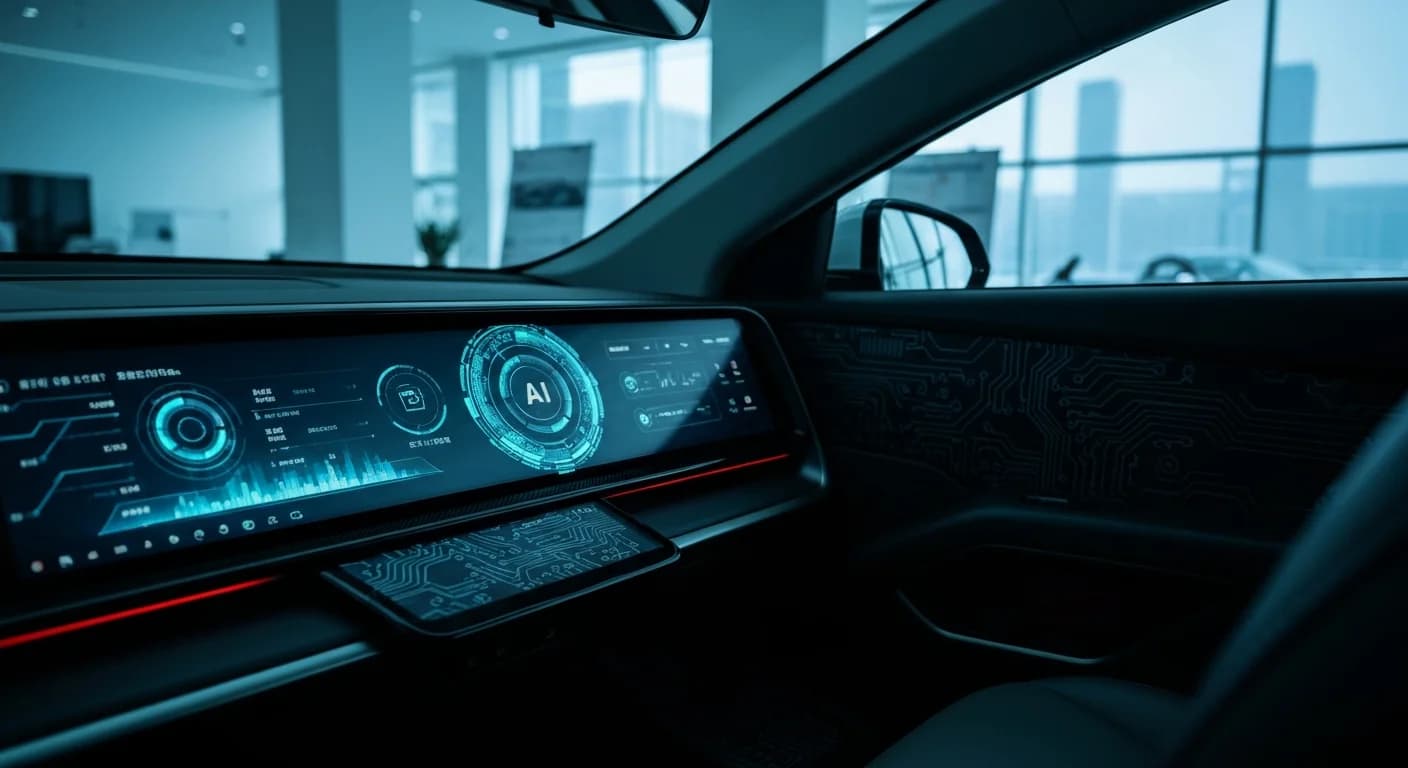
China's automotive sector is pivoting from electrification to artificial intelligence at full speed, following a direct mandate from Beijing to weave AI into every layer of the next generation of vehicles. The push, framed by China's most recent five-year plan as the 'AI Plus' strategy, is reshaping how cars are designed, manufactured, and driven — and accelerating the country's effort to wean itself off U.S. chip suppliers.
From EV Leader to AI-First Auto Power
Having already become the dominant force in electric vehicles, Chinese automakers are now chasing what officials and engineers describe as 'self-reasoning' machines: vehicles that interpret natural-language requests, navigate without map coordinates, and run on Chinese silicon and software. The shift was crystallized by a recent comment from Nissan Motor China chief Stephen Ma, who said: 'There's no longer a distinction between a technology company and a car company.'
The AI Plus blueprint, applied across manufacturing, healthcare, and transport, treats embedded intelligence as critical national infrastructure. Beijing wants the resulting hardware and models to run on domestic chips, sidestepping the export restrictions that have squeezed access to Nvidia's most advanced parts.
Huawei, Xpeng, Xiaomi and NIO Lead the Charge
Huawei has emerged as the heavyweight in the new automotive AI stack, pledging more than $10 billion over the next five years to expand the computing power behind smart driving. Automotive is now its fastest-growing segment, with Dongfeng Motor among the first major partners to announce 'embodied AI technology' vehicles co-developed with Huawei.
Xpeng has updated its in-car model so drivers can issue conversational instructions such as 'park near the entrance to the shopping center,' with cameras handling navigation when high-definition maps or GPS coordinates are unavailable. Xiaomi's refreshed HyperOS pushes the cabin further into agentic territory, letting drivers complete restaurant reservations or coffee orders mid-trip and modulating ambient lighting, sound, and seating based on detected stress levels.
On the silicon side, NIO has spun off its chip unit to develop proprietary processors, a move it says is already trimming costs and lifting earnings. Horizon Robotics launched its Starry 6 processor, capable of driving up to 12 displays inside a single vehicle — feeding the screen-saturated cabins that have become a defining feature of new Chinese models.
Implications
The AI Plus push turns cars into one of the most visible test beds for China's effort to operate an end-to-end domestic AI stack — chips, models, applications, and consumer touch points. For Western automakers and chipmakers, it intensifies a competitive squeeze: Chinese vehicles are not just cheaper or more electrified, but increasingly more software-rich. For regulators outside China, the trend raises fresh questions about data flows, in-cabin surveillance, and the security of foreign-built vehicles running heavily integrated AI agents on their roads.