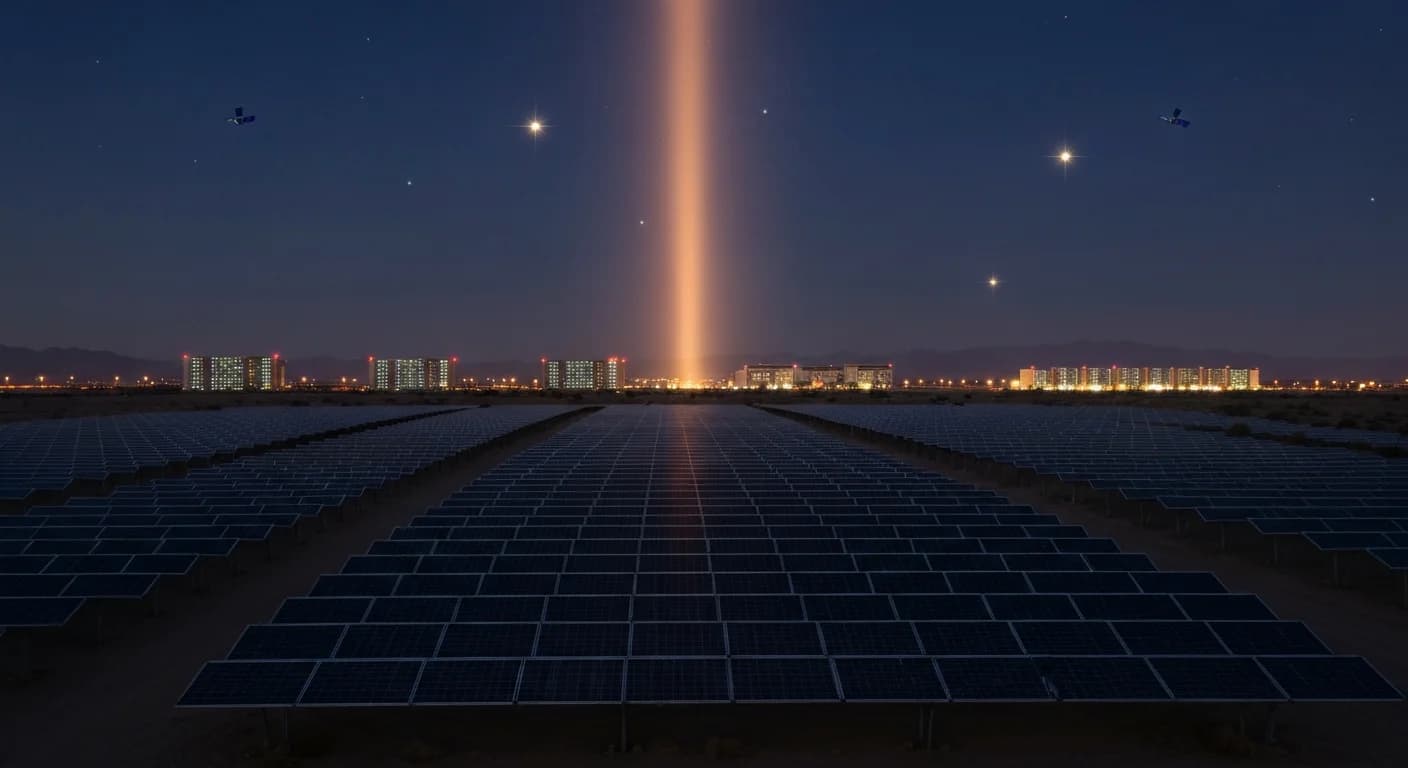
Meta has signed a first-of-its-kind agreement with Virginia-based startup Overview Energy that could see a constellation of satellites beam solar power down to Earth to help run the social network's AI data centers around the clock. Announced on April 27, 2026, the deal gives Meta early access to up to 1 gigawatt of capacity from Overview's planned orbital fleet, with an initial demonstration targeted for 2028 and commercial power delivery beginning in 2030.
How the technology works
Overview Energy plans to operate roughly 1,000 spacecraft in geosynchronous orbit. Each satellite collects sunlight 24/7 in space, converts it into near-infrared light, and beams that light down to existing terrestrial solar farms, which then convert it back into electricity. Because the system uses a wide, low-intensity infrared beam aimed at hundreds-of-megawatt solar facilities, Overview argues it sidesteps the safety, regulatory, and land-use hurdles that have stalled other space-power concepts based on high-power lasers or microwaves.
CEO Marc Berte said the beam is passive and safe enough that "you'll be able to stare right into his satellite's beam with no ill effects." Founded in 2022 and headquartered in Ashburn, Virginia, Overview says it has already demonstrated airborne power beaming and plans to launch its first low-Earth-orbit demonstration satellite in January 2028.
Why an AI company is buying space power
For Meta, the appeal is simple: AI compute is hungry, and the sun does not shine at night. The company's data centers consumed more than 18,000 gigawatt-hours in 2024, and Meta has committed to procuring 30 gigawatts of renewable power as it scales for generative AI. Solar farms can supply some of that load during the day, but pairing them with batteries or fossil backup gets expensive at gigawatt scale.
"Space solar technology represents a transformative step forward by leveraging existing terrestrial infrastructure to deliver new, uninterrupted energy from orbit," said Nat Sahlstrom, Meta's VP of Energy and Sustainability, in the joint announcement. Berte framed the deal as a sign that "space is becoming part of America's energy infrastructure," pitched directly at hyperscalers seeking "reliable siting, and speed to power."
A new asset class for hyperscaler power
Financial terms were not disclosed, and Overview introduced a new commercial unit it calls "megawatt photons" to price the offering. The startup is backed by aerospace and energy investors, with an advisory board that includes former NASA administrators Jim Bridenstine and Mike Griffin and former FERC chairman Joseph Kelliher.
Implications
The agreement is the clearest signal yet that AI's power crunch is pushing hyperscalers beyond conventional grid procurement and into exotic energy bets — joining recent moves into nuclear, fusion, and behind-the-meter gas. If Overview hits its 2030 milestone, Meta could become one of the first AI operators to literally light up its data halls with photons collected above the atmosphere. If it slips, the deal will still have helped legitimize space-based solar as a procurement category for the AI build-out.