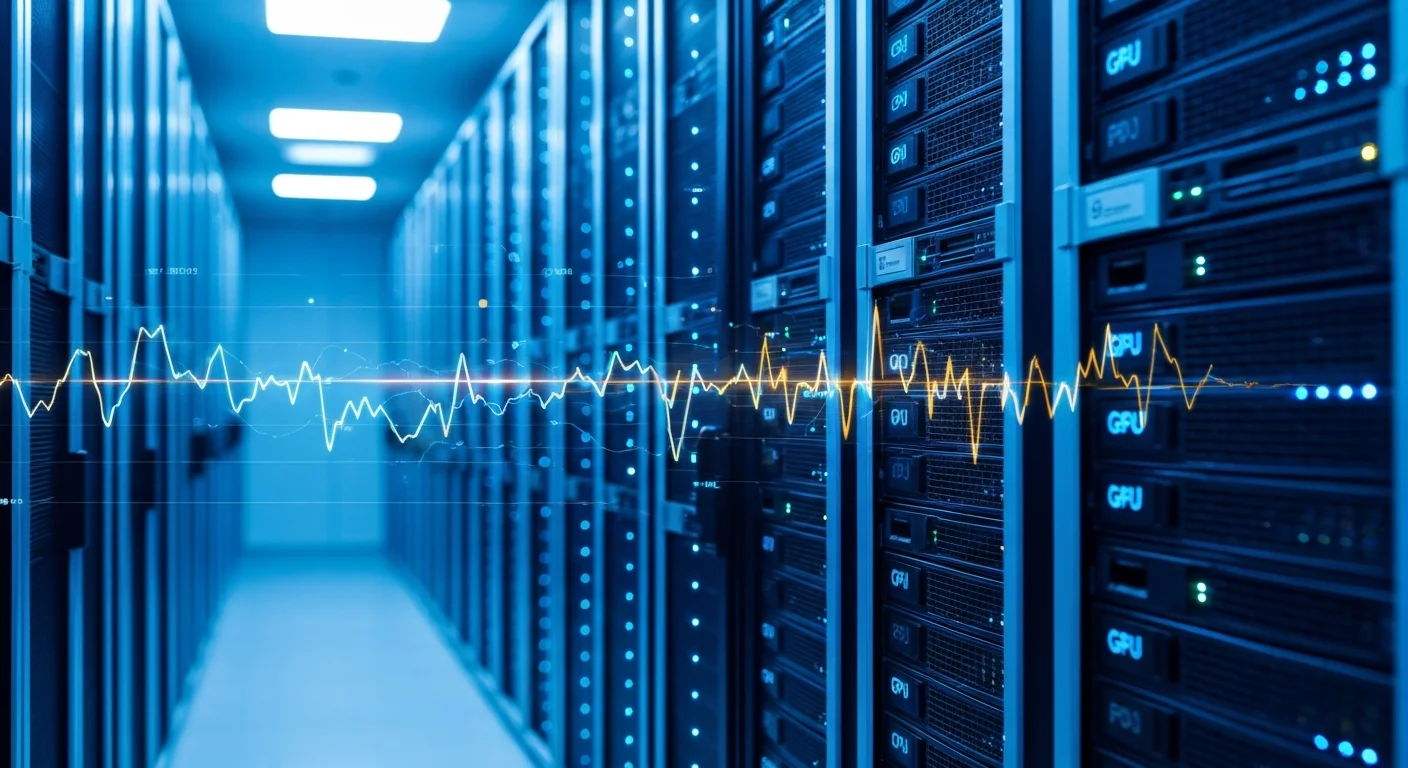
MIT and the MIT-IBM Watson AI Lab on April 27 unveiled EnergAIzer, a prediction tool that estimates how much electricity a given AI workload will draw on a specific GPU or accelerator in seconds — a task that previously required hours or days of cycle-level simulation. The team reports the estimates land within roughly 8% of measured power consumption on real GPU workloads, fast enough to fit inside the design loop instead of after the fact.
The project, led by MIT postdoc Kyungmi Lee with EECS graduate student Zhiye Song and collaborators Eun Kyung Lee and Xin Zhang of IBM Research, IBM Fellow Tamar Eilam, and MIT Provost Anantha P. Chandrakasan, targets one of the more uncomfortable bottlenecks in modern AI: nobody really knows what a workload will cost in watts until it has already been run.
Why a faster estimator matters
Traditional methods break a workload into individual steps and emulate how each module inside a GPU is exercised one cycle at a time. That works for small kernels but collapses on production AI jobs — training runs and large preprocessing pipelines can take hours, sometimes days, just to simulate. By the time the simulation finishes, the workload itself is often already running on hardware.
EnergAIzer instead produces a fast statistical estimate that operators and developers can query interactively. According to MIT, that lets users compare algorithms and configurations on energy efficiency, evaluate emerging GPU configurations before purchase, or watch how a small change in operating speed alters power draw.
A direct response to the data center crunch
The research lands in the middle of an extraordinary capacity squeeze. Data centers are projected to consume up to 12% of total U.S. electricity by 2028, and hyperscalers have been openly competing for power contracts, substations, and transmission rights. An estimator that runs in seconds is a small piece of the puzzle, but a useful one: it lets developers fold energy cost into the model-selection decision rather than treating it as an externality.
"The AI sustainability challenge is a pressing question we have to answer," Lee said in MIT's announcement. "Because our estimation method is fast, convenient, and provides direct feedback, we hope it makes algorithm developers and data center operators more likely to think about reducing energy consumption."
Implications
For data center operators, EnergAIzer points at a more disciplined way to allocate scarce capacity across multiple models and tenants. For algorithm teams, it offers an early warning before a model is shipped to production. And for hardware designers, it provides a quicker feedback loop on how chip-level decisions translate into real workload behavior. None of that solves the underlying electricity supply problem — but it shrinks the share of waste that comes from blind provisioning, which, at 12% of U.S. power, is no longer a rounding error.