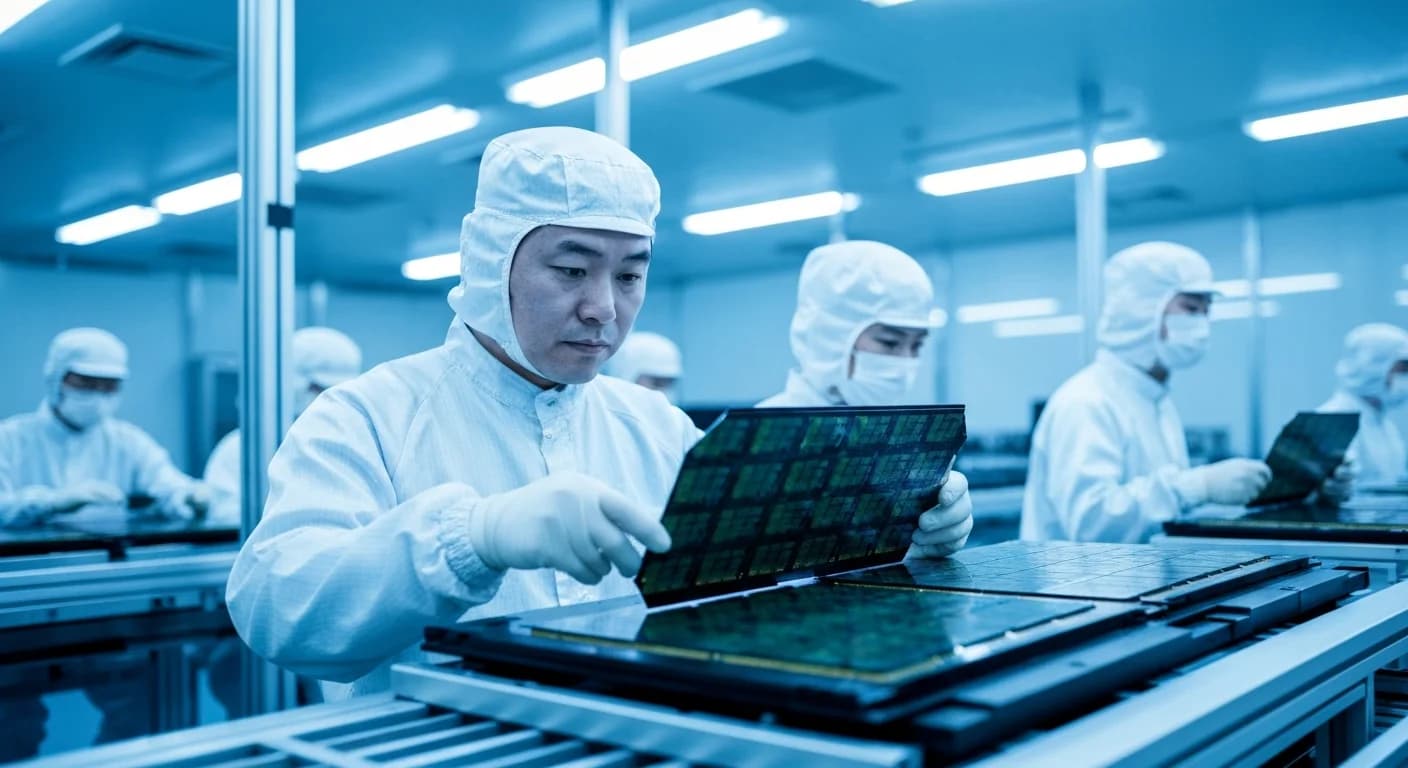
Samsung Electronics crossed a $1 trillion market capitalization on Wednesday, becoming only the 13th company in history — and just the second Asian firm — to clear the threshold, after a year-long rally driven by AI-fueled memory chip demand. Shares climbed as much as 15% during the session, capping a stretch in which the stock has more than quadrupled.
Samsung now joins TSMC as the only non-US, non-Chinese company in the trillion-dollar club, a milestone that signals how aggressively the AI buildout is reshaping global tech leadership and rewarding the companies that supply the picks and shovels of the boom.
An eightfold profit jump
The rally is anchored in an extraordinary set of first-quarter financial results. Samsung reported operating profit of 57.2 trillion won, more than eight times the figure from the same quarter a year earlier, on record revenue of 133.9 trillion won. In a striking comparison, the company's Q1 2026 operating profit alone exceeded its full-year 2025 operating profit of 43.6 trillion won.
Margins are being driven primarily by high-bandwidth memory (HBM), the specialized DRAM stack used alongside Nvidia, AMD, and custom AI accelerators. As large model training and inference workloads scale, memory bandwidth — not raw compute — has become the binding constraint, and the suppliers who can deliver it at volume are extracting unusual pricing power.
Memory shortages spread beyond AI
The boom has knock-on effects across the rest of the electronics industry. All three of the world's major memory makers — Samsung, SK Hynix, and Micron — have pulled production capacity away from commodity chip lines and redirected it toward HBM for data centers. The result is a tightening DRAM and NAND market that is now pushing up component costs in smartphones, PCs, and consumer electronics — including, ironically, in Samsung's own phone and TV divisions.
Apple talks and a labor cloud
The milestone also comes amid reports that Apple is exploring manufacturing partnerships with both Samsung and Intel for US-based chip production, a potential diversification away from its longtime reliance on TSMC's Taiwan fabs. A deepened relationship with Apple would give Samsung's foundry business a marquee anchor customer alongside its dominant memory franchise.
Not every signal is positive. Samsung is also bracing for an 18-day strike threat from a worker group demanding a larger share of the AI windfall through expanded profit sharing. The dispute underscores a broader tension across the sector: the gains from the AI boom are flowing to a narrow set of capital owners and senior employees, even as production lines run flat out.
Implications
For investors and policymakers, Samsung's milestone is the clearest illustration yet that the AI cycle is no longer just a software story. The bottlenecks — and the profits — have moved decisively into the upstream silicon supply chain, with memory makers, foundries, and packaging specialists capturing share that once flowed to model providers and cloud platforms. As long as HBM remains scarce, expect the trillion-dollar club to keep expanding eastward.