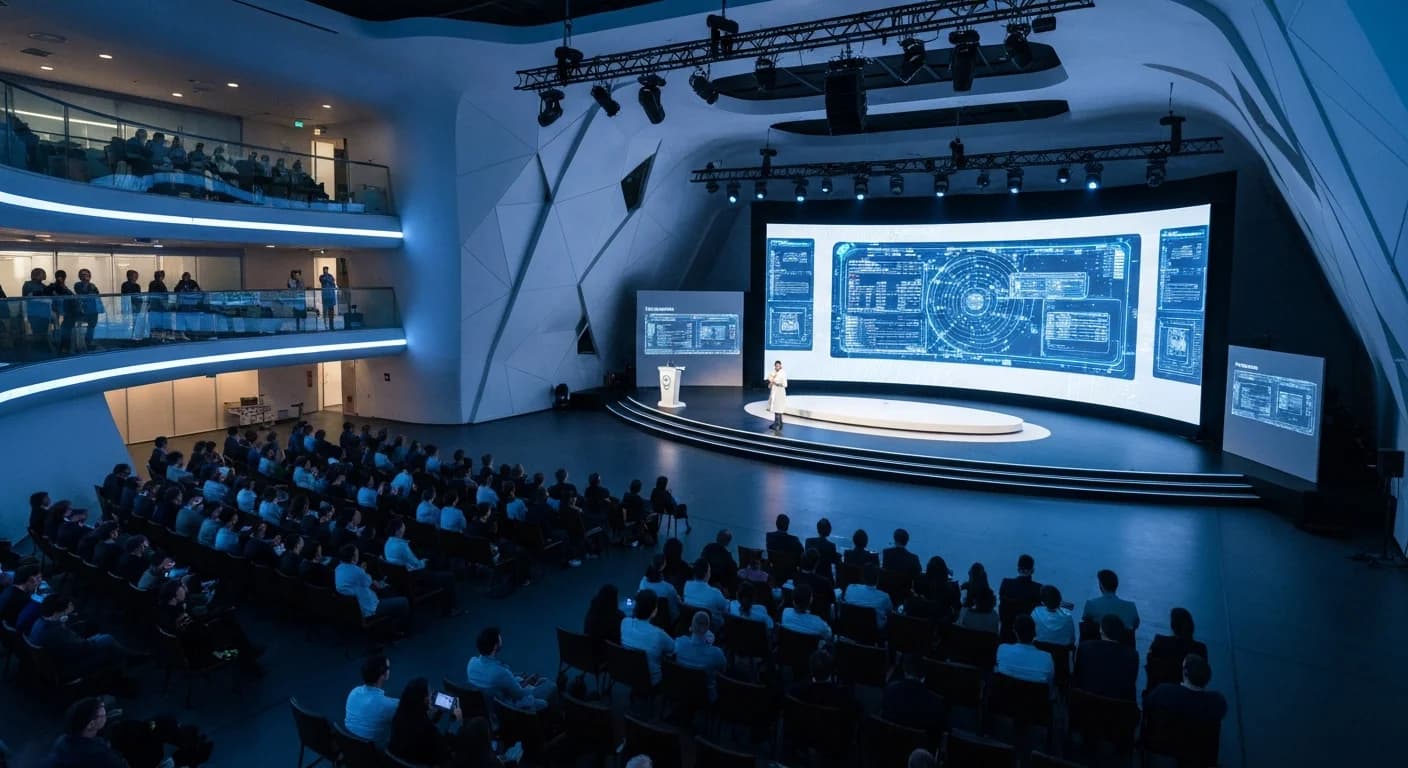
Baidu opened its Create 2026 developer conference in Beijing on May 14, using the keynote to pivot the company's public narrative from foundation-model competition to agent deployment. The event, themed "Agents at Scale," was headlined by co-founder and CEO Robin Li, who argued that the industry has entered a new phase where the unit of competition is no longer model benchmarks but agents that actually finish work.
"For the first time, what really made AI go viral was not the model, but the application," Li told the audience, framing the shift as the defining moment of the next AI cycle.
DuMate steps out of preview
The headline product launch was DuMate, Baidu's general-purpose AI agent, which made its official debut after an MVP release in March. Baidu says the system can now read screens, operate third-party software, process files, and connect end-to-end into business systems. Demonstrated use cases included resolving customer-service tickets, running data analysis, and generating marketing posters. A consumer mobile app shipped alongside the launch.
DuMate was not the only product unveiled. Baidu also announced an upgraded coding agent called Miaoda — which the company said now produces roughly 90% of its own code — along with an enterprise edition, a refreshed multi-agent digital human platform called Baidu YiJing aimed at livestreaming and real-time interactions, and Famou Agent 2.0, a new iteration of its self-evolving agent.
A new yardstick: Daily Active Agents
The most ambitious framing of the keynote was Li's proposal that the industry adopt a new headline metric: Daily Active Agents, or DAA. Li positioned DAA as the agent-era equivalent of the Daily Active Users measure that defined the mobile internet, predicting that global DAA could eventually surpass 10 billion as agents proliferate across personal and enterprise workflows.
He took an implicit swipe at the token-volume narratives favored by some Western labs, saying that "tokens only reflect cost, not value, as they measure input rather than output." The implication: an industry that measures itself by how many tokens it sells is rewarding the wrong side of the equation.
"Super individuals" and organizational change
Li sketched a three-tier picture of how agentic AI will reshape work. At the lowest level, agents themselves self-improve. At the individual level, he predicted the rise of "super individuals" — single people paired with fleets of agents who can outproduce conventional teams, particularly in software development and creative fields. At the organizational level, he argued companies will eventually have to restructure around agent-driven workflows rather than bolt agents onto existing org charts.
Implications
The pitch matters beyond Baidu. Chinese AI labs have spent the past year closing the model-capability gap with US frontier labs at lower inference cost, and several have now released competitive open-weight agentic models. By staking out DAA as the metric that matters, Baidu is trying to shift the conversation from a race Western labs are still winning — raw model capability — to one where China's lower deployment costs and dense application ecosystem give domestic players a structural edge. Whether DAA catches on outside Baidu's own marketing remains to be seen, but the framing is likely to surface in earnings calls and analyst notes through the rest of the year.