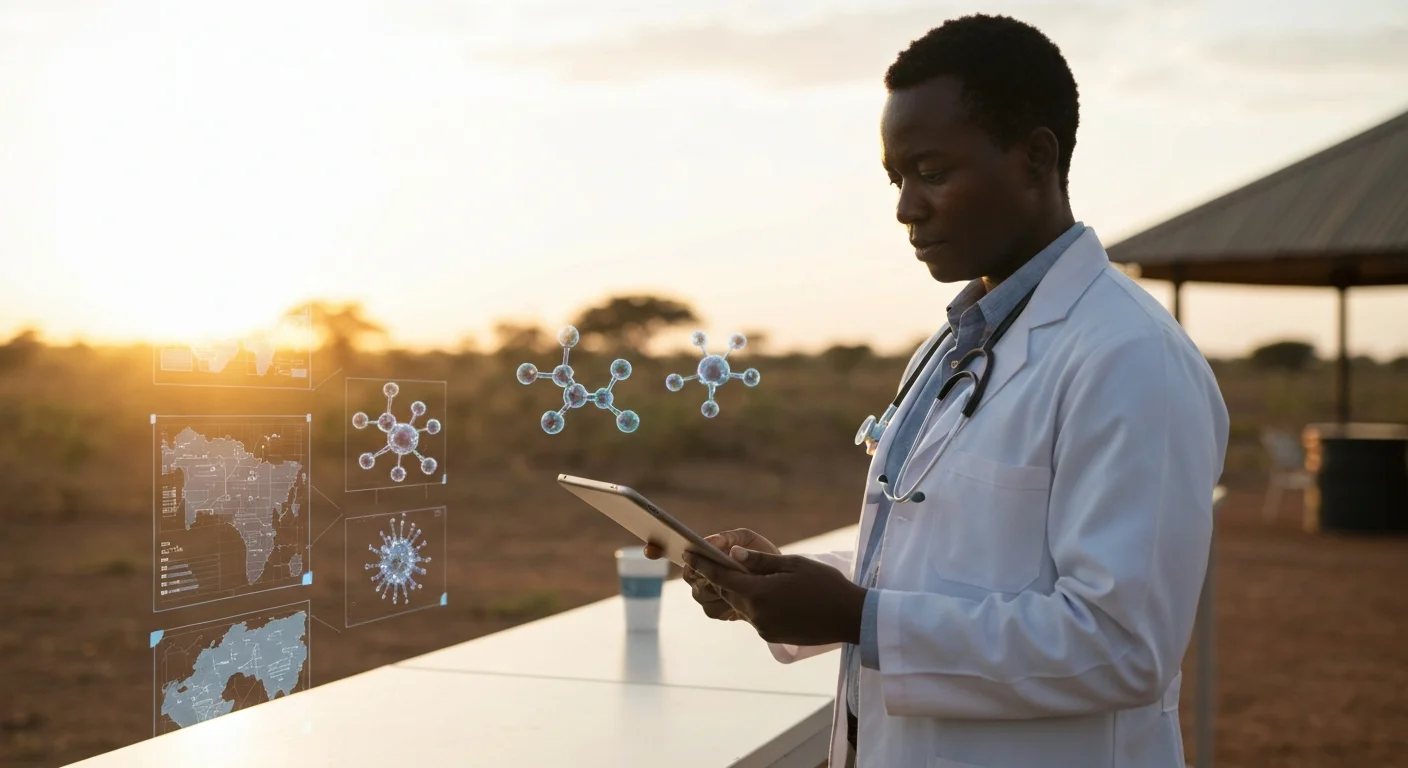
Anthropic and the Gates Foundation announced a four-year, $200 million partnership on May 14, 2026 to deploy AI tools across global health, education, and economic mobility programs, marking one of the largest commitments yet to channel a frontier AI lab's technology toward public-interest work in low- and middle-income countries.
The commitment combines grant funding from the Gates Foundation with Claude usage credits and technical support from Anthropic staff. The two organizations also named the Institute for Disease Modeling and the Global AI for Learning Alliance as initial implementing partners, with additional collaborators expected to join during the rollout.
Health takes the largest share
The health portion of the partnership is positioned as the centerpiece. Anthropic's announcement says the largest tranche of work will target diseases that disproportionately affect low- and middle-income countries, where an estimated 4.6 billion people lack access to essential health services. Initial disease areas include polio, HPV, and eclampsia/preeclampsia, with broader work extending to malaria and tuberculosis.
The partnership describes plans to use Claude to help researchers screen vaccine and therapy candidates, build AI connectors and benchmarks for healthcare workflows, and help governments analyze health data faster. HPV alone is responsible for roughly 350,000 deaths annually, with about 90% concentrated in low- and middle-income countries, according to figures cited in the announcement.
Education and economic mobility
Beyond health, the partnership will co-develop K-12 education tools for use in the United States, sub-Saharan Africa, and India. Anthropic says the goal is to release public goods such as benchmarks, datasets, and knowledge graphs that any developer or government can use, rather than producing proprietary products locked to Claude.
A related strand of work focuses on language accessibility. Anthropic and the Gates Foundation plan to fund data collection and labeling for dozens of African languages and release the resulting datasets publicly so that other model developers can improve performance for underserved populations. Economic mobility programs will look at smallholder farming, where roughly 2 billion people earn a living, and at portable skills records and career-guidance systems for workers without access to formal credentialing.
The strategic context
For Anthropic, the announcement lands during an unusually active stretch of partnerships. The lab has spent recent weeks rolling out enterprise tie-ups including Claude for Small Business with Workday and LISC, a Wall Street push with Moody's and Microsoft 365, and large compute deals. Pairing those commercial moves with a high-profile philanthropic partnership reinforces the company's positioning as a developer of "beneficial" AI, a framing Anthropic leans on in regulatory conversations in Washington and Brussels.
For the Gates Foundation, the partnership extends an AI strategy that began with smaller pilot grants in 2023 and 2024. Reporting from PYMNTS and Yahoo Finance notes that the foundation's stated preference is to avoid proprietary lock-in by funding public datasets and infrastructure that any AI vendor can build on, an emphasis reflected in the public-goods framing of this round.
What to watch
The most concrete near-term deliverables flagged so far are public benchmarks and datasets, model evaluations for health and education tasks, and tools built with the Institute for Disease Modeling. Whether those public outputs materialize quickly will be one early test of how different this partnership is from the broader run of vendor-specific AI deployments in the public sector.