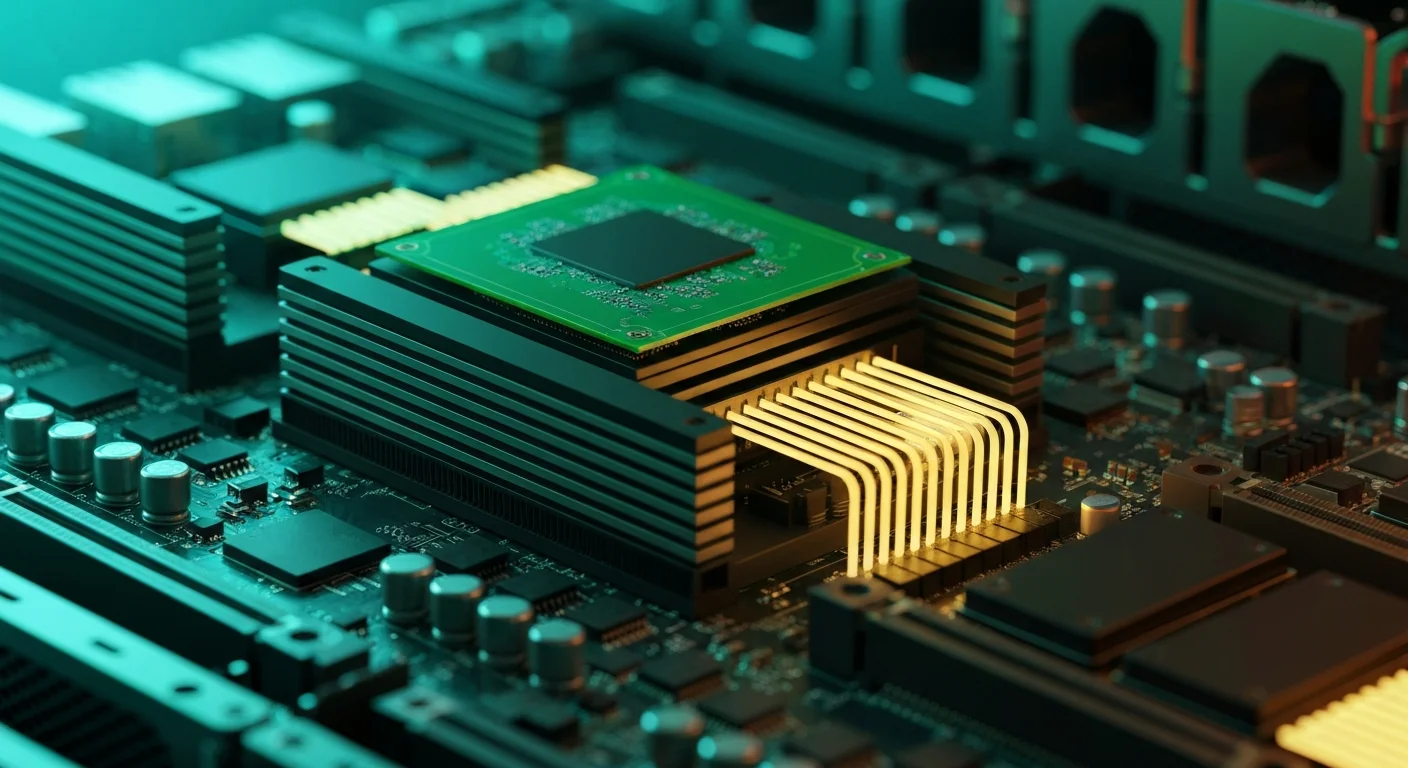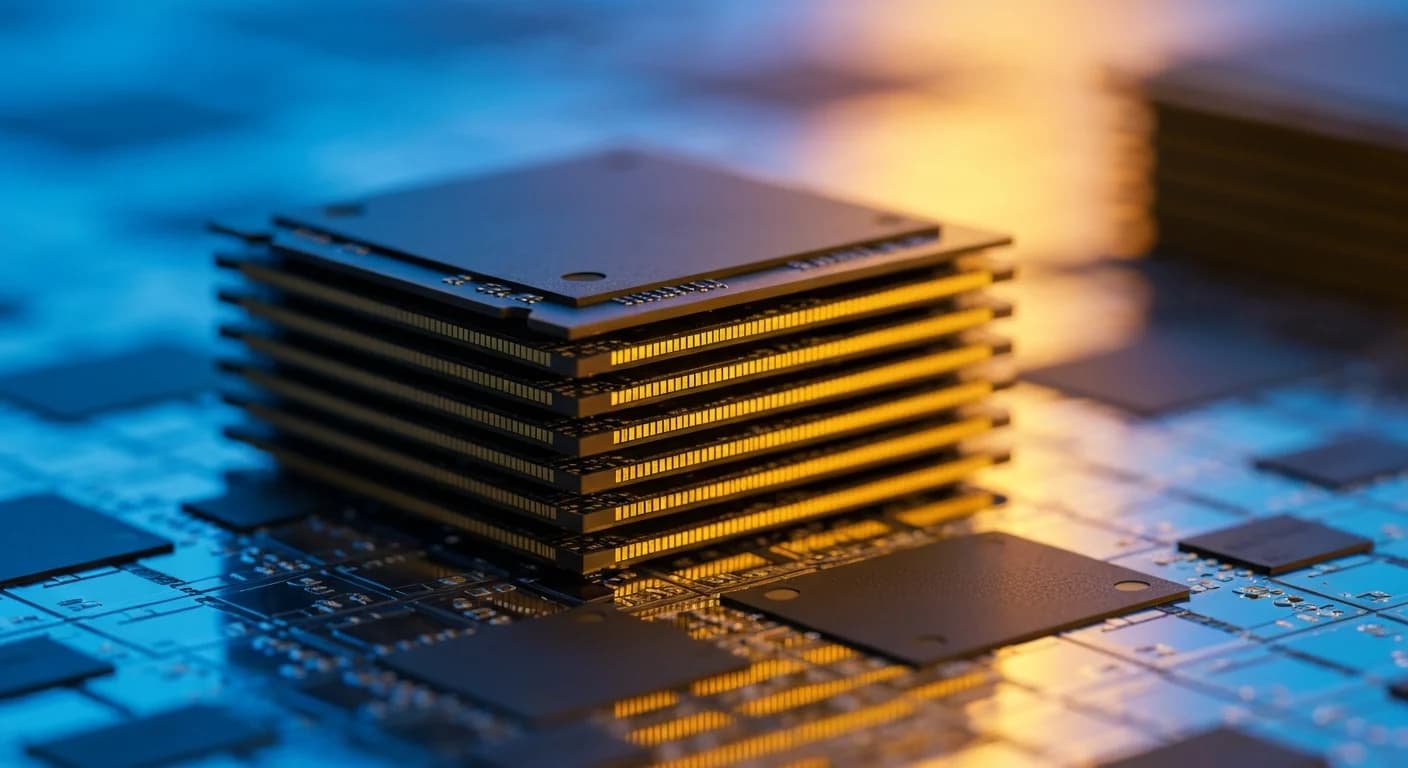
The Roundhill Memory ETF (DRAM) crossed $6.5 billion in assets under management within 36 trading days of its April 2, 2026 launch — the fastest ETF on record to reach that milestone. The fund had crossed $1 billion after 10 trading days and $5 billion after 25, and has roughly doubled in price since launch, with reported 2026 gains tracking near 100%.
The vehicle is a pure-play bet on the thesis that memory, not GPUs, is now the binding constraint on AI infrastructure expansion.
Memory as the New Choke Point
"Investors are waking up to the fact that the biggest bottleneck in the AI build-out is actually memory chips," Roundhill CEO Dave Mazza told CNBC on May 15. He added: "Memory has been identified as the clear AI bottleneck, and there is a shortage of these chips that is going to last not for a quarter but multiple years."
The argument has been gaining traction across hyperscaler earnings. Microsoft's recent capex revision to $190 billion for 2026 attributed roughly $25 billion of the increase to memory and component price inflation. High-bandwidth memory used in Nvidia and AMD accelerators has been the sharpest mover, with HBM stacks reportedly sold out across vendors well into next year.
The Three-Vendor Lock
DRAM's portfolio reflects how concentrated the supply side has become. As of May 8, 2026, the top three holdings were approximately Samsung at 25%, SK hynix at 24%, and Micron at 24% — collectively about three-quarters of the fund. Those same three names control essentially all HBM3E and HBM4 production capacity scheduled to ship into AI accelerator platforms through 2027. (Weightings fluctuate daily; see Roundhill's official holdings page for current values.)
That concentration is what makes the trade structurally different from a broad semiconductor index. Where logic foundry capacity has multiple expansion paths (TSMC, Intel, Samsung Foundry, emerging Chinese fabs), HBM is a three-player oligopoly with capital-intensive, multi-year ramp cycles.
What Changes for Builders
For teams running production inference at scale, the memory squeeze is showing up in three places: lead times on H200 and MI300X-class systems stretching past two quarters, hyperscaler API pricing holding firm despite competitive pressure, and a re-emergence of efficiency-first model architectures — sparse MoE, KV-cache compression, and quantization techniques like Google's TurboQuant — being prioritized over raw parameter counts.
It also reshapes the AMD-versus-Nvidia debate. Both vendors are HBM-constrained at the wafer-back-end level, so accelerator choice increasingly reduces to which supplier got which memory allocation in which quarter.
The Read
A $6.5 billion thematic ETF reaching that scale in 36 days is itself a signal: capital is rotating away from the assumption that AI capex is bottlenecked by GPU compute, and toward the view that the binding constraint sits one layer deeper in the bill of materials. For enterprise buyers locking in 2027 capacity, the practical implication is that HBM allocation negotiations now matter as much as GPU SKU selection.