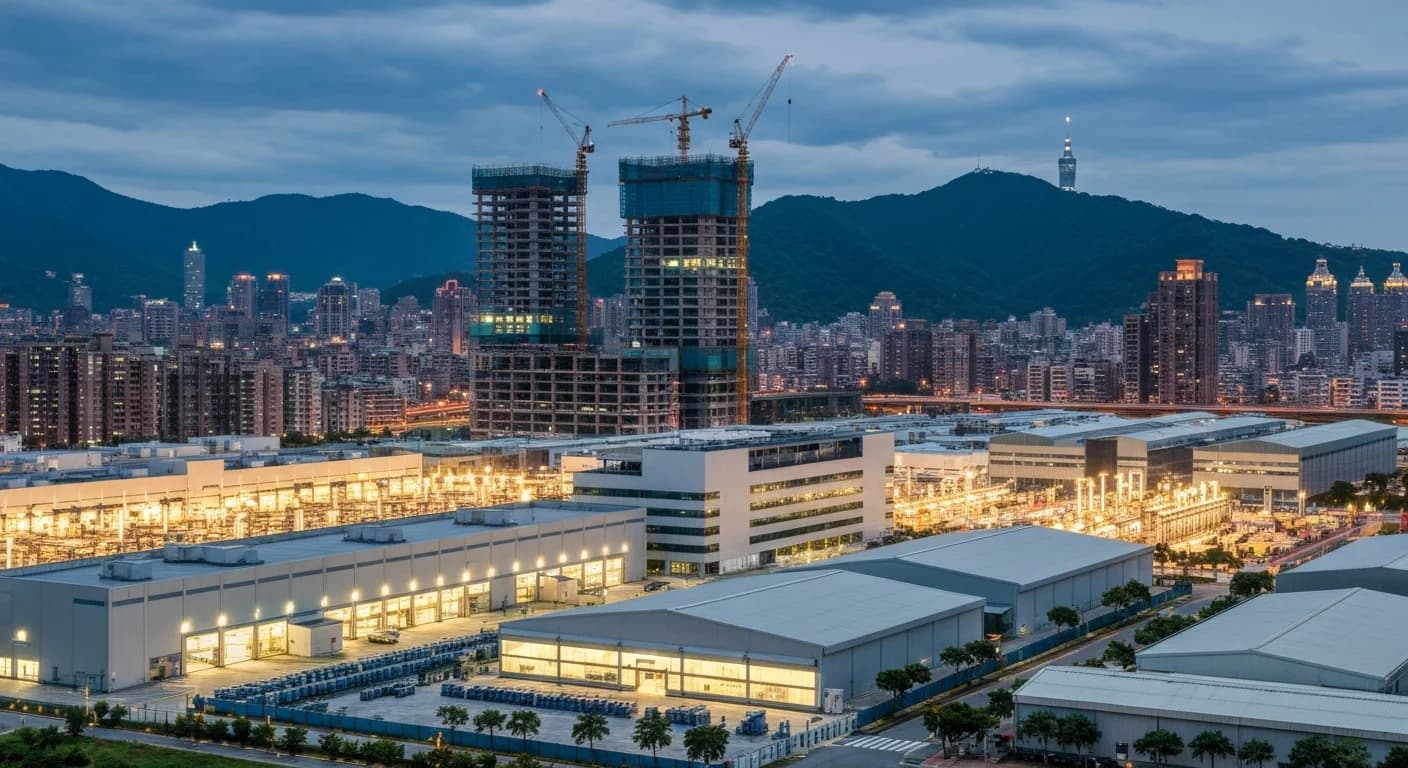
Jensen Huang said in Taipei on May 27 that Nvidia is now spending around $100 billion a year in Taiwan and intends to push that figure to $150 billion annually — roughly a tenfold jump from the $10–15 billion the company spent in the region four to five years ago. The disclosure, made ahead of Computex 2026, sent Taiwanese chip and supply-chain stocks higher.
"Taiwan is booming," Huang said, calling the island "the epicenter of the AI revolution" and "the manufacturing, the technology, electronics manufacturing hub for the world."
The number behind the number
The $150 billion run-rate is not a single capital project — it is Nvidia's aggregate annual spend across the Taiwanese ecosystem that turns its designs into shippable systems: TSMC for leading-edge fabrication and advanced packaging, Foxconn for assembly, plus the long tail of substrate, optics, power, and cooling suppliers. For buyers waiting on Blackwell and the incoming Rubin generation, that spend is the clearest signal yet of how Nvidia plans to clear the supply bottleneck that has defined the past two years.
The headline purpose of Huang's visit was a meeting with TSMC chairman C.C. Wei to lock in production commitments for the Vera Rubin platform. Each Vera Rubin NVL72 configuration connects 36 Vera CPUs and 72 Rubin GPUs, contains close to two million parts, and pulls from roughly 150 Taiwanese supply-chain partners — a complexity that makes the wafer and packaging allocation Huang is securing the gating factor for 2027 deliveries.
Constellation: a physical bet on Taipei
Nvidia also confirmed it will break ground by the end of the year on Constellation, a new office complex in Taipei's Beitou-Shilin Technology Park. The campus is designed to accommodate about 4,000 employees when it opens in 2030, with local officials citing more than 10,000 associated jobs. The build cements Taipei as an engineering hub rather than just a manufacturing one — a notable move as Washington pressures chip supply chains to diversify toward U.S. soil.
What changes for builders and buyers
The spend underscores a structural reality: compute capacity for the next two years is being negotiated now, in Taiwan, between Nvidia and a concentrated set of fabricators and assemblers. Enterprises modeling 2027 GPU availability should read the $150 billion commitment as both reassurance — Nvidia is funding the ramp aggressively — and a concentration risk, since the entire Rubin pipeline still routes through the same island and the same foundry.
For infra teams, the takeaway is to treat Vera Rubin allocation as a procurement question to settle early. Nvidia is putting nine figures a year behind the supply, but the same partners now feed every hyperscaler and sovereign buyer competing for the same racks.