The artificial intelligence boom is reshaping not just the tech industry but the physical landscape of rural America. As competition for power and water pushes data center construction further from cities, developers are building sprawling temporary worker villages — known as "man camps" — to house the armies of electricians, welders, and pipefitters needed to erect the next generation of AI infrastructure.
A $700 Billion Construction Wave
Bloomberg Intelligence estimates that roughly $700 billion worth of data center projects are currently in the planning stage, with another $160 billion already underway throughout the United States. The sheer scale of this buildout, driven by insatiable demand for AI training and inference compute, has created a construction labor crisis in remote locations.
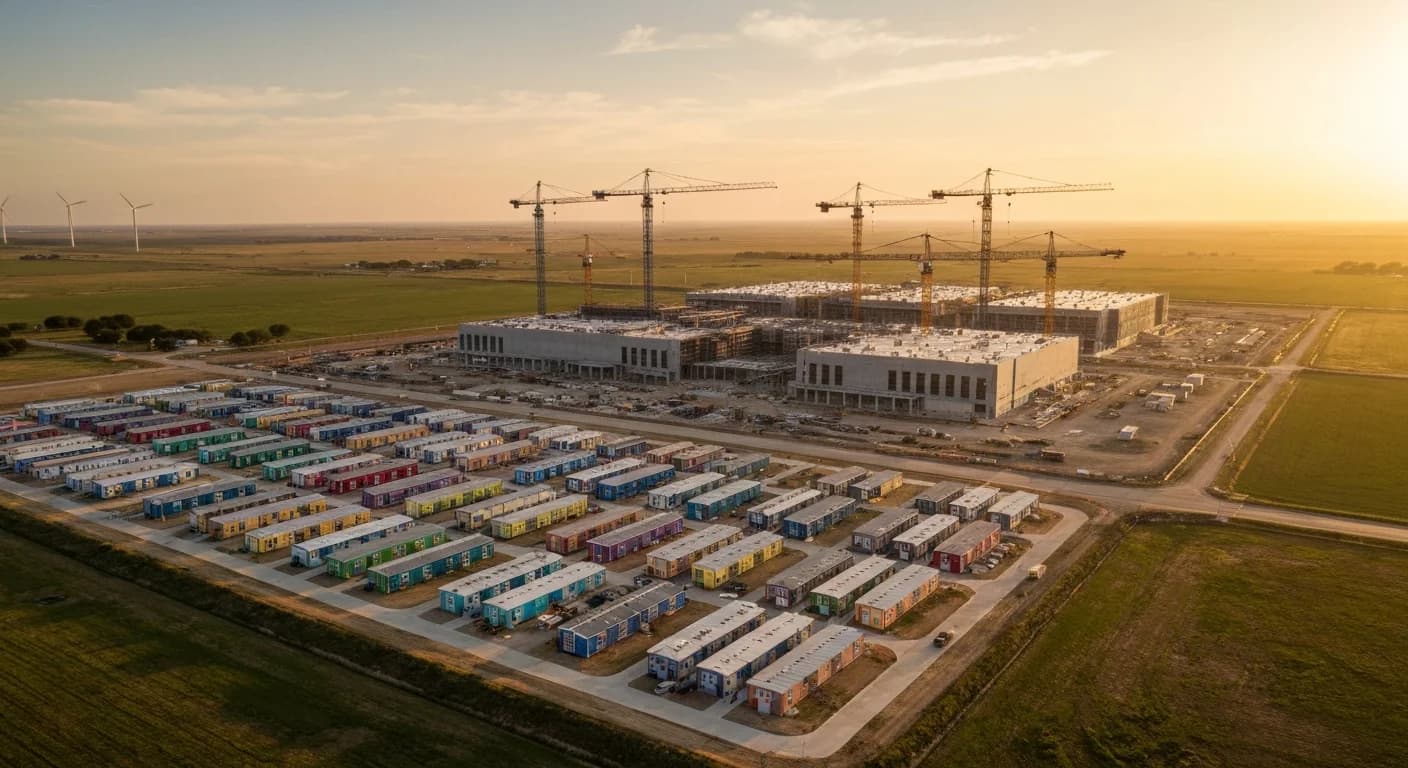
In Dickens County, Texas, a camp is being built to house and entertain over 1,000 workers needed for a massive 1.6-gigawatt data center. Target Hospitality, which specializes in mobile workforce housing, has signed contracts worth $132 million to build and operate the facility.
Luring Scarce Labor
To attract in-demand skilled tradespeople, these camps have evolved well beyond basic trailers. Developers are offering game rooms, free rib-eye steaks, golf access, and shuttle rides to work sites. The accommodations range from containerized modular homes to wood-framed two-story apartment buildings, all supplied with electricity, water, and increasingly, resort-style amenities.
The competition for workers is fierce. With multiple gigawatt-scale projects breaking ground simultaneously across Texas, Virginia, and the Midwest, companies are racing to offer the most attractive living conditions to secure labor commitments.
Controversial Operators
The boom has drawn attention — and criticism — for some of the companies entering the space. Target Hospitality Corp. and Civeo Corp., which have backgrounds in oil-field housing and immigration detention facilities, are now pivoting to serve the AI data center market. The involvement of operators with ties to ICE detention facilities has raised concerns about labor conditions and the ethics of the companies profiting from the AI infrastructure rush.
The Bigger Picture
These temporary villages represent a tangible, ground-level consequence of the AI investment surge. While tech executives discuss trillion-dollar spending forecasts and next-generation model capabilities, thousands of construction workers are living in prefab housing in remote towns, physically building the compute infrastructure that powers it all. The man camp phenomenon underscores just how material and resource-intensive the AI revolution has become — extending far beyond Silicon Valley into the fields of rural America.