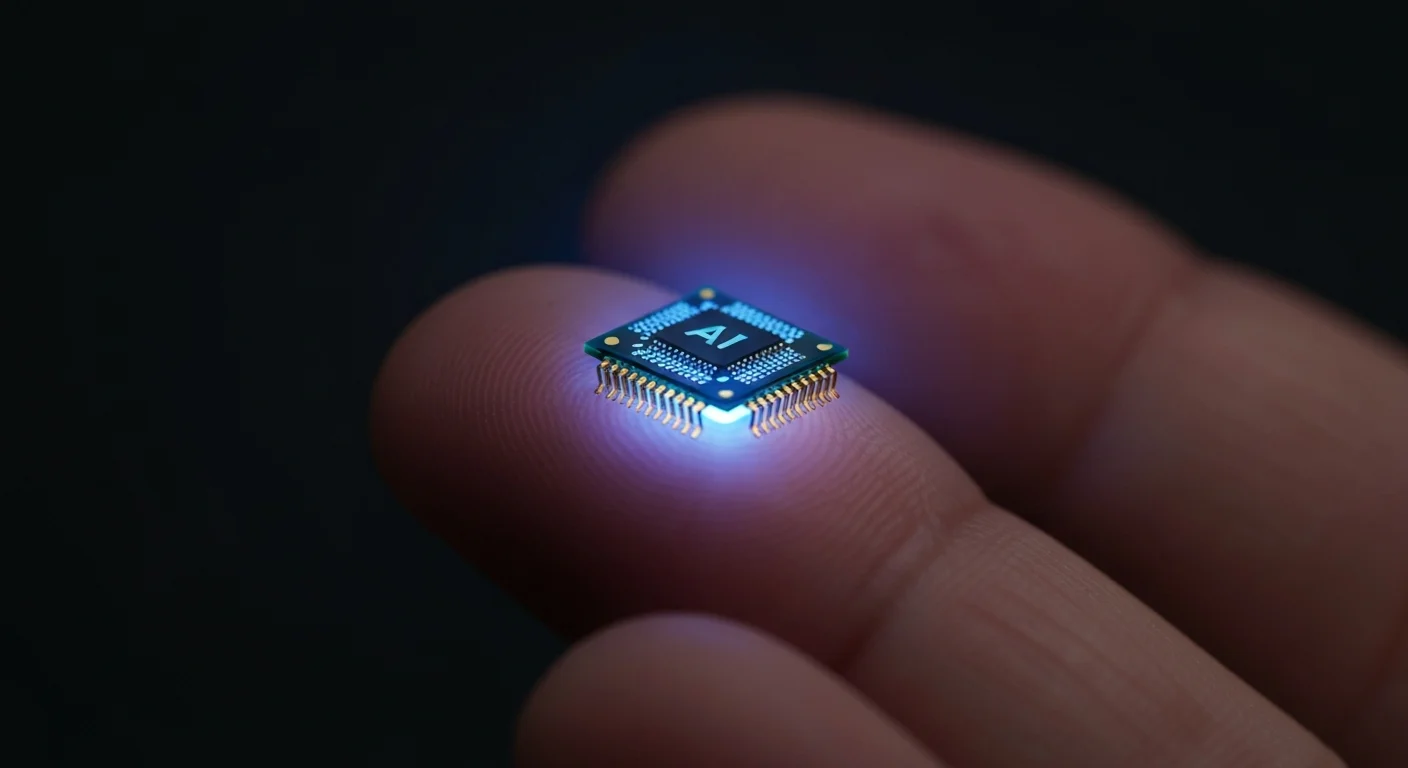
Alibaba's Qwen 3.5 Small Models Beat GPT-Class Performance on Your Laptop
Alibaba's Qwen team has completed a rapid-fire release of nine models in sixteen days, capping the series with four compact models that are turning heads across the open-source AI community. The Qwen 3.5 Small series — spanning 0.8B to 9B parameters — delivers performance that was frontier-tier just twelve months ago, and it runs on hardware you already own.
The Lineup
The four models cover a range of on-device use cases:
- Qwen3.5-0.8B — Ultra-lightweight for mobile and IoT applications
- Qwen3.5-2B — Edge devices and real-time assistants
- Qwen3.5-4B — Multimodal base for lightweight AI agents with a 262,144 token context window
- Qwen3.5-9B — The flagship small model, outperforming OpenAI's gpt-oss-120B on key third-party benchmarks
All four share the same architecture and support native multimodal processing — text and images within a single model, not separate bolted-on vision modules.
Why This Matters
The Qwen 3.5-9B is the headline. A nine-billion parameter model matching or beating a 120-billion parameter model is not an incremental improvement — it is a fundamental shift in what "small" models can do. Elon Musk publicly highlighted the release, calling attention to the "intelligence density" Alibaba has achieved.
For developers, this means capable AI that runs locally without cloud API costs. For enterprises, it means deploying AI agents on edge infrastructure without sending sensitive data to external servers. For the broader industry, it confirms that the race is no longer about who can build the biggest model — it is about who can pack the most capability into the smallest package.
The Bigger Picture
Alibaba released these models under Apache 2.0 licenses, the most permissive open-source terms available. Combined with the earlier Qwen 3.5 Medium series — which VentureBeat reported offers Claude Sonnet 4.5-level performance on local hardware — Alibaba is building a comprehensive open-source stack that covers everything from phone-scale inference to production-grade deployment.
The message is clear: frontier AI performance is commoditizing faster than anyone expected, and the companies that win will be the ones that make it accessible, not the ones that keep it behind API paywalls.