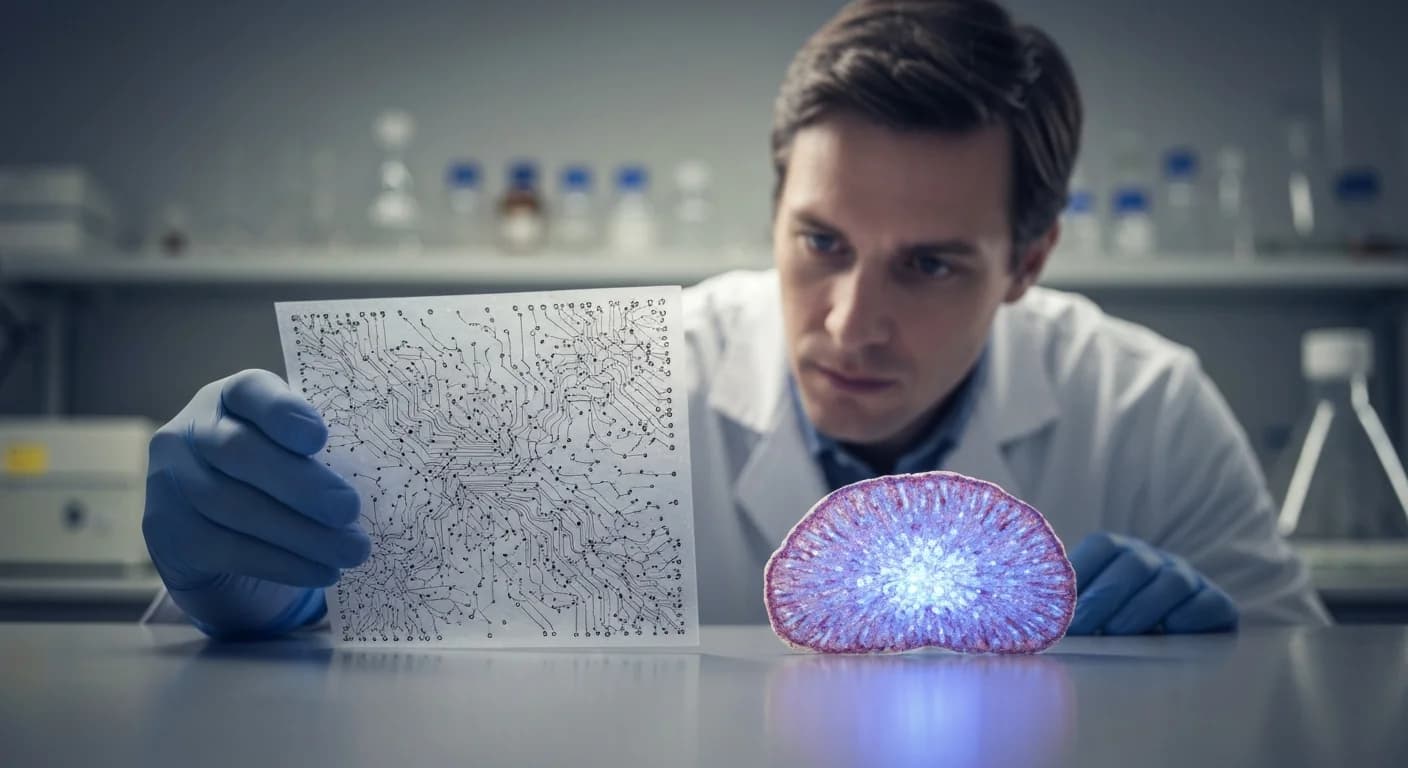
DeepMind has released AlphaFold 3, a major update to its protein structure prediction system that extends far beyond its predecessors. The new model can predict the interactions between proteins, DNA, RNA, and small molecules — a capability that could dramatically accelerate drug discovery.
Beyond Protein Folding
While AlphaFold 2 revolutionized structural biology by predicting protein structures, AlphaFold 3 takes a much broader approach. It models the full complexity of molecular biology, including how different types of molecules interact with each other.
This is critical for drug discovery because most drugs work by binding to specific proteins. Understanding how a potential drug molecule interacts with its target protein — and with other molecules in the body — is essential for predicting efficacy and side effects.
Key Capabilities
Protein-Ligand Interactions
AlphaFold 3 can predict how drug-like molecules bind to protein targets with accuracy that rivals experimental methods. This could reduce the time and cost of early-stage drug screening by orders of magnitude.
Protein-DNA Interactions
The model can predict how proteins interact with DNA, which is crucial for understanding gene regulation and developing gene therapies.
Antibody Design
AlphaFold 3 includes specialized capabilities for predicting antibody-antigen interactions, potentially accelerating the development of therapeutic antibodies.
Real-World Impact
Several pharmaceutical companies have already begun integrating AlphaFold 3 into their drug discovery pipelines. Early results suggest the tool can identify promising drug candidates in weeks rather than months.
Isomorphic Labs, DeepMind's drug discovery spin-off, is using AlphaFold 3 in its own drug development programs targeting diseases with limited treatment options.
Open Access
DeepMind has made AlphaFold 3 available through an updated AlphaFold Server, allowing researchers worldwide to access its predictions — though rising AI salaries continue to drain talent from academic science, potentially limiting the research community's ability to fully leverage these tools. The underlying model weights have also been released for academic use.
What This Means
AlphaFold 3 represents a shift from understanding biological structures to understanding biological processes. It joins other recent AI breakthroughs in scientific discovery, including AI-identified magnetic materials that could replace rare earth elements. As the tool matures, it could fundamentally change how we develop medicines, moving from trial-and-error approaches to computationally guided design.