China's export machine just posted one of its strongest months on record, and economists say the global artificial intelligence buildout is the reason. In an analysis published May 12, 2026, Bloomberg reported that the country is now earning on the order of $500 million an hour from overseas sales — a pace propelled by surging worldwide demand for the chips, servers and computers that feed AI infrastructure.
The numbers
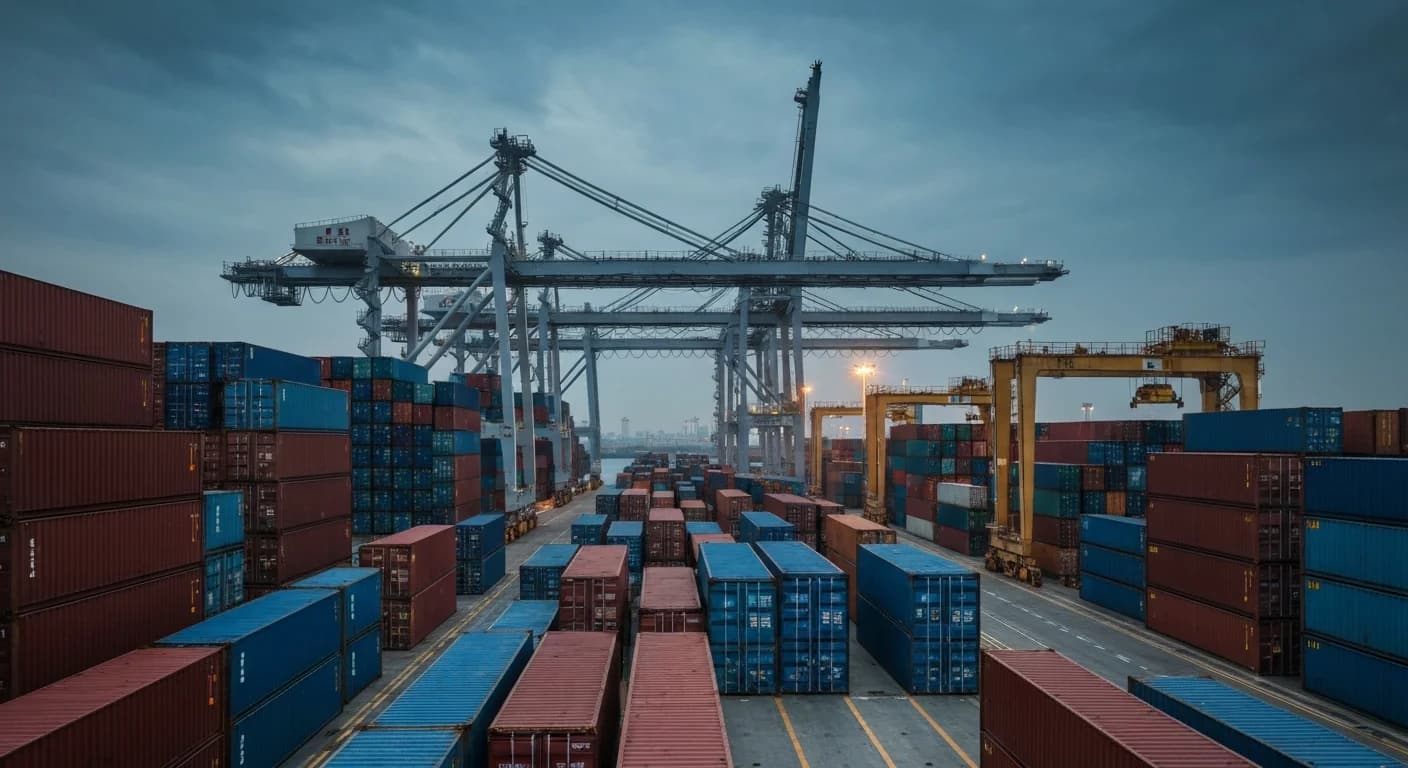
Chinese customs data showed exports rose 14.1% year over year in U.S. dollar terms in April, reaching a record of roughly $359 billion for the month. That far outpaced March's 2.5% gain and the roughly 7.9% increase economists had penciled in. Imports climbed even faster — up about 25.3% — leaving a trade surplus near $84.8 billion.
Crucially, the growth wasn't broad-based consumer demand. Goldman Sachs and Nomura both estimate that semiconductors, computers and other AI-adjacent products accounted for about half of April's export growth. High-tech product exports came in around $104 billion for the month, with integrated-circuit shipments alone near $31 billion — extending a run in which Chinese chip exports have been climbing sharply through 2026 as Beijing pushes a "whole-nation" effort toward semiconductor self-reliance.
Why now
Two forces are stacking. First, the AI infrastructure race: hyperscalers, sovereign-AI projects and data-center operators worldwide are absorbing nearly every server, accelerator and networking component they can source. Second, stockpiling — with the Iran war stoking fears about shipping costs and parts availability, manufacturers have been pulling orders forward to lock in supply before input prices rise further.
A double-edged story for China
The export surge is a rare bright spot for an economy still working through a property hangover and soft domestic demand. But it also deepens China's exposure to a single, notoriously cyclical end-market. AI hardware demand has historically been lumpy, and a build-out pause — or a faster shift toward custom silicon designed in the U.S. — could leave Chinese factories facing the same overcapacity problem that has dogged solar panels and EVs.
Implications
- For the global AI buildout: Even under U.S. export controls, China remains a structural node in the hardware supply chain — much of what ships out is lower-end chips, advanced packaging, components and finished computers rather than cutting-edge GPUs.
- For trade politics: A 14%-plus export jump driven by AI gear lands awkwardly as Washington tightens controls and allies weigh their own restrictions; expect the figure to be cited in both directions ahead of any U.S.–China talks.
- For investors: The data reinforces that AI capex is now a macro variable, not just a tech-sector narrative — it is visibly moving a multi-trillion-dollar annual export number.
The takeaway: the AI boom isn't only reshaping Silicon Valley balance sheets. It's now showing up in national trade statistics — and right now, it's one of the biggest things keeping China's exports growing.