Israeli AI infrastructure lab Decart has closed a $300 million Series B at a valuation of nearly $4 billion, led by Radical Ventures with Nvidia, Adobe Ventures, Toyota Ventures, Atreides Management, Valor Equity Partners, and eBay Ventures joining alongside returning backers Sequoia Capital, Benchmark, and Zeev Ventures. The round, announced May 18, brings Decart's total funding to more than $450 million. OpenAI co-founder Andrej Karpathy participated as an angel investor.
The bet: world models off Nvidia, onto Trainium3
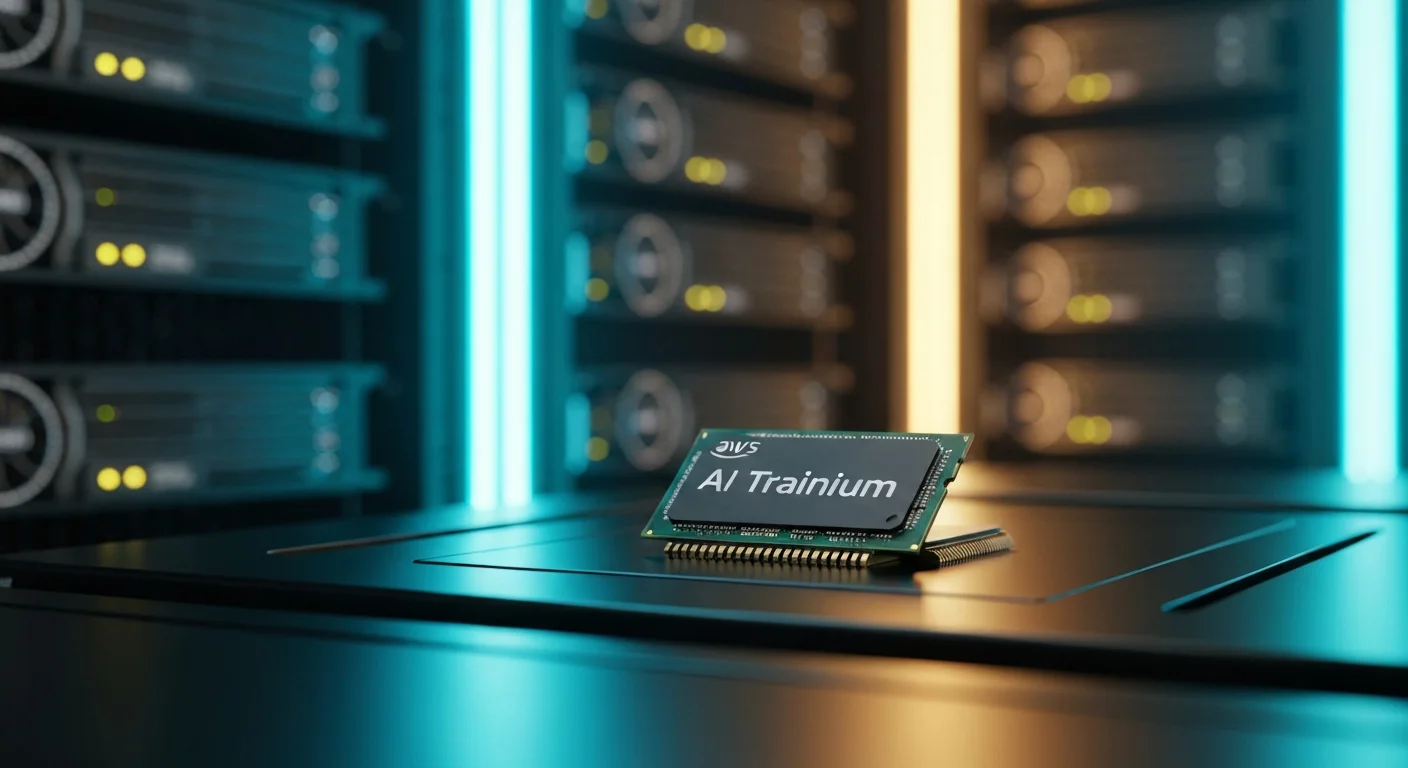
The headline technical claim of the round is Decart's deployment of its Lucy2 world model on AWS Trainium3, where the company reports it exceeds 80% Model FLOPs Utilization. That figure is unusually high for production inference and undercuts a long-standing assumption that frontier generative-video workloads have to sit on Nvidia silicon. Decart describes itself as one of the first labs to run real-time world models at this class of scale on Trainium hardware.
Three products, one optimization stack
Decart sells three software lines built on top of a shared optimization layer:
- DOS — an inference and training stack that the company says compresses multi-chip model optimization workflows from months to weeks. DOS 2.0 cites roughly 1,600 tokens per second of throughput for agents and reasoning models — about 8x what Decart calls the industry average — and up to 100 HD frames per second for world-model inference. DOS runs across Nvidia GPUs, Google TPUs, and AWS Trainium.
- Lucy — a real-time world model that ingests video and edits depicted objects on the fly. Decart points to virtual try-on, furniture generation, and synthetic robotics training data as early production use cases.
- Oasis — a 3D environment generator aimed at robotics and physical AI, including simulated warehouse logistics.
The company says it already books "significant revenue" from DOS licensing deals with cloud providers and AI labs, suggesting the infrastructure product — not the models — is where the near-term P&L sits.
What it changes for builders
For enterprise buyers and infra engineers, the round is another data point that the chip stack underneath frontier inference is starting to fragment in earnest. A vendor with credible Nvidia, TPU, and Trainium support — plus published MFU numbers — gives procurement teams a lever against capacity constraints and a hedge against single-vendor lock-in. For robotics and immersive-media teams, Lucy and Oasis sharpen the question of whether to keep building bespoke world-model pipelines or rent a real-time substrate from someone whose optimization stack is the actual product.