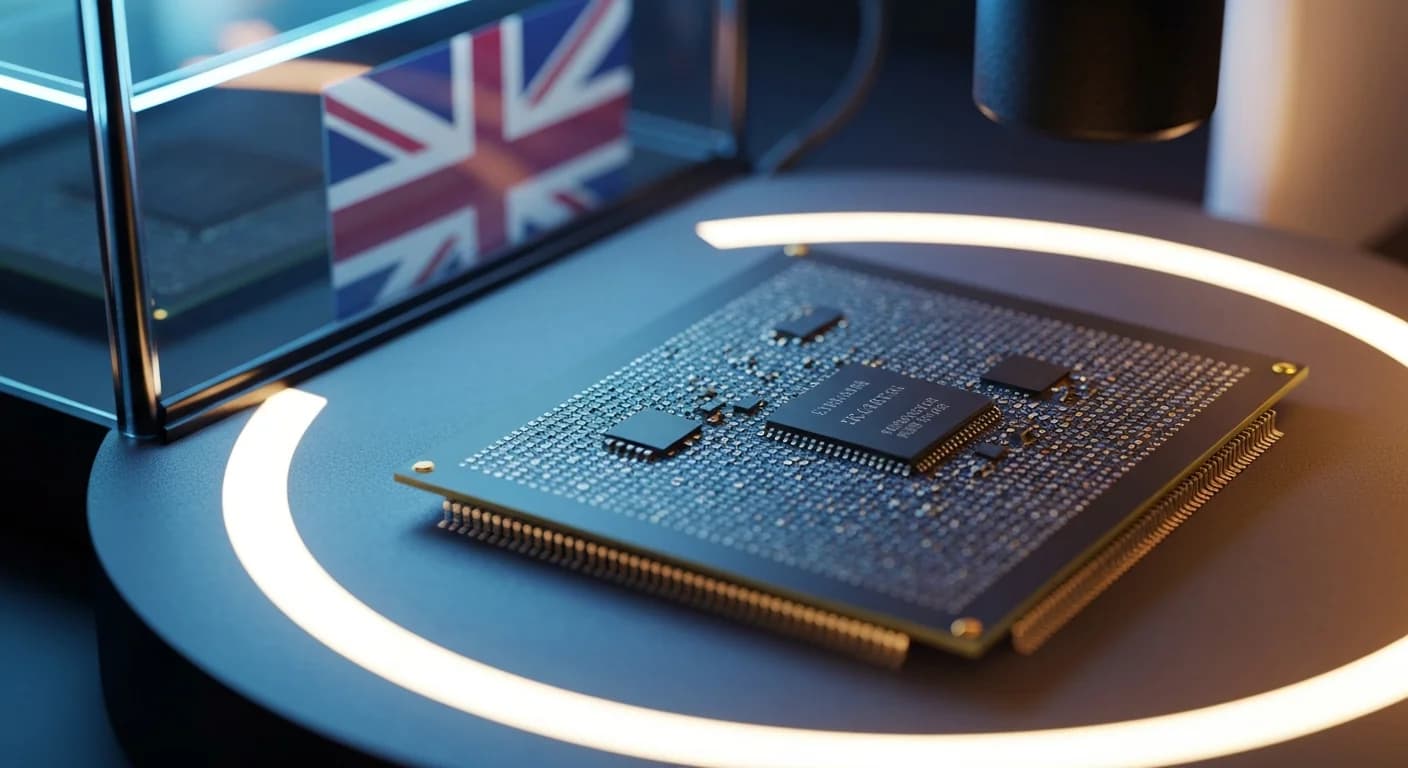
Fractile, a London-based AI chip startup, has closed a $220 million Series B led by Accel, Factorial Funds and Peter Thiel's Founders Fund, with Conviction, Felicis and 8VC also participating alongside existing seed backers Kindred Capital, the NATO Innovation Fund and Oxford Science Enterprises. Former Intel CEO Pat Gelsinger joined as an angel investor and operating adviser. The round reportedly values the company at roughly $1 billion post-money, its first formal entry into the unicorn bracket — and it lands as Anthropic is reported to be in early discussions to buy Fractile silicon once it ships.
In-memory compute, not another GPU clone
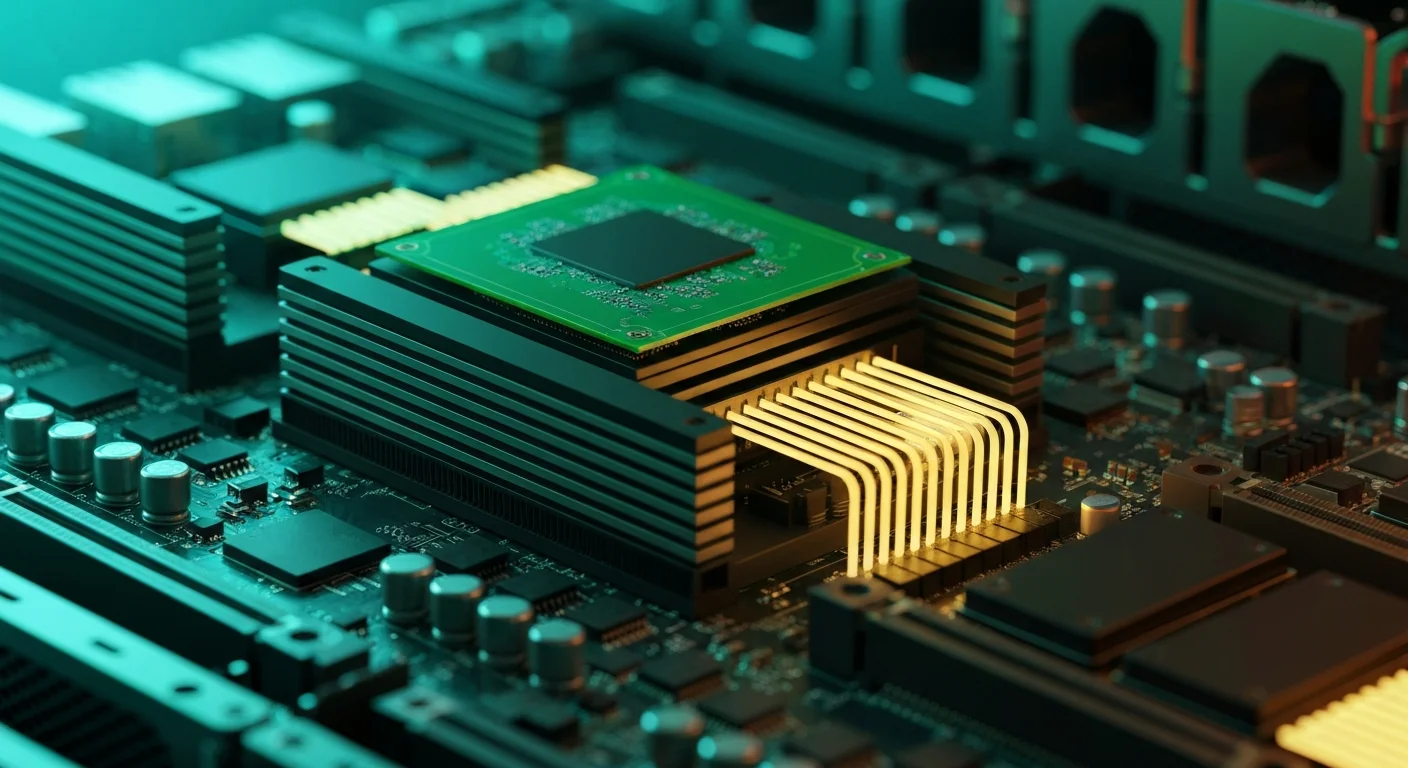
Fractile's pitch is architectural, not a packaging tweak. The company designs inference parts that perform matrix multiplications directly inside SRAM cells alongside the compute logic, eliminating most of the data movement between DRAM and tensor cores that dominates power and latency budgets on current accelerators. Investor materials cite up to 25x faster inference at roughly 10% of the operating cost of comparable GPU deployments. Earlier company decks pitched a 100x speedup and 10x cost reduction; the more recent number set is the one running in front of customers.
The first commercial part is targeted for 2027. That timeline matters: it places Fractile in the same window as Nvidia's Vera Rubin successor generation and the next round of custom silicon from Broadcom-Google, MediaTek-Meta and Marvell-Amazon.
The Anthropic angle
Anthropic's diligence on Fractile is the more consequential signal in the deal. Anthropic already runs Claude across three back-ends — Nvidia GPUs, Google TPUs, and AWS Trainium/Inferentia — and has publicly described compute diversification as a structural priority. Adding Fractile would make it a fourth supplier, and the first non-hyperscaler, non-Nvidia line in the mix. For an inference-heavy workload at Anthropic's scale, a 10x cost-per-token reduction is a multi-billion-dollar lever even at modest adoption.
For builders, the implication is narrower but worth tracking: a credible third architectural category for inference (alongside GPUs and TPU-style systolic arrays) means the cheapest tokens per dollar in 2027 may not run on hardware that today's serving stacks are tuned for.
What's actually shipping
Nothing, yet. Fractile is pre-revenue and pre-silicon at volume. The $220 million is Series B capital to tape out, qualify and pilot — not the Series C that funds a fleet. Founder Walter Goodwin, an Oxford Robotics Institute PhD in his late twenties, leads a team split between London and Bristol.
The round is also a vote on European silicon as a category. With Sarvam, Mistral, Nebius, Nscale and now Fractile pulling growth-stage capital this quarter, the assumption that frontier-scale inference infrastructure has to be designed and operated from the US is getting actively tested with real money.