Google's Android XR Glasses Demo Real-Time Translation at MWC — And the Lines Stretched for Hours
Mobile World Congress 2026 in Barcelona had no shortage of AI announcements. But one demo dominated the conversation: Google's prototype Android XR smart glasses translating live speech into floating subtitles — in real time, right in the lens.
What Google Showed
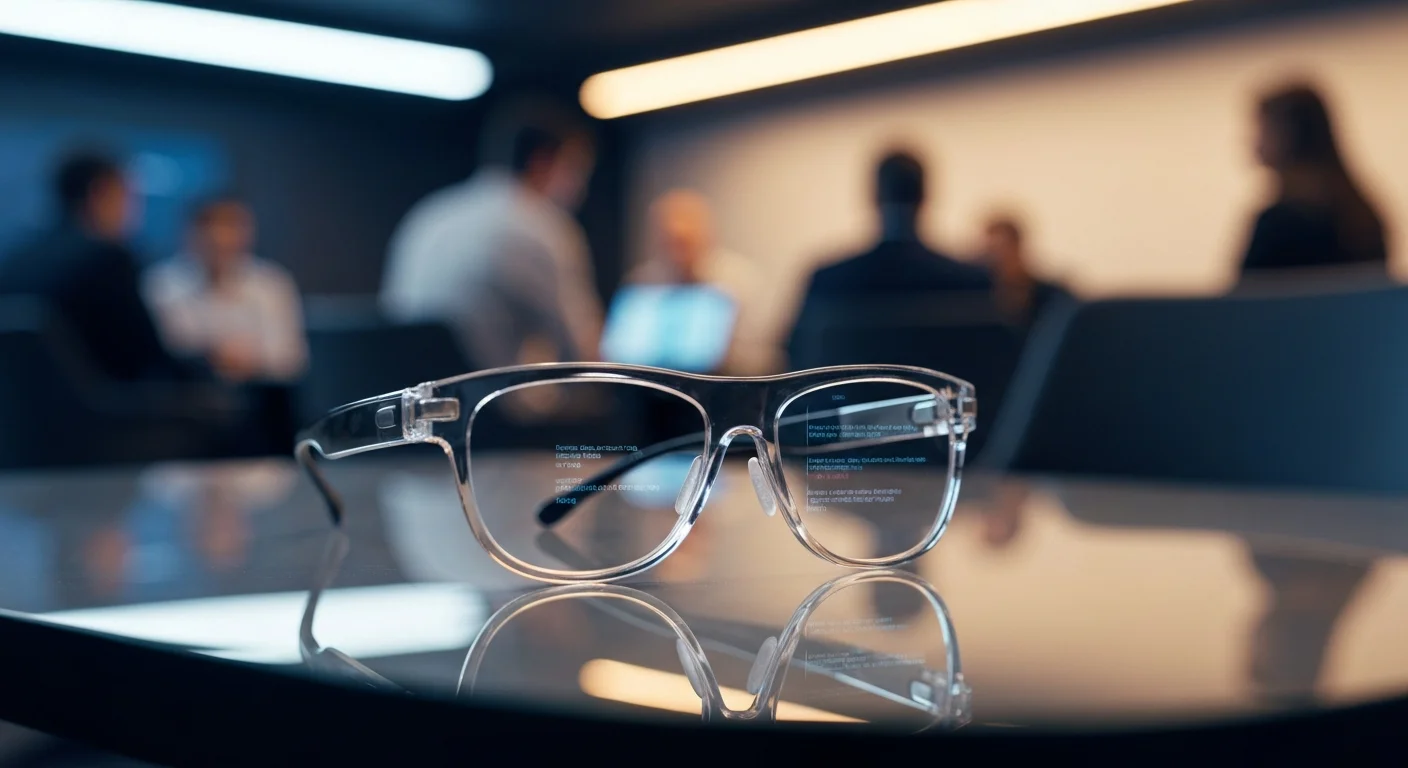
The demo was deceptively simple. A speaker talks in one language. The person wearing the glasses sees translated subtitles appear in their right lens with smooth, low-latency rendering. The speaker's actual voice and tone are preserved — no robotic text-to-speech replacement.
But the glasses did more than translate. Navigation arrows overlaid on the real world reversed direction instantly when the wearer turned around. Circle to Search let users look at someone's outfit and find similar clothing online. A city exploration mode surfaced contextual information about surroundings, backed by Gemini.
Wait times to try the demo reached two hours. Google's booth became the most visited attraction at MWC.
The Partnership Stack
Google is not building this alone. Samsung is co-developing the hardware and has committed to launching Android XR glasses in 2026. Warby Parker and Gentle Monster are handling eyewear design — a signal that Google wants these to look like actual glasses, not a tech prototype strapped to your face.
The software runs on Android XR with deep Google services integration: Maps, Search, Gemini, and the full Android app ecosystem. This gives Google's glasses an immediate software advantage over Meta's Ray-Ban smart glasses, which rely on Meta's more limited AI assistant.
The Competitive Landscape
MWC 2026 became an unexpected battleground for smart glasses. Alibaba set up a competing booth showcasing its own AI glasses vision. Qualcomm announced the Snapdragon Wear Elite chip specifically targeting AI wearables — glasses, pendants, and pins rather than traditional smartwatches.
The race is shifting from smartphones to faces. Apple is reportedly working on its own smart glasses following Vision Pro, and Meta continues iterating on Ray-Bans. But Google's MWC demo set the bar: real-time, in-lens AI that actually works in conversational settings.
What This Means
Smart glasses have failed before — Google Glass in 2013 being the cautionary tale. The difference now is that the AI is genuinely useful. Real-time translation alone is a killer feature for travelers, international business, and multilingual communities. If Google can ship this at a reasonable price point in 2026, it could define the next computing platform.