Nebius will pay Bloom Energy up to $2.6 billion in aggregate service fees for roughly 250 MW of guaranteed on-site power, under a Master Fuel Cell Capacity Agreement disclosed in a regulatory filing and joint release on May 20. The structure is the story: instead of buying grid power, the AI cloud operator is buying behind-the-meter generation it can switch on without an interconnection queue. Bloom shares rose about 12% and Nebius climbed roughly 17% in May 21 trading.
The terms
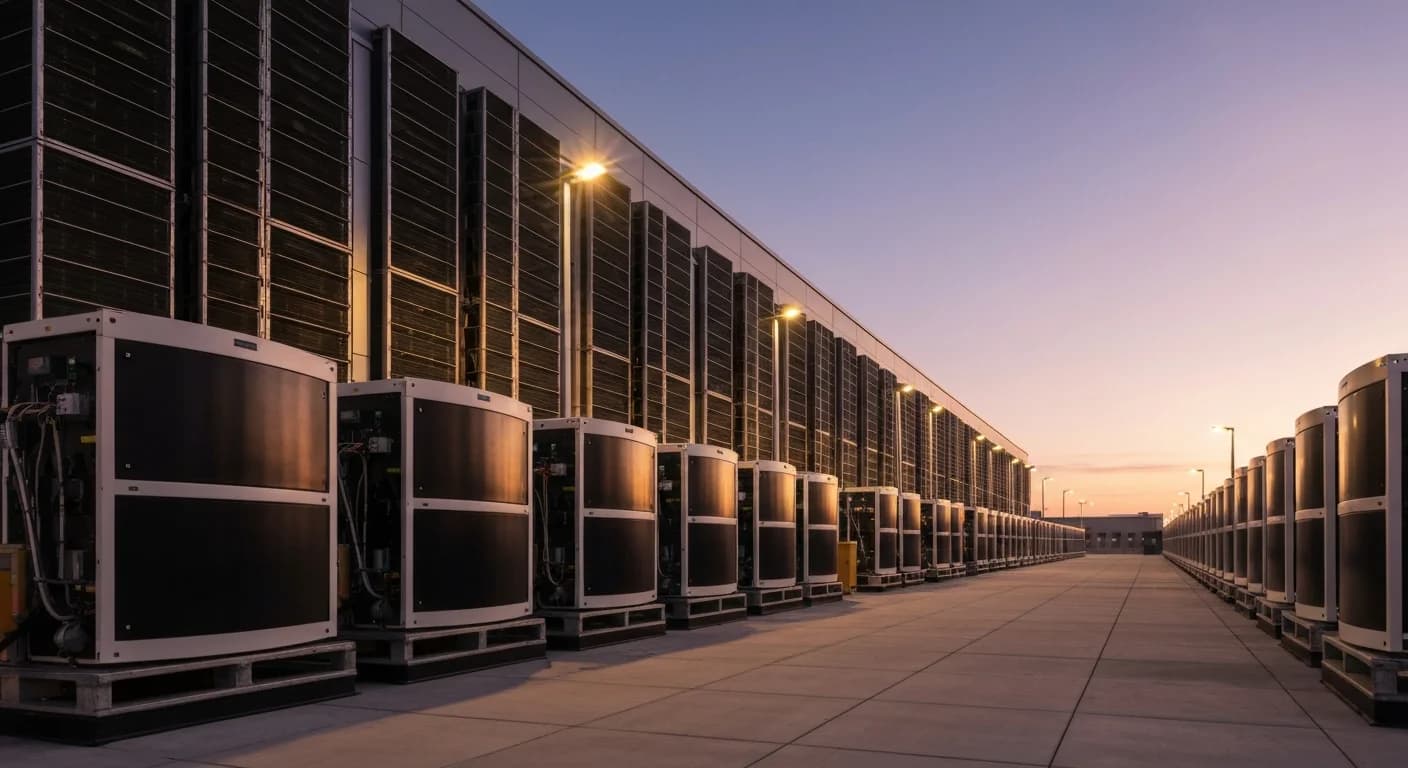
The agreement covers approximately 328 MW of installed system capacity delivering ~250 MW of guaranteed output, rolled out in three phases, each with a 10-year supply term. Nebius purchases the capacity and the associated electricity; Bloom installs, operates, and maintains the solid oxide fuel cell systems. The initial deployment lands at a site in Independence, Missouri, where construction is slated to begin in 2026. Notably, Nebius had originally planned conventional gas turbines at that location and switched to fuel cells.
Power is the binding constraint
The swap is the practitioner takeaway. Dense GPU clusters need large, steady supply, and the wait for new U.S. grid connections now stretches years. On-site fuel cells sidestep that queue and can be brought online roughly in step with the racks they feed. "Power remains a key constraint," Nebius's Andrey Korolenko said. Bloom CEO K.R. Sridhar framed the company as the "go-to choice" for on-site power — positioning that, after the stock move, the market is now pricing in.
This is the same calculus driving the sector's wider energy scramble — NextEra's $67B move for Dominion, the Blackstone–Google TPU venture's 500 MW target — but Bloom's behind-the-meter model is a different lever: generation that ships with the data center rather than waiting on utility timelines.
The financial backdrop
Nebius is spending into a steep revenue ramp. Its Q1 2026 AI cloud revenue surged 684% year over year, with capex reported near $25 billion, after raising $4.34 billion in convertible debt in March and taking a $2 billion Nvidia investment. Bloom posted Q1 2026 revenue of $751.1 million, up about 130% year over year, and lifted its 2026 growth guidance to roughly 80% — figures that suggest fuel-cell demand from AI buildouts is already material to its book, not speculative.
What changes for builders
For anyone planning capacity, the deal validates on-site generation as a deployment-speed lever, not just an ESG line item. When the bottleneck is megawatts and lead time rather than chips, controlling your own power source — and contracting it in 10-year tranches tied to phased build-out — becomes part of the infrastructure stack. Expect more AI operators to underwrite generation directly rather than wait on the grid.