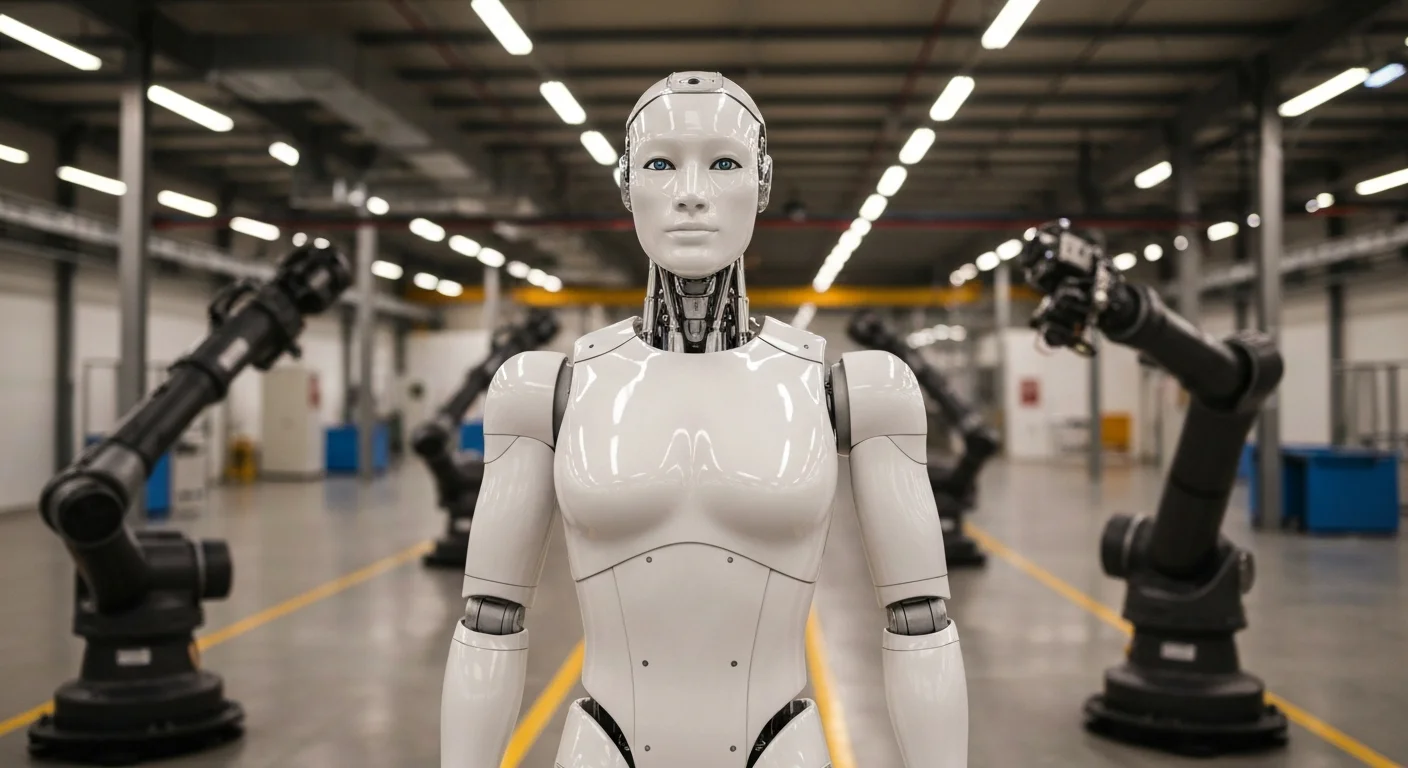
NVIDIA used its GTC 2026 keynote in San Jose to unveil GR00T N2, a next-generation robot foundation model that signals a decisive push to bring physical AI out of research labs and into real-world factories, hospitals, and entertainment venues.
A New Architecture for Robot Intelligence
GR00T N2 is built on NVIDIA's DreamZero research and introduces a "World Action Model" architecture — a system that allows robots to effectively "dream" the correct future in video pixels before executing a task. The underlying DreamZero model is a 14-billion parameter foundation model capable of interpreting simple text commands and performing tasks it has never been explicitly trained for.
The results are striking. According to NVIDIA, robots running GR00T N2 complete new tasks in unfamiliar environments more than twice as often as leading vision-language-action models. The model currently ranks first on both the MolmoSpaces and RoboArena benchmarks for generalist robot policies.
From Data Problem to Compute Problem
One of the most significant strategic shifts NVIDIA outlined at GTC is reframing robotics' longstanding data bottleneck as a compute problem. Rather than relying solely on expensive real-world data collection, NVIDIA is investing in simulation pipelines and synthetic data generation to train robot models at scale.
DreamZero demonstrates this approach in practice. The model can transfer its knowledge to a completely new, unseen robot with only about 55 demonstration trajectories — roughly 30 minutes of a human teleoperating the machine. That dramatically lowers the barrier to deploying robots in new settings.
Industry Partnerships and the Olaf Moment
CEO Jensen Huang drove the point home with a memorable stage demo featuring Disney's Olaf character brought to life as an autonomous robot. The demonstration highlighted how GR00T N2 can power robots across entertainment, manufacturing, and healthcare applications.
NVIDIA announced partnerships with global robotics leaders to deploy physical AI systems in real-world environments. The full stack runs on NVIDIA Jetson modules at the edge for real-time inference, DGX-class systems for large-scale training, and NVIDIA Thor and IGX platforms for mission-critical robotics.
What Comes Next
GR00T N2 is expected to ship by the end of 2026, building on the early-access release of GR00T N1.7, which is already available with a commercial license for humanoid robots. As inference costs continue to fall with NVIDIA's new Vera Rubin hardware — also unveiled at GTC — the economics of deploying intelligent robots at scale are shifting rapidly in favor of adoption.
For an industry that has long promised autonomous machines, NVIDIA is betting that the combination of powerful foundation models, synthetic training data, and purpose-built silicon will finally close the gap between demo and deployment.