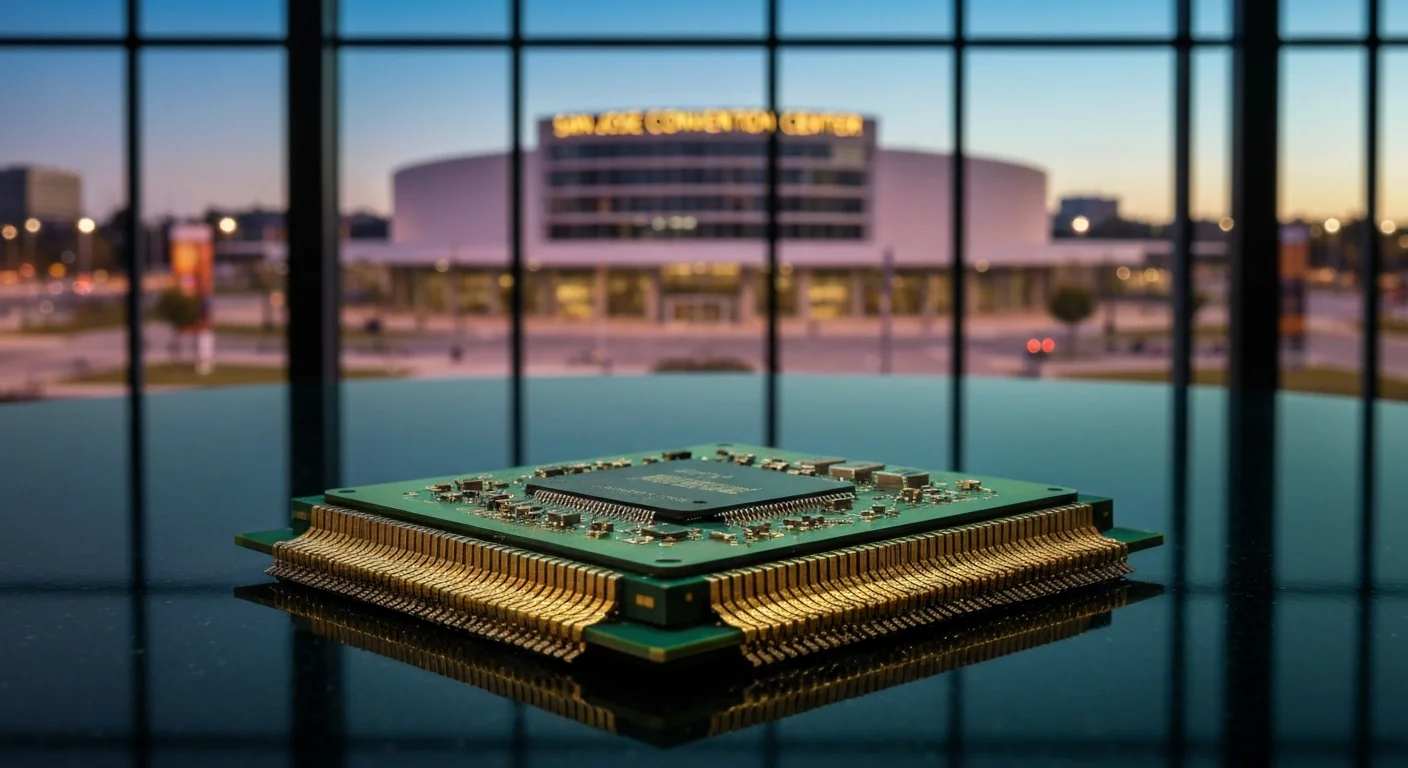
Nvidia is building anticipation for what could be one of the most consequential hardware reveals in recent AI history. Ahead of its GTC 2026 conference, scheduled for March 16-19 in San Jose, CEO Jensen Huang has promised attendees will witness a chip unveiling meant to "surprise the world" — a bold claim from a company whose products already power the vast majority of AI training infrastructure globally.
What We Know So Far
In an interview with The Korea Economic Daily, Huang confirmed that the mystery chip announcement would headline his keynote address on Monday, March 16 at 11 a.m. PT. Beyond that, details remain scarce. Nvidia has kept the product under tight wraps, fueling intense speculation across the semiconductor and AI industries.
The conference itself is shaping up to be massive. More than 30,000 attendees from over 190 countries are expected, with 1,000-plus sessions spanning the full AI stack — from silicon to software to deployment strategies.
The Current Landscape
Nvidia's existing Vera Rubin platform, unveiled at CES 2026 in January, already represents a generational leap, offering up to 10x lower cost per token and requiring 4x fewer GPUs to train equivalent models compared to the previous Blackwell architecture. The fact that Huang is teasing something beyond Rubin suggests the company may be targeting a different market segment or introducing an entirely new product category.
Analysts have floated several theories. Some believe the announcement could involve a dedicated inference chip designed to compete with custom silicon from Groq and other inference-focused startups. Others speculate it may be an edge AI processor targeting robotics and autonomous systems — aligning with Nvidia's growing push into physical AI.
Beyond the Chip
The keynote will cover far more than hardware. Huang is expected to address advancements in agentic AI systems, AI factory infrastructure, and physical AI applications including robotics. He will also host a discussion on the state of open frontier models with leaders from Andreessen Horowitz, AI2, Black Forest Labs, Cursor, Reflection AI, and Thinking Machines Lab.
This open-model panel is particularly notable given the ongoing debate about whether open-weight models can compete with closed frontier systems from OpenAI, Anthropic, and Google. Nvidia's positioning as a neutral infrastructure provider gives it unique convening power in this discussion.
Market Impact
Nvidia shares have already risen ahead of the conference, with investors pricing in the expectation of significant announcements. The company recently became the world's first to reach a $5 trillion market capitalization, and any product that expands its addressable market — particularly in inference, edge computing, or robotics — could further extend its dominance.
With competition intensifying from AMD, custom silicon efforts at Google and Amazon, and inference-focused startups gaining traction, the stakes for GTC 2026 could not be higher. Whatever Huang reveals on March 16, the AI hardware landscape may look very different by the time attendees head home on the 19th.