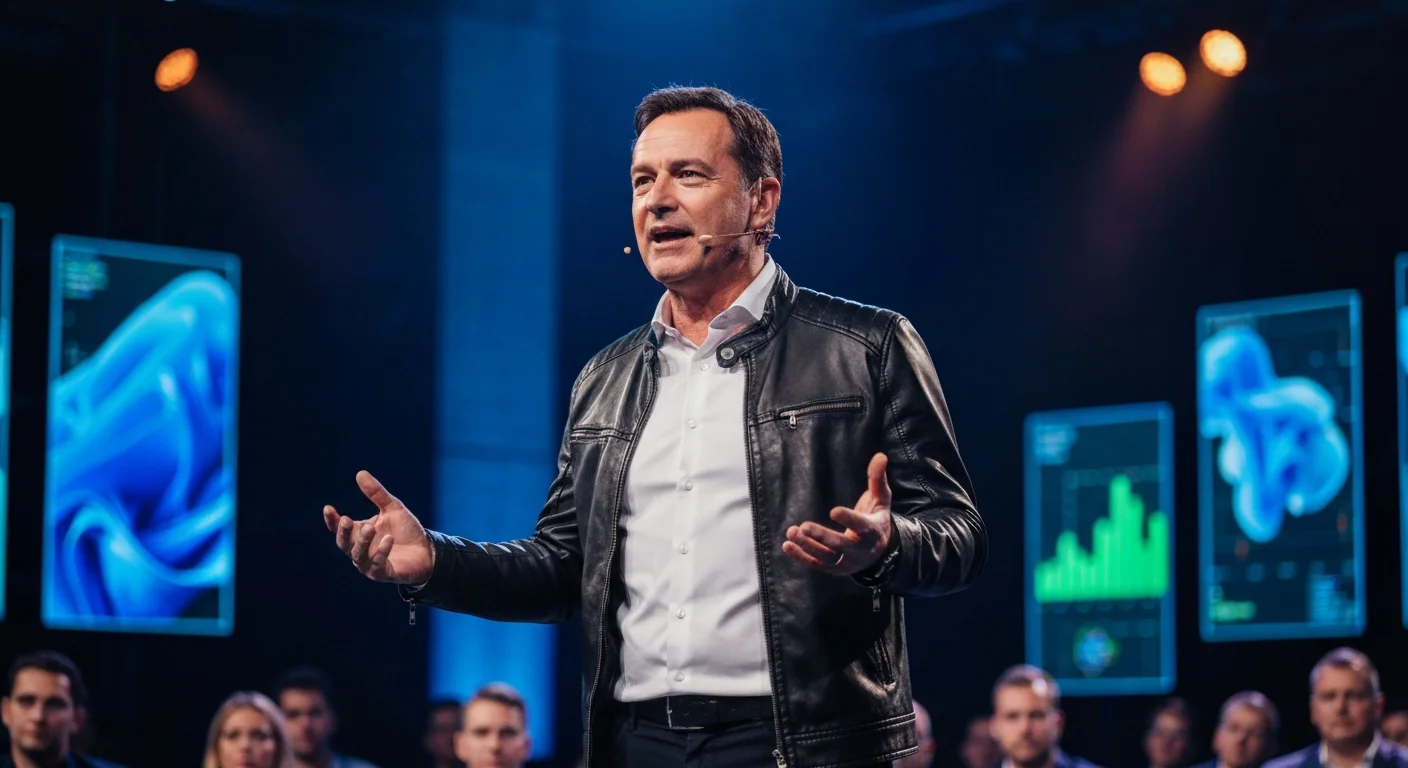
Nvidia CEO Jensen Huang has thrown a public elbow at fellow tech executives, accusing them of cultivating a 'God complex' that is fueling AI hysteria and damaging worker confidence. The remarks, reported by The Decoder and The National, mark one of the sharpest intra-industry rebukes of the doom-laden labor narrative pushed by some of AI's loudest voices.
'Somehow, because they became CEOs'
Speaking on a recent panel, Huang did not mince words. 'Somehow, because they became CEOs they adopt a God complex, and before you know it you know everything,' he said. He framed the continuing insistence that AI will trigger a sweeping labor disruption as 'counter-productive, and in fact hurtful.'
The comments land squarely on Anthropic CEO Dario Amodei, whose prediction that AI could erase up to half of entry-level white-collar jobs has become the most-cited forecast of the AI labor debate. Huang paraphrased that 50% figure directly before dismissing it.
Huang's alternative thesis
The Nvidia founder offered a different framing that has now become his signature line on the topic: 'It is unlikely most people will lose a job to AI. It is most likely that most people will lose their job to somebody who uses AI.'
He also pointed to job creation tied to the AI buildout. 'The facts are, AI has created more than half a million jobs in the last couple of years,' Huang said, arguing that the technology is a central driver of US reindustrialization rather than a workforce wrecking ball.
A tactical disagreement, not just a philosophical one
Huang's pushback is not academic. Nvidia's commercial story depends on enterprises continuing to invest in AI rollouts, retrain staff, and expand teams around new tooling. Forecasts of mass layoffs make boards skittish, slow procurement, and feed political pressure for AI taxes and moratoriums. The 'God complex' line, in that light, is as much a defense of Nvidia's growth runway as a critique of his peers.
It also highlights a widening rift inside the AI elite. Anthropic and several frontier labs have leaned into existential and labor-disruption framing as part of their safety posture and policy advocacy. Nvidia, Microsoft, and AWS have largely chosen the opposite tone, emphasizing augmentation, productivity, and reskilling.
Historical echoes
Huang reached back a decade for cover, noting that Geoffrey Hinton's 2016 prediction that AI would make radiologists obsolete has not materialized. AI now permeates radiology workflows, yet the field still faces a global radiologist shortage. The lesson he is selling: confident timelines for human obsolescence age poorly.
Implications
For enterprise buyers, Huang's intervention is a clear signal that the loudest AI voice on hardware is publicly arguing against the hire-freeze playbook. For policymakers weighing AI labor protections, it widens the disagreement they are being asked to legislate around. And for Amodei, it is a reminder that even allies in the AI buildout will push back when forecasts threaten the broader narrative the industry depends on.