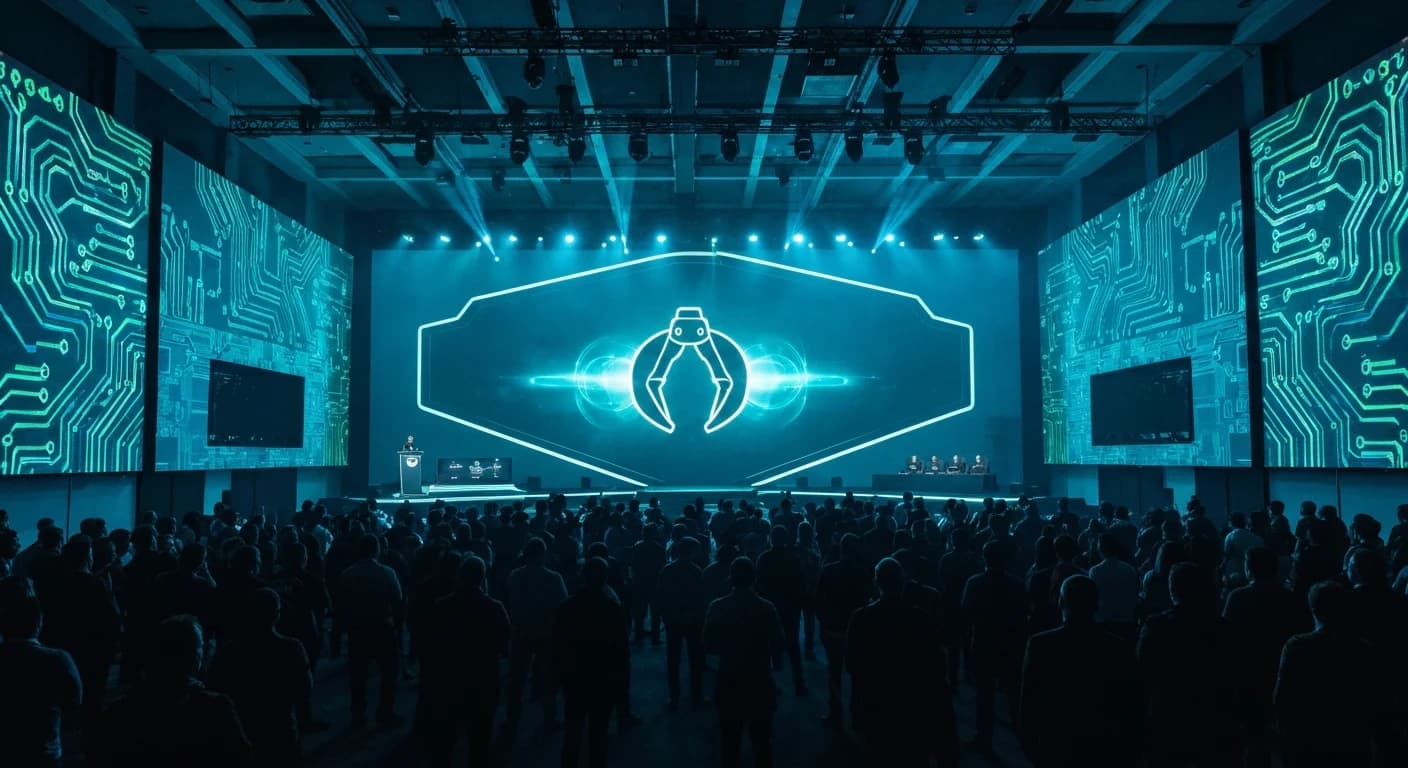
NVIDIA kicked off GTC 2026 today with a packed keynote from CEO Jensen Huang at the SAP Center in San Jose, unveiling NemoClaw — an enterprise AI agent platform that may fundamentally change how developers build and deploy AI agents. The announcement headlined a two-hour presentation that spanned chips, software, models, and robotics in front of more than 30,000 attendees from 190 countries.
NemoClaw: AI Agents That Run on Your Machine
NemoClaw is designed to let developers create long-running AI agents that operate locally on a user's device. Unlike cloud-dependent AI assistants, these agents interact directly with files, applications, and workflows without sending data to external servers.
NVIDIA released a NemoClaw Playbook alongside the announcement, providing a step-by-step guide to running agents on DGX Spark hardware. GTC attendees are among the first to build their own agents at hands-on events running throughout the conference. The platform draws inspiration from the open-source OpenClaw project — originally created by Peter Steinberger and now under foundation governance — but is tailored for enterprise deployment.
The local-first approach addresses two persistent concerns in enterprise AI adoption: data privacy and latency. By keeping agent processing on-device, NemoClaw eliminates the round-trip to cloud servers and ensures sensitive documents never leave the user's machine.
Robotics Gets a Major Upgrade
Huang also showcased Isaac GR00T N1.6, the latest iteration of NVIDIA's vision-language-action model for humanoid robots. The model enables robots to interpret visual scenes, understand natural language instructions, and execute physical tasks in real-world environments.
The robotics segment featured demonstrations from SkildAI, PhysicsX, and Waabi, exploring how simulation, digital twins, and foundation models are bridging the gap between virtual training and real-world deployment. NVIDIA's Isaac platform continues to be the backbone for companies building autonomous systems, from warehouse logistics to surgical assistance.
The Vera Rubin Era Begins
While the Rubin architecture was previewed earlier this year, GTC 2026 provided the most detailed look yet at deployment timelines and partner commitments. The next-generation chips pack up to 288GB of HBM4 memory and deliver a significant performance leap over the current Blackwell generation.
Thinking Machines Lab confirmed a multiyear strategic partnership to deploy at least one gigawatt of Vera Rubin systems for frontier model training — a commitment that underscores the sheer scale of compute demand heading into the second half of 2026.
What This Means for Developers
GTC 2026 signals a clear shift in NVIDIA's strategy: from selling hardware to providing the full software stack for an AI-native world. NemoClaw, in particular, positions NVIDIA as a player in the rapidly growing agentic AI space, competing with frameworks from LangChain, OpenAI, and Anthropic.
For developers, the message is straightforward — the tools to build persistent, privacy-respecting AI agents are now available and designed to run on hardware you already own. On the business side, companies are already restructuring their organizations around AI agents to take advantage of this shift. Specific use cases are maturing quickly too, from 7 AI agents every e-commerce business should deploy in 2026 to AI voice agents handling customer service at scale. The conference continues through March 19 with hundreds of sessions, developer labs, and product demonstrations.