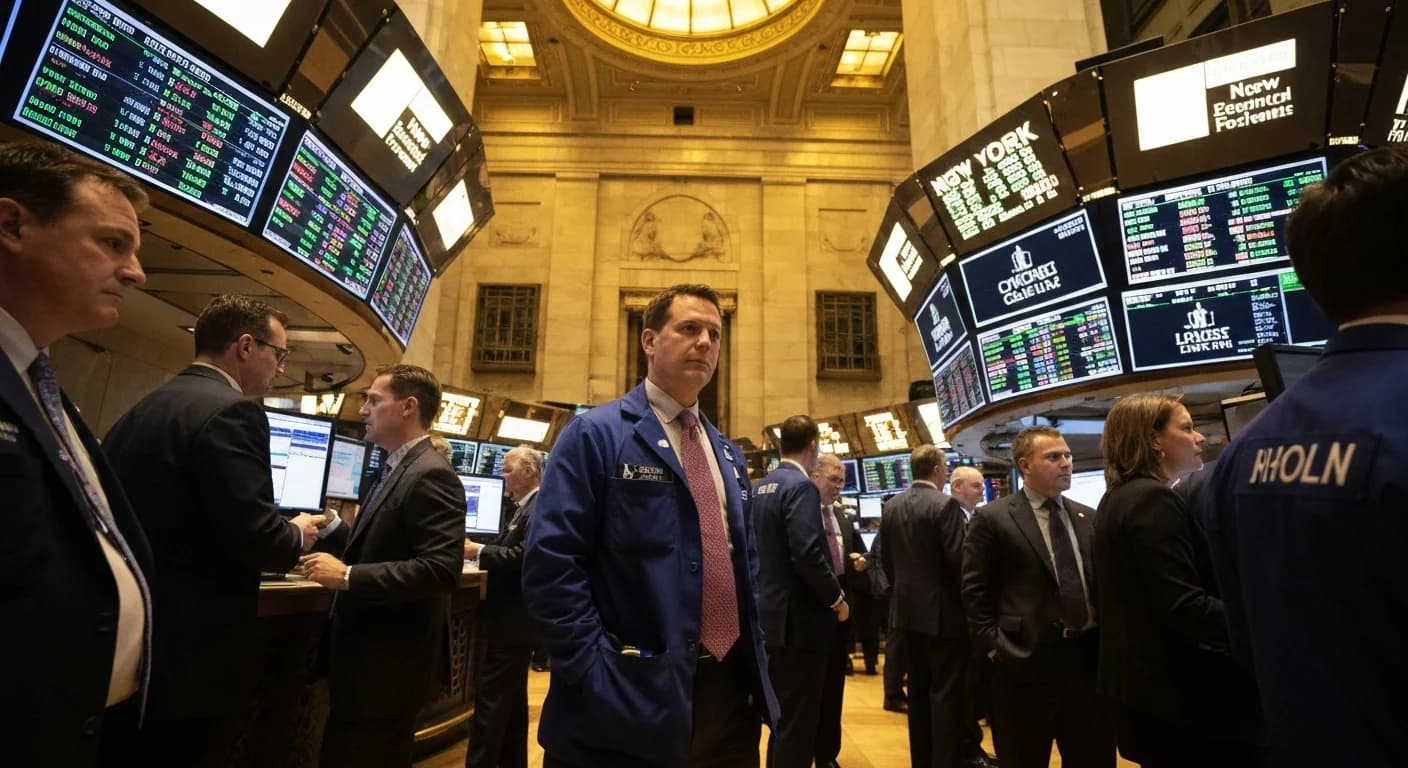
OpenAI is laying the groundwork for what could become the largest technology IPO in history, having retained two prominent law firms to guide its path to the public markets.
Legal Team in Place
The company has hired Cooley LLP and Wachtell, Lipton, Rosen & Katz to lead its IPO preparations, a move that signals the listing is moving from speculation to active planning. Cooley is one of Silicon Valley's premier technology law firms, while Wachtell is known for handling the most complex corporate transactions on Wall Street.
The timing is significant. Amazon's recent $50 billion investment commitment in OpenAI — $15 billion upfront and $35 billion contingent on a 2026 public listing or the achievement of AGI by end of 2026 — adds external pressure to an already accelerating timeline.
The Numbers Behind the Hype
OpenAI's financial trajectory makes a compelling case for going public. The company now generates more than $20 billion in annualized revenue, growing at triple-digit rates. It serves 810 million monthly active users and has crossed the one million enterprise customer mark.
In February 2026, OpenAI raised $110 billion in a funding round that valued the company at $730 billion pre-money, with backing from Amazon, Nvidia, and SoftBank. Analysts at several investment banks believe the valuation could approach or exceed $1 trillion by the time shares begin trading.
Challenges on the Road to Market
Despite the impressive topline growth, OpenAI faces questions that public market investors will scrutinize carefully. The company burns through cash at an extraordinary rate to train and deploy frontier AI models, and profitability remains elusive.
There are also structural questions. OpenAI's recent transition from a nonprofit to a for-profit entity drew regulatory attention and public criticism. Any IPO prospectus will need to address governance, the competitive threat from open-source models, and the company's dependence on Microsoft's cloud infrastructure.
What It Means for the AI Industry
An OpenAI IPO would be a defining moment for the AI sector. It would provide the first true public market benchmark for valuing a pure-play frontier AI company, setting the stage for potential listings from rivals like Anthropic, which is also reportedly exploring a public offering.
For investors, the listing represents an opportunity to participate directly in what Morgan Stanley recently called the most significant technological shift since the internet. For the industry, it marks the moment AI transitions from a venture-backed experiment to a public market reality.