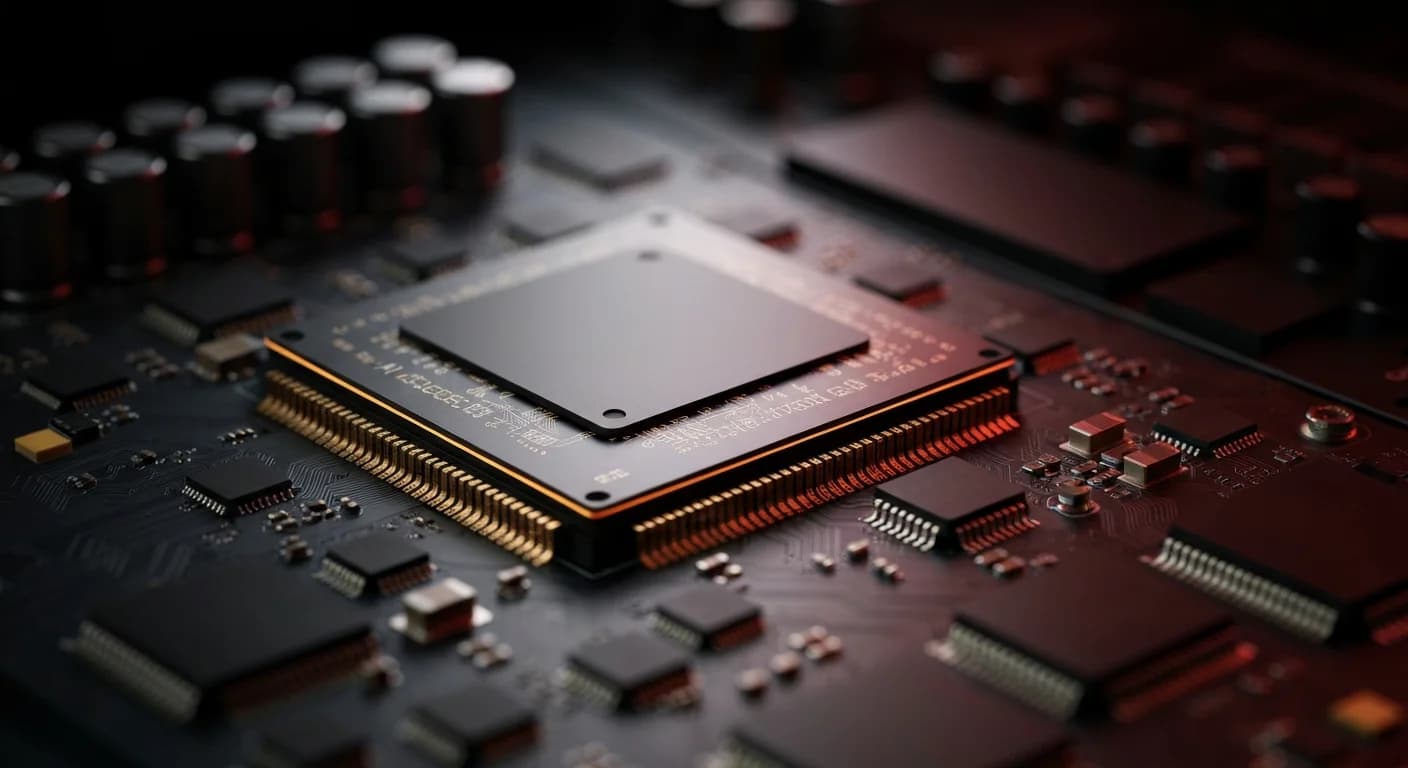
Samsung used NVIDIA GTC 2026 in San Jose to pull the curtain back on HBM4E, its most advanced high-bandwidth memory chip to date. The announcement signals the next front in a fierce battle between Samsung and SK Hynix to supply the memory underpinning the world's most powerful AI accelerators.
Specs That Push the Envelope
The headline numbers are striking. HBM4E delivers 16 Gbps per pin and up to 4.0 terabytes per second of bandwidth per stack — a significant leap over current-generation solutions. Samsung is stacking 16 high-density layers to reach 48 GB of capacity per stack, enabled by its proprietary hybrid copper bonding (HCB) technology.
According to Samsung, HCB reduces heat resistance by more than 20 percent compared to conventional approaches, a critical advantage as AI workloads push thermal envelopes inside dense server racks.
HBM4 Already in Mass Production
While HBM4E represents the future, Samsung's current HBM4 is already shipping. The company says its HBM4 delivers consistent processing speeds of 11.7 Gbps — well above the 8 Gbps industry standard — with headroom to push to 13 Gbps. These chips are designed for NVIDIA's Vera Rubin platform, which CEO Jensen Huang showcased extensively during his GTC keynote.
The Memory Race Heats Up
The unveiling comes at a pivotal moment. SK Hynix currently holds roughly two-thirds of NVIDIA's 2026 HBM4 allocation for Vera Rubin, leaving Samsung in an unfamiliar second-place position. To close the gap, Samsung has pledged to triple its HBM production capacity — a massive capital commitment that underscores just how high the stakes are in AI infrastructure.
The broader context amplifies the urgency. During his GTC keynote, Huang projected $1 trillion in purchase orders for Blackwell and Vera Rubin systems through 2027. Every one of those systems needs vast quantities of high-bandwidth memory, making HBM suppliers as strategically important as GPU designers themselves.
What It Means for the AI Industry
Memory bandwidth has emerged as one of the key bottlenecks in scaling large language models and inference workloads. As models grow to trillions of parameters and context windows expand past one million tokens, the ability to feed data to GPUs fast enough becomes a defining constraint.
Samsung's HBM4E, with its 4 TB/s throughput, is designed specifically for this next wave. If Samsung can deliver on its production pledges and close the gap with SK Hynix, the resulting competition could drive down costs and accelerate the buildout of AI data centers worldwide.
For now, the memory wars are just getting started — and GTC 2026 made clear that the chip powering AI's future is not just the GPU. Samsung's ambitions extend beyond the data center — the company is also pushing into consumer health and fitness with products like the Samsung Galaxy Ring, which uses on-device AI to track workouts and biometrics.