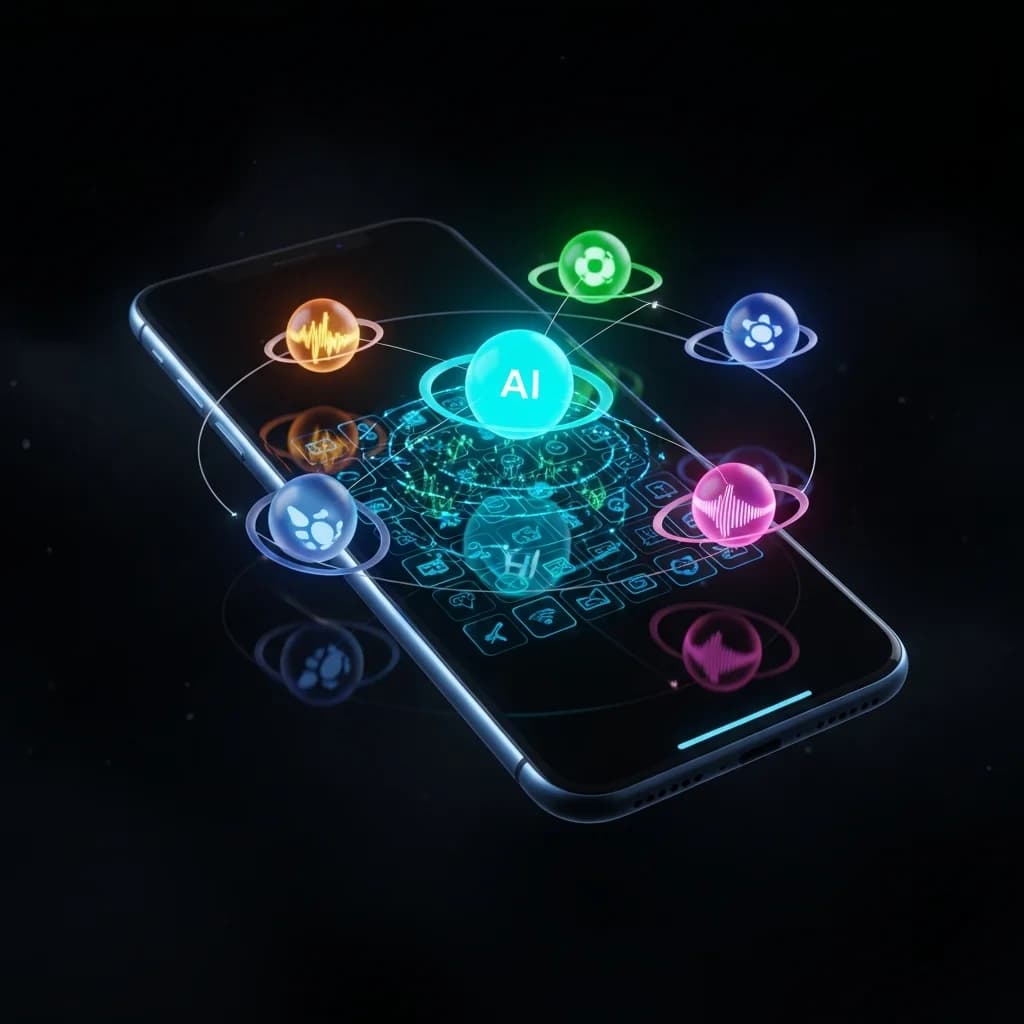
Apple is about to do for AI chatbots what it did for mobile apps in 2008: give them a store, a platform, and 1.5 billion potential users.
According to Bloomberg's Mark Gurman, iOS 27 will introduce Siri Extensions — a new framework that lets third-party AI chatbots plug directly into Apple's voice assistant. Anthropic's Claude, Google's Gemini, OpenAI's ChatGPT, and other AI services will be able to compete for users right inside the iPhone. Apple is also creating a dedicated section in the App Store specifically for AI extensions, effectively building an AI App Store within its existing marketplace.
How Siri Extensions Will Work
The Extensions system will allow users to choose which AI model handles different types of Siri requests. Instead of being locked into Apple's built-in AI capabilities, users could route coding questions to Claude, creative writing to ChatGPT, or research queries to Gemini — all through the same Siri interface.
This is a dramatic departure from Apple's historically walled-garden approach to Siri. For years, the company has resisted opening its assistant to outside AI providers, preferring to build capabilities in-house even as Siri fell behind competitors. The Extensions system acknowledges what users already know: no single AI model is best at everything.
Developers will be able to build and distribute their AI extensions through the App Store, complete with ratings, reviews, and Apple's standard approval process. The dedicated AI section will make it easy for users to browse and compare different AI providers — turning model selection into a consumer choice rather than a technical decision.
Apple's Own Chatbot: Project Campos
In a twist that underscores the complexity of Apple's AI strategy, the company is simultaneously building its own conversational AI chatbot, codenamed Campos. And it's not using Apple's own AI models to power it — it's using Google's Gemini.
The Campos project suggests Apple recognizes it needs a competitive chatbot experience but isn't confident its in-house AI models can match the frontier capabilities of dedicated AI labs. By licensing Gemini's technology, Apple gets a capable foundation while maintaining control over the user experience and data handling.
This creates an unusual dynamic: Google's AI technology will power Apple's default chatbot, while Google's Gemini will also be available as a third-party Siri Extension. Apple is essentially competing with its own supplier.
Why This Matters for the AI Industry
Apple's App Store created a $100 billion app economy. An AI App Store could do something similar for model providers. Distribution has always been the challenge for AI companies — most users don't visit chatbot websites directly. By embedding AI choice into every iPhone, Apple is solving the distribution problem overnight.
For AI companies, getting featured in Apple's AI App Store could become as important as ranking in Google search results. The revenue-sharing implications are significant too: Apple's standard 30% commission on App Store transactions could apply to AI subscription purchases made through the Extensions system.
The Bigger Picture
iOS 27 is expected to be previewed at WWDC in June 2026. If Apple executes on this vision, it will fundamentally change how a billion people interact with AI — shifting the paradigm from "which chatbot website do I visit" to "which AI do I want Siri to use right now."
The AI wars just got an App Store.