Mistral, the French AI startup that has positioned itself as Europe's most credible challenger to OpenAI and Anthropic, just took on $830 million in debt to build its own GPU cluster. The deal, announced today, is Mistral's first major debt financing and represents a clear bet that owning infrastructure — not just renting it — is the path to competing at the frontier.
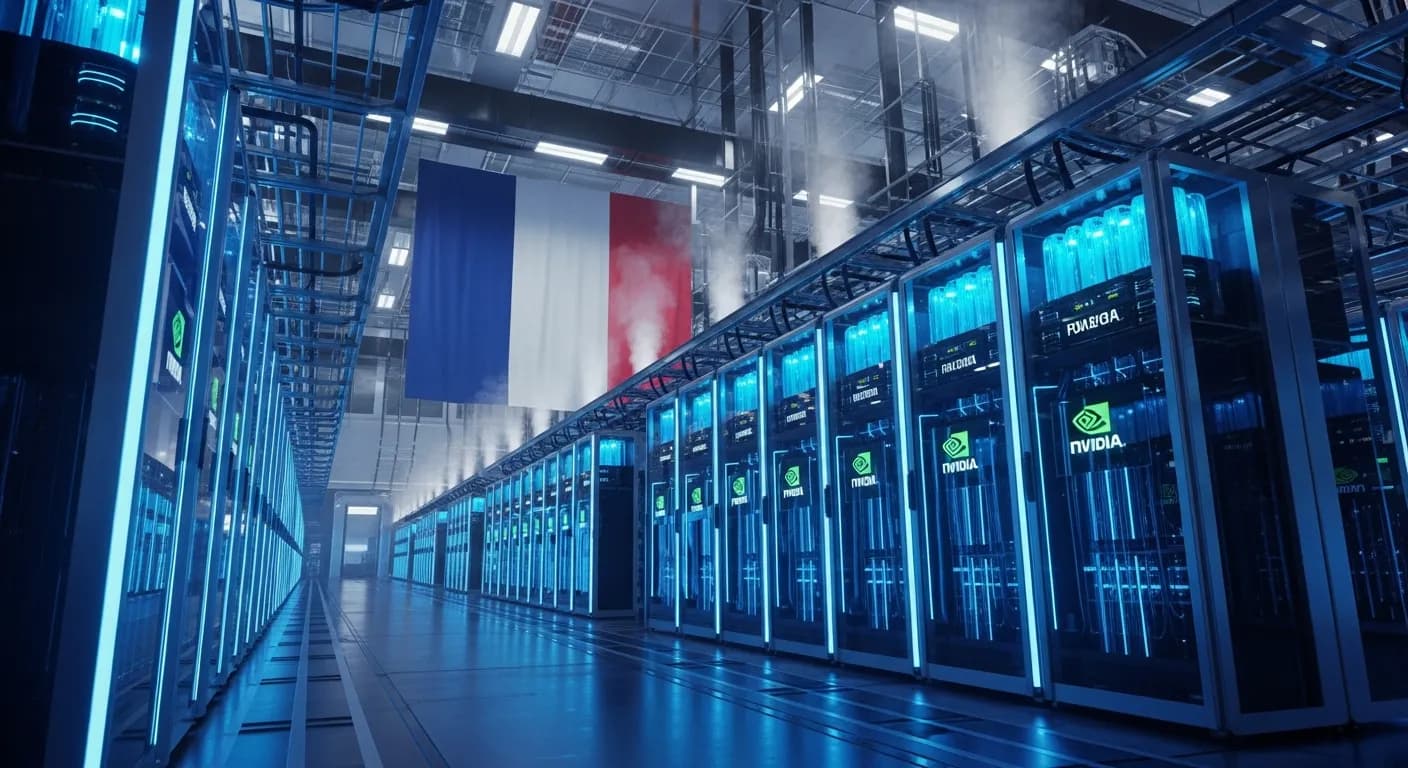
The financing was arranged through a seven-bank consortium led by BNP Paribas, with Crédit Agricole CIB, HSBC, and MUFG among the lenders. The proceeds will fund a data center at Bruyères-le-Châtel, south of Paris, packed with 13,800 Nvidia GB300 GPUs and rated at 44 megawatts of capacity. Mistral expects the facility to come online in Q2 2026.
Why Debt, and Why Now
Mistral has raised over $1 billion in equity across multiple rounds, most recently at a valuation north of $6 billion. But equity is expensive — it dilutes founders and early investors. Debt lets Mistral finance capital-intensive hardware without giving up more of the company, and the fact that seven banks were willing to underwrite the deal signals confidence in Mistral's revenue trajectory and the collateral value of Nvidia GPUs.
The timing is strategic. Nvidia's GB300 chips represent the current performance frontier for AI training and inference. Securing 13,800 units locks in capacity at a moment when GPU supply remains tight globally and cloud providers are booking allocations years in advance. By owning the hardware, Mistral avoids the margin stack of renting from hyperscalers and gains flexibility to run whatever workloads it needs — training runs, fine-tuning, inference — without negotiating with a third party.
The European Infrastructure Gap
The deal also matters for the broader European AI ecosystem. The continent has struggled to compete with U.S. and Chinese labs partly because of an infrastructure deficit — fewer data centers, less GPU capacity, and more regulatory friction around building them. Mistral's 200 MW target across Europe by end of 2027 is an attempt to close that gap from the private sector side.
France has been particularly aggressive in courting AI infrastructure investment, with President Macron personally championing the country's AI ambitions at multiple international summits. Mistral's Bruyères-le-Châtel site benefits from France's relatively cheap nuclear-powered electricity — a meaningful cost advantage when running thousands of GPUs around the clock.
What This Means for Mistral's Roadmap
Founded in 2023, Mistral has built a reputation for efficient, open-weight models. Its Mistral Small 4, a 119-billion-parameter hybrid architecture with 6.5 billion active parameters, is the strongest open-weight model currently shipping from a European lab. But competing at the frontier of capabilities — where Anthropic's rumored Mythos model and OpenAI's GPT-5 series are pushing — requires significantly more compute than Mistral has historically commanded.
The 44 MW Paris facility won't close the gap with OpenAI's multi-gigawatt ambitions overnight. But it gives Mistral enough capacity to train its next generation of flagship models in-house, on its own timeline, without depending on cloud partnerships that come with strings attached. In the AI infrastructure race, owning your compute is increasingly the price of admission.