A rolling wave of local political revolts is threatening to derail the US data center buildout underpinning the AI boom, with mounting delays already costing hyperscalers tens of billions of dollars, according to a Tom's Hardware report published April 18, 2026. The backlash is now broad enough to reshape where and when the next generation of AI compute gets built.
Communities Push Back
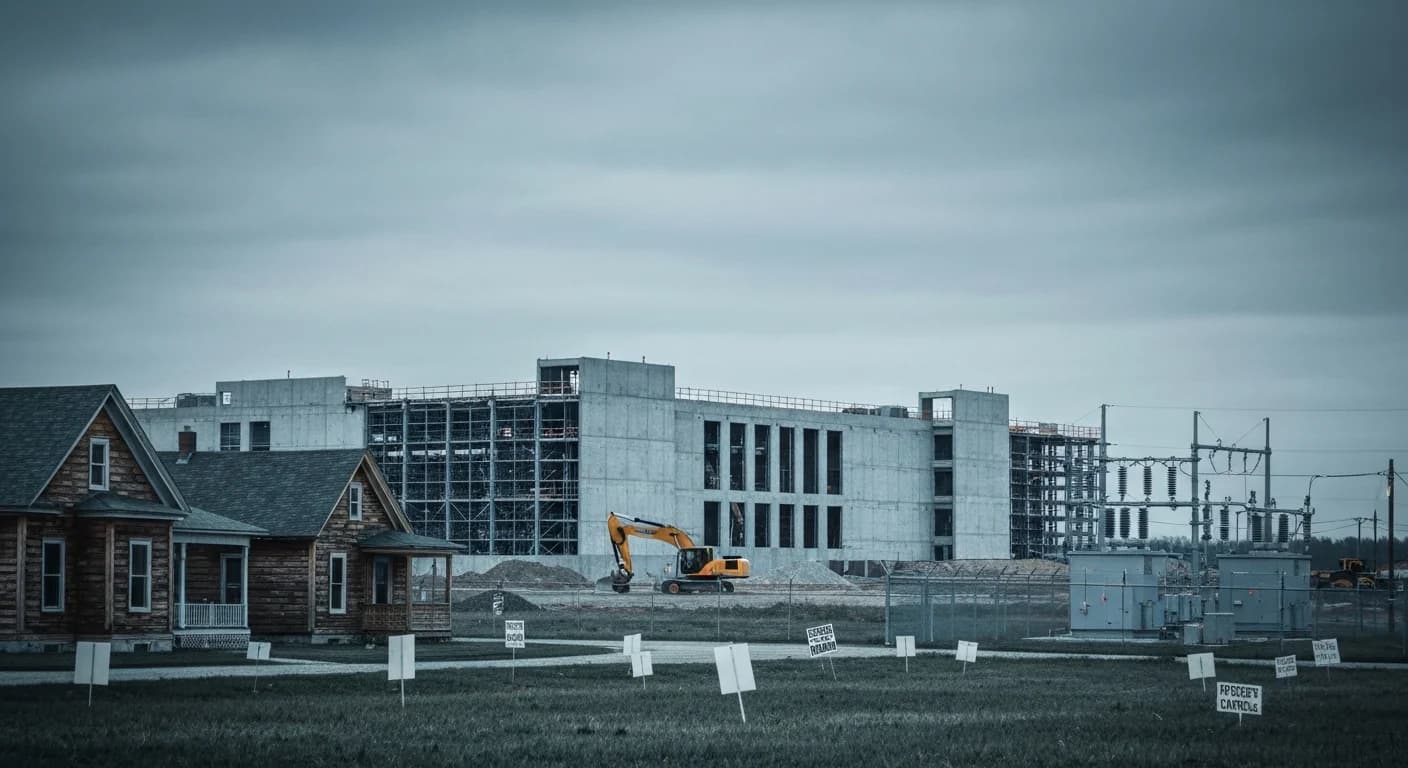
A small town in Missouri recently ousted half of its city council over approval of a $6 billion data center project, with residents filing a petition to remove the mayor. In Claremore, Oklahoma, a farmer was arrested in February for exceeding his speaking time at a town hall on a proposed facility. In Virginia — long the heart of the US data center industry — voter support has collapsed from 69% in 2023 to just 35%, stalling what would have been one of the country's largest builds.
Other jurisdictions are passing hard restrictions. Maine has imposed a moratorium on data centers larger than 20 megawatts until October 2027. Tulsa approved a temporary moratorium through year-end. San Marcos rejected the rezoning for a 200-megawatt facility in February. In Brown County, Wisconsin, developers are reportedly offering $120,000 per acre for rural land, fueling further tension.
The Dollar Impact
A report from Data Center Watch found that at least $156 billion in data center projects were blocked or delayed in 2025 amid local opposition and litigation, with at least 142 activist groups now organized across 24 states. The group says residents have blocked or delayed a cumulative $64 billion in projects over the past two years.
Analytics data cited in the reporting suggests approximately half of all planned US data center builds this year are likely to be delayed or canceled. Only about a third of roughly 140 large-scale projects — representing around 12 gigawatts of power — are under construction, with the remainder stuck in pre-production and unlikely to open on schedule.
Implications for the AI Stack
The timing is awkward for companies pushing historic capex. OpenAI has committed around $100 billion to AI infrastructure, while Oracle signed a five-year compute deal reportedly worth roughly $300 billion. Meta, Google, Microsoft, Nvidia, and Cloverleaf Infrastructure are all named among the affected builders. Delays that push capacity by even a few quarters directly threaten model training schedules, cloud expansion plans, and the unit economics investors are pricing into an increasingly IPO-ready sector.
The broader signal is that the AI industry's growth is no longer bottlenecked only by chips and power — it is now bottlenecked by local politics. Hyperscalers that fail to win over communities may find their multi-billion-dollar roadmaps running into city council votes and primary elections as often as into supply chains.