Uber has spent a decade preaching the gospel of the asset-light platform. On Sunday, TechCrunch's mobility newsletter argued that gospel is quietly being rewritten — and the receipts now add up to more than $10 billion committed to autonomous vehicles and the fleets that will run them.
From gig platform to fleet owner
According to Financial Times calculations cited by TechCrunch, Uber's autonomous vehicle push breaks down into roughly $2.5 billion in direct equity investments and about $7.5 billion earmarked for purchasing robotaxis over the coming years. That is a far cry from the company's original pitch to Wall Street, where the core promise was that Uber would never own the cars driving its riders around.
The pivot has been spread across multiple partners rather than a single bet. Public disclosures and reporting point to an investment of around $100 million in WeRide, multi-million-dollar stakes in Lucid and Nuro, a deal with Rivian reported to reach up to $1.25 billion, and a strategic investment in UK-based Wayve.
Tokyo pilot with Nissan and Wayve
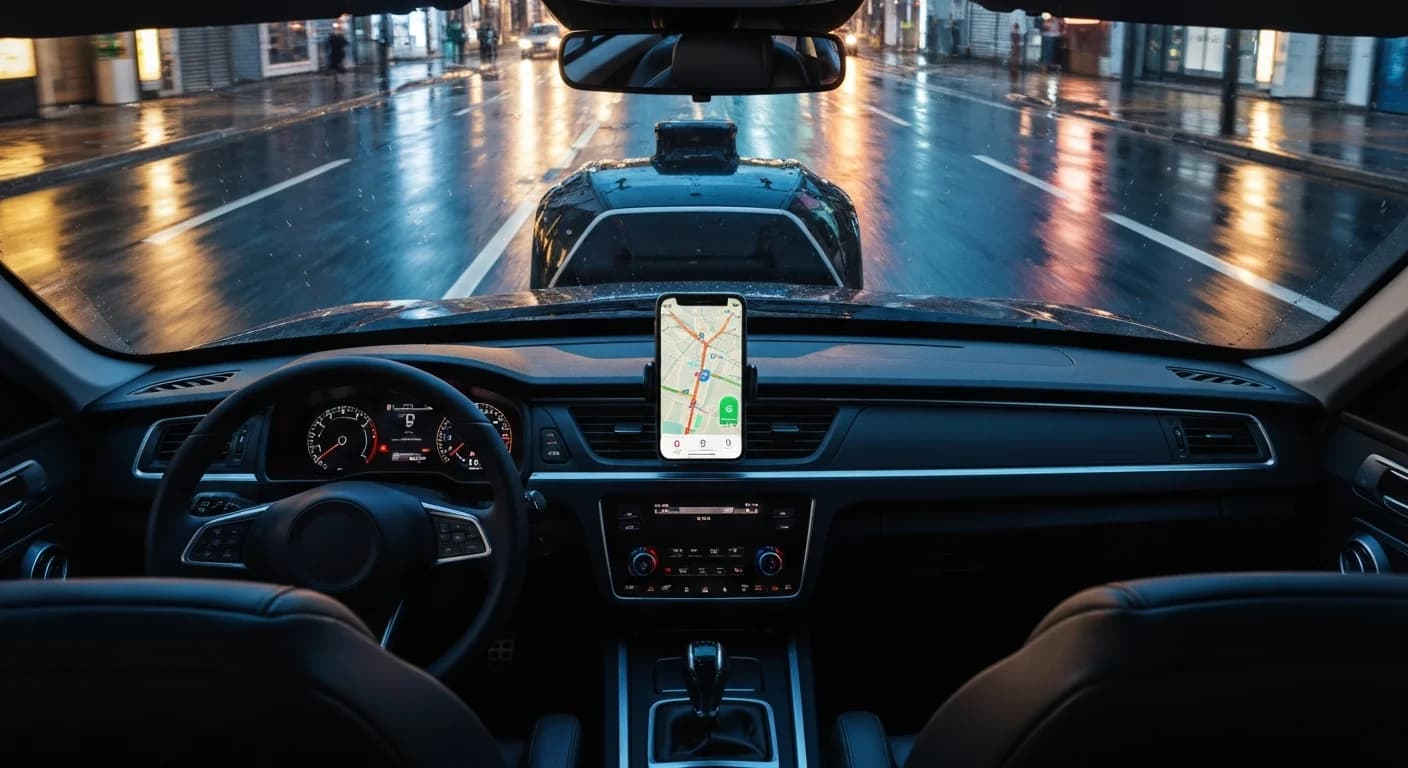
The shift has a concrete product attached to it. Wayve, Uber, and Nissan have signed a memorandum of understanding to collaborate on robotaxis, with a pilot deployment in Tokyo targeted for late 2026. The vehicles combine Nissan's LEAF platform, Wayve's embodied AI driver, and NVIDIA DRIVE Hyperion compute — and they will be bookable through the Uber app. The partners have previously said the global rollout is designed to span more than ten cities, including London.
Why now
The strategic logic is straightforward. Self-driving technology has matured enough that Waymo, Baidu's Apollo Go, and Tesla's expanding robotaxi service are all taking paying riders today. Uber, which sold its in-house Advanced Technologies Group to Aurora in 2020, cannot afford to be the distribution layer for someone else's network — particularly if that someone else decides to go direct-to-consumer.
By buying vehicles and taking equity in the AV stacks most likely to scale, Uber is trying to guarantee itself supply and, implicitly, pricing power over the next decade of ride-hailing.
The risk of 'assetmaxxing'
The trade-off is unmistakable. Asset-light businesses command premium valuations because capital does not get trapped in depreciating hardware. Owning — or financing the purchase of — tens of thousands of robotaxis puts balance-sheet risk squarely back on Uber's books, and investors who bought the 2019 IPO story may not love the new one.
What to watch
The Tokyo pilot is the first chance to see whether Uber's multi-partner strategy actually yields a coherent product experience, or whether riders notice that the Wayve-Nissan car behaves differently from the WeRide one in Abu Dhabi. If the fleets feel interchangeable, Uber may have pulled off an elegant asset swap. If they do not, the next quarterly filing will get uncomfortable quickly.