Cadence and NVIDIA used the CadenceLIVE Silicon Valley 2026 conference, held April 15–16, to announce an expanded multi-year partnership that stitches together agentic AI, high-fidelity physics simulation, and digital twins across engineering — with robotics, semiconductor design, and AI factory operations as the headline workloads.
The news, announced on April 15, 2026 at CadenceLIVE Silicon Valley 2026, extends a relationship that has quietly underpinned much of Cadence's push into GPU-accelerated simulation. This time, the scope reaches well beyond chip design.
Closing the sim-to-real gap
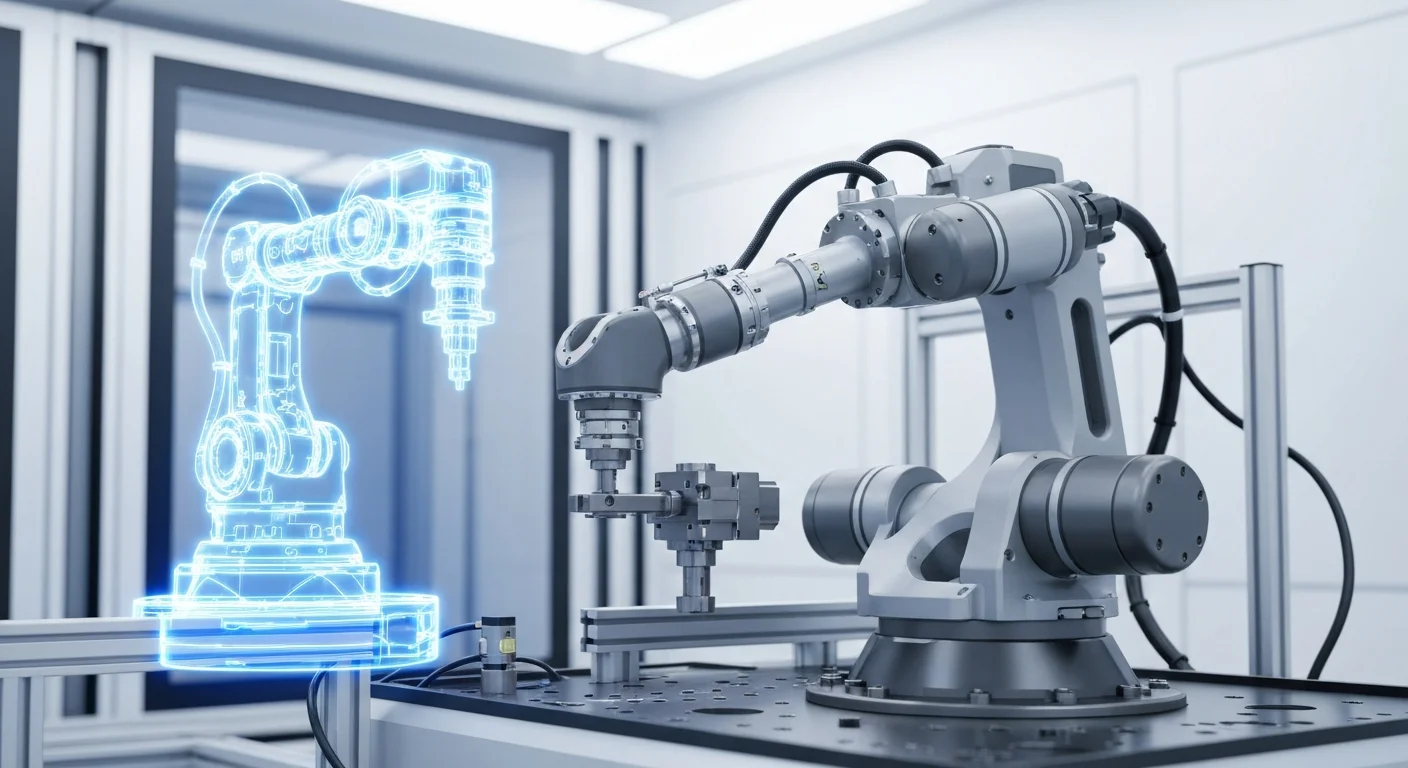
The centerpiece for robotics is an end-to-end workflow that links virtual training in NVIDIA Isaac Sim and Isaac Lab with Cadence's physics-accurate evaluation tools and mission-scale scenario testing in VTD and VTDx. Results can then be deployed on NVIDIA Jetson and edge AI systems, where a live virtual twin keeps the physical deployment and its simulated counterpart synchronized.
The companies framed the goal plainly: closing the "sim-to-real" gap that has long made robot policies trained in simulation behave unpredictably in the real world. By embedding accurate physics across training, validation, and inference — and pairing it with NVIDIA's Cosmos world models — the stack is designed to let teams iterate faster without sacrificing safety.
Digital twins for AI factories and chips
Beyond robots, the expanded deal targets two other fast-growing categories. For AI factories, Cadence said early digital-twin simulations suggest potential 17% efficiency gains in tokens-per-watt when data center designs are co-optimized with NVIDIA's Omniverse-based twins.
For semiconductor design, Cadence's AgentStack and ChipStack AI Super Agent are being tuned on CUDA-X libraries and accelerated computing, with the vendors citing up to 100x speedups from AI-driven solvers and up to 10x productivity gains in chip design deployments already in the field.
Executive framing and customer momentum
"Agentic AI and digital twins are reshaping the entire engineering landscape," Cadence president and CEO Anirudh Devgan said in the announcement. NVIDIA founder and CEO Jensen Huang added that "CUDA-accelerated computing and AI are reinventing the engineering process."
Cadence said customers already using elements of the joint stack include Ascendence, Argonne National Laboratory, Honda R&D, Samsung, and SK Hynix — a list that spans robotics research, national-lab simulation, automotive R&D, and leading-edge memory and semiconductor manufacturing.
Why it matters
The partnership lands at a moment when physical AI — humanoids, autonomous vehicles, factory robots — is widely seen as the next compute-hungry frontier after generative models. Simulation has been the bottleneck: cheap to run, but hard to trust. By pairing Cadence's multiphysics heritage with NVIDIA's world models and GPU fleet, the two companies are making an explicit bet that the winning path to real-world robotics runs through ever-more-accurate digital twins, not more on-device trial and error.
For engineering leaders, the practical takeaway is that the tooling stack for robotics and AI factory design is consolidating quickly around a small number of integrated vendors — and Cadence and NVIDIA just deepened their claim on that center.