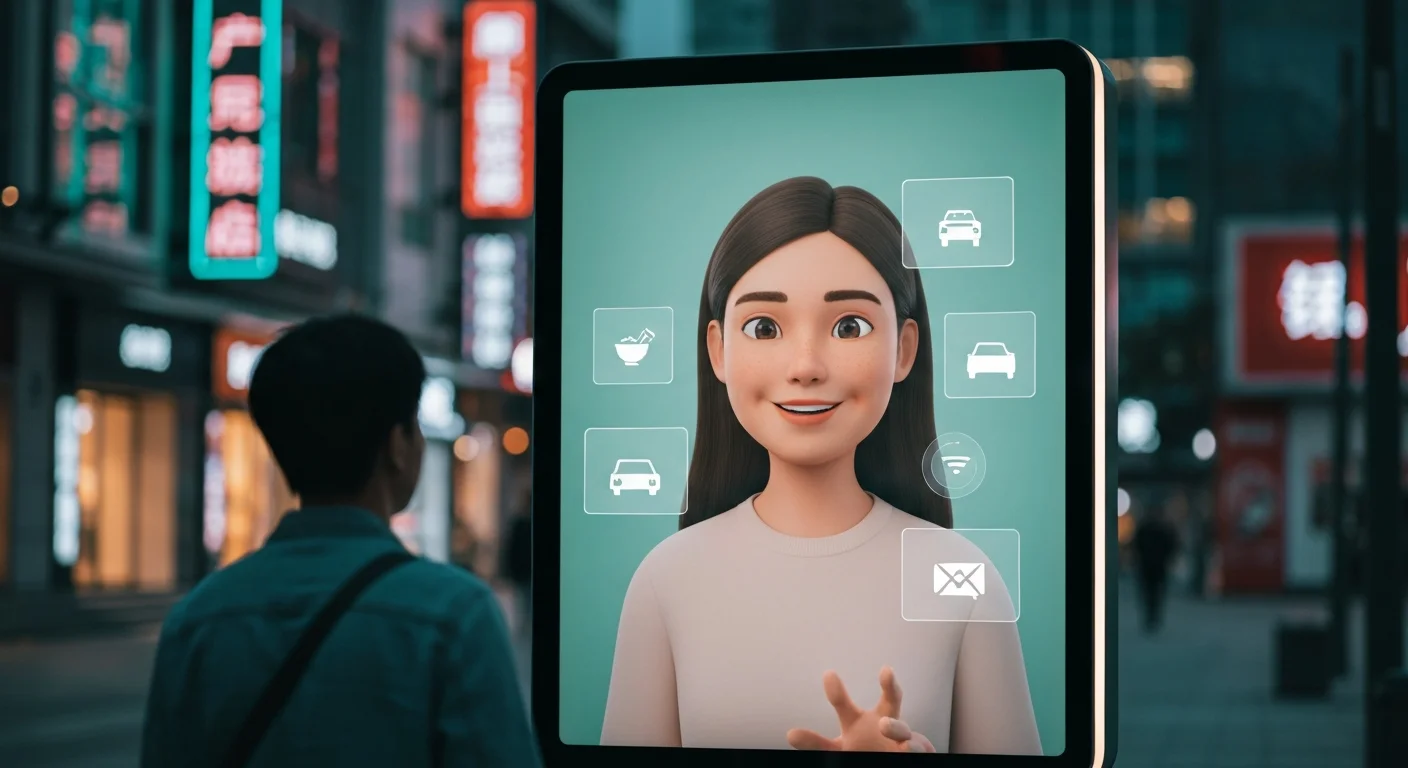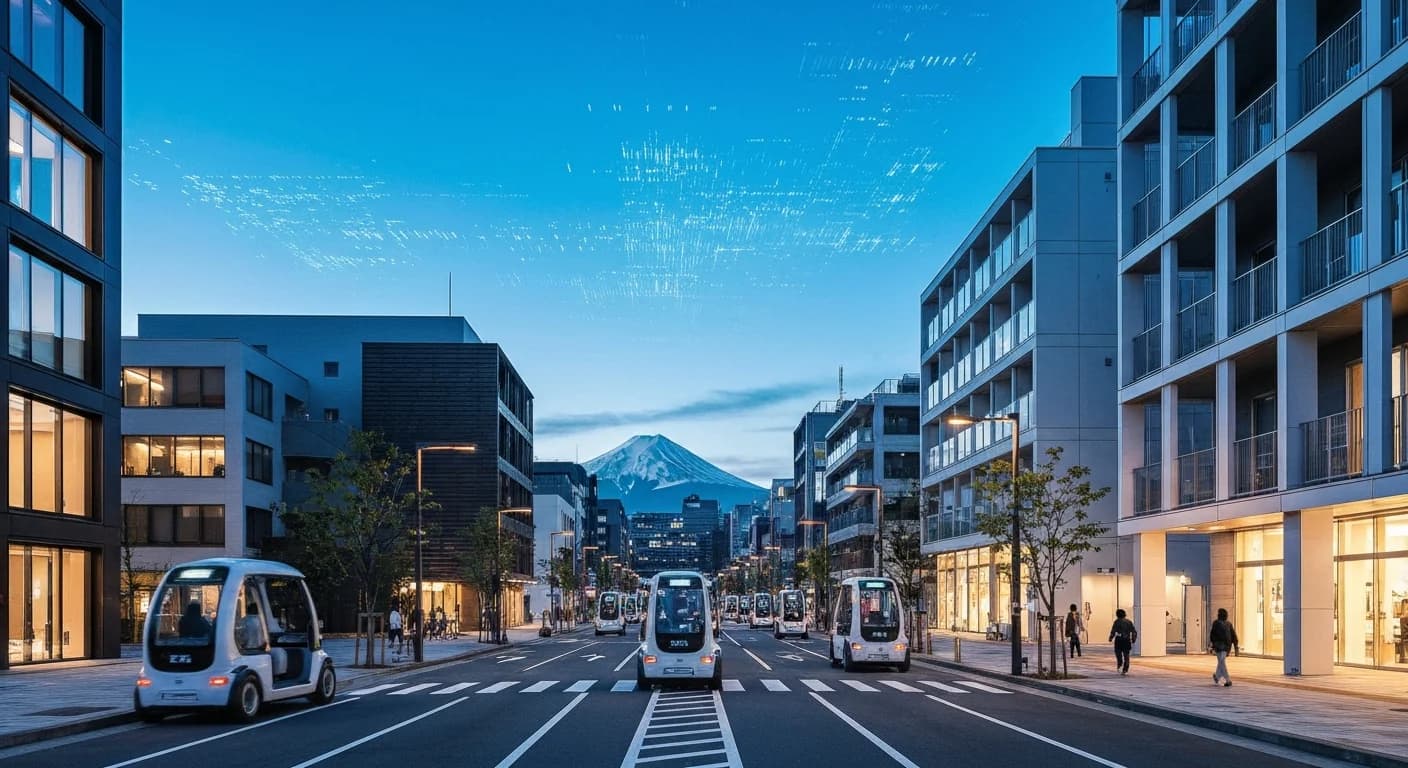
Toyota and its technology subsidiary Woven by Toyota used a joint announcement on April 22, 2026 to pull back the curtain on a sweeping set of artificial intelligence systems designed to run their experimental Woven City in Susono, Japan as a single coordinated environment. The unveiling moves the long-hyped "living laboratory" decisively into the agentic AI era, with a city-scale foundation model at its core.
A city-scale vision language model
The headline release is the Woven City AI Vision Engine, which Toyota describes as a large-scale AI foundation model that enables the city to understand and respond to real-world conditions in real time. Toyota says the underlying vision language model ranks among the world's leading systems according to the MVBench Leaderboard, a benchmark that measures temporal and spatial understanding in video.
By positioning a vision language model as municipal infrastructure, Toyota is making a bet that physical environments — streets, facilities, mobility fleets — should be perceived and reasoned about by a single multimodal backbone rather than a patchwork of narrow perception models. It is a notably different architecture from the sensor-and-rules smart-city deployments that dominated the last decade.
Integrated ANZEN: behaviour AI meets driving assistance
Alongside the Vision Engine, Toyota introduced what it calls the Integrated ANZEN System. ANZEN fuses Woven City Behavior AI, which interprets human behavioural patterns, with Woven City Drive Sync Assist, which provides driving assistance. Toyota frames the combination as letting "people, mobility technologies and infrastructure operate as a single coordinated system."
That phrasing is important. Rather than treating pedestrian-prediction and driver-assistance as separate stacks — as most automakers do — Toyota is wiring them into one control loop. If a human is about to step off a curb, the same model informing that prediction informs the vehicle that should yield.
Supporting data backbone
The announcement also detailed two infrastructure layers that feed the models: the Woven City Infra Hub, an integrated data platform, and the Woven City Data Fabric, a data management framework. Together they are intended to give the Vision Engine and ANZEN a consistent, real-time picture of the city.
Inventor Garage and a growing roster
The Inventor Garage, a development hub with prototyping spaces and testing areas, has begun operations. Four new companies joined the program as Inventors, bringing the total to 24. Toyota summarises the approach with the Japanese concept of "Kakezan," or multiplication — a bet that cross-industry collaboration, not any single partner, will produce the breakthroughs worth productising.
Chairman Akio Toyoda also contributed to the development of an "Akio Toyoda AI," which Toyota says reflects his leadership approach.
Why it matters
For the broader industry, Toyota's announcement is a test case for two ideas that have been circulating but rarely implemented at scale. First, that the right abstraction for a smart city is a foundation model, not a collection of services. Second, that driver-assistance systems should inherit their understanding of humans from the same model that understands the wider environment.
If Woven City can operationalise those ideas, the Vision Engine and ANZEN may quietly become the clearest demonstration yet of what "physical AI" looks like outside a research paper — with a Japanese automaker, rather than a Silicon Valley lab, holding the template.