Stuttgart-based robotics-software company Sereact announced on April 27, 2026 that it has closed a $110 million Series B round led by venture firm Headline, with new investors Bullhound Capital, Felix Capital, and Daphni joining alongside several existing backers. The company declined to disclose its post-money valuation, but the raise represents roughly a four-times step-up over its January 2025 Series A in fifteen months — an unusually compressed cadence for a hardware-adjacent startup outside Silicon Valley.
Sereact's pitch is that the bottleneck in industrial robotics is no longer mechanical hardware but software that can generalize across environments. Founded in 2021 by Ralf Gulde and Marc Tuscher — both former AI researchers at the University of Stuttgart — the company develops what it calls Vision Language Action Models, or VLAMs, that fuse computer vision, natural-language understanding, and action planning into a single end-to-end system.
Robots That Think Before They Move
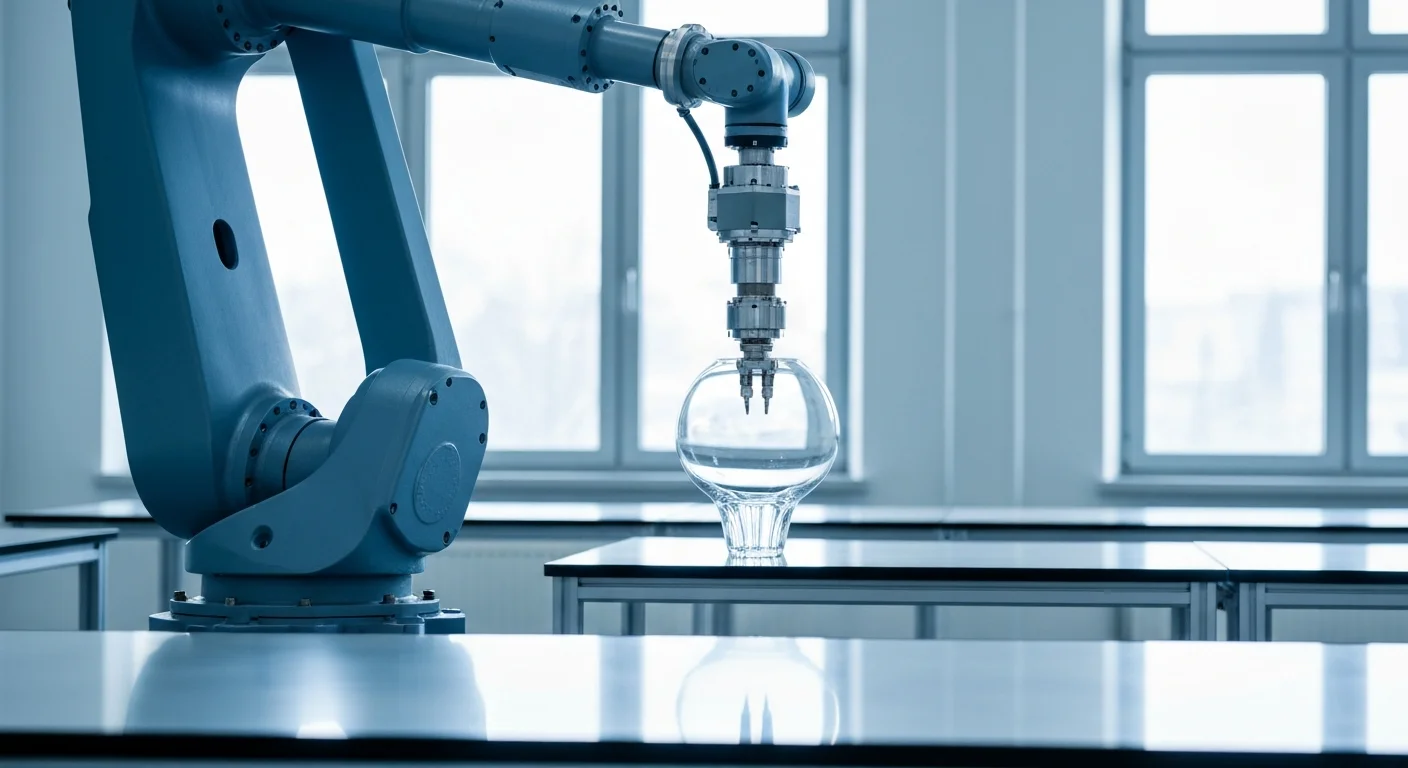
The core differentiator Sereact emphasized in its announcement is the ability for robots to evaluate the consequences of an action before executing it — for example, simulating whether a particular grip will crush a fragile package, or whether moving a tote will dislodge a neighbor. Rather than following rigidly programmed sequences, Sereact-powered robots are described as acting "situationally," reasoning over the scene in front of them and adjusting on the fly.
That architectural choice puts Sereact in the same conceptual neighborhood as US-based foundation-model robotics labs like Physical Intelligence and Skild, which have argued that a single generalist policy — rather than per-task scripting — is the path to deploying robots into messy real-world environments. Where Sereact differs is its software-first, hardware-agnostic posture: the company sells the model layer that runs on third-party arms and mobile platforms rather than building its own robot.
Customers and Roadmap
Sereact says current production customers include automakers BMW Group and Daimler Truck on the manufacturing side, and European e-commerce operators Bol, MS Direct, and Active Ants on the logistics side. The Series B capital is earmarked for further development of Sereact's core VLAM, expansion of go-to-market in the United States, and pushing the model onto humanoid robot platforms — a market that has attracted billions in late-stage capital across Figure, 1X, Apptronik, and Chinese entrants over the past year.
Why It Matters
The round is one of the largest European robotics-software financings of 2026 and lands in a market where investors increasingly distinguish between robotics hardware bets and the model layer that sits on top of them. With incumbents Amazon Robotics and Symbotic still dominating warehouse automation by revenue, software-only entrants like Sereact are betting that a horizontal AI brain — deployable across vendors and form factors — is the more defensible long-term position. The pace of follow-on funding suggests at least four major investors agree.