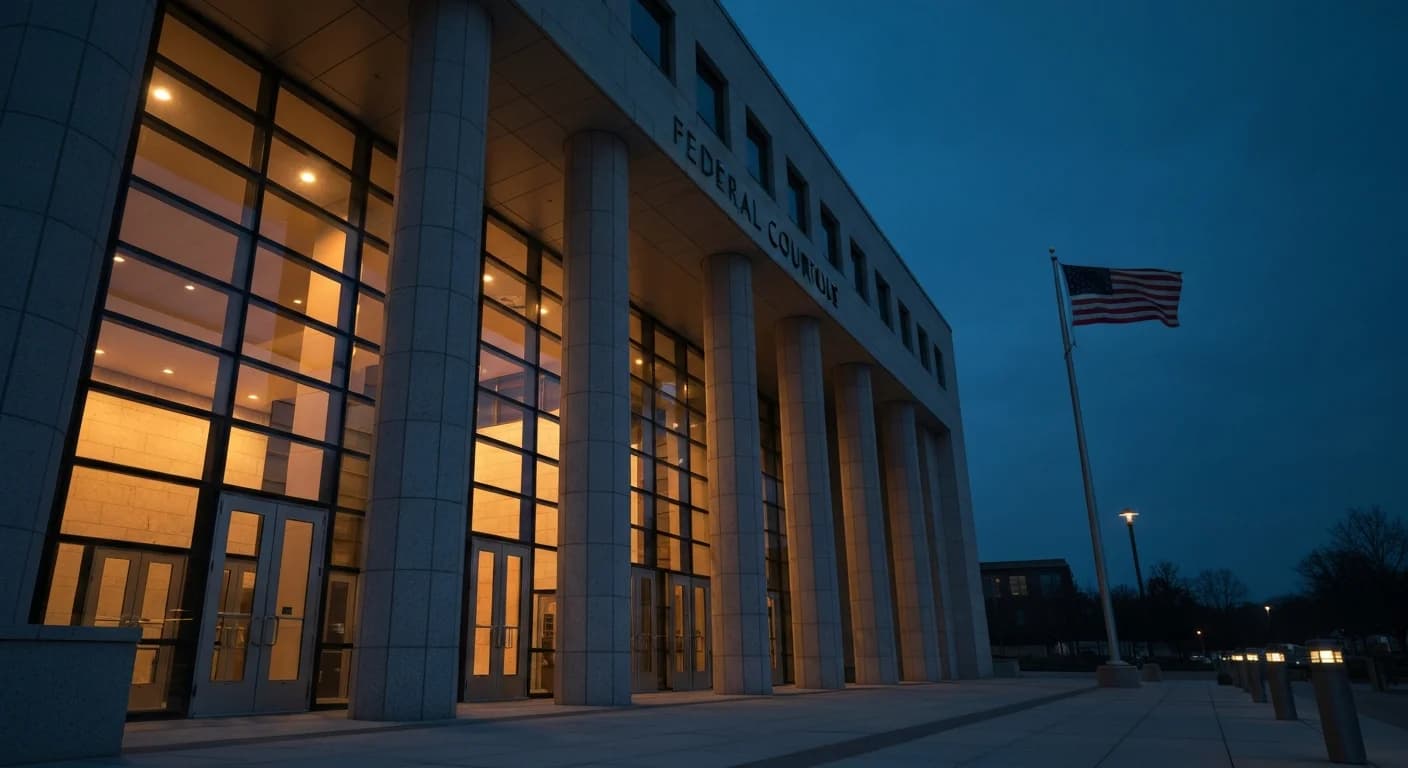
After a marathon Monday of jury selection, the high-stakes federal trial pitting Elon Musk against Sam Altman over the future of OpenAI moves Tuesday to opening statements in an Oakland courtroom — with one notable absence from the case file: Musk has dropped his fraud allegations against the ChatGPT maker on the eve of trial.
What's left on the docket
Of the 26 claims Musk filed in 2024, only two remain in front of the nine-person jury: breach of charitable trust and unjust enrichment. Both argue that OpenAI's conversion from a nonprofit to a capped-profit structure betrayed its founding mission — and that Altman, OpenAI president Greg Brockman, and Microsoft (named as a defendant for aiding and abetting) benefited from a charitable enterprise Musk helped seed with roughly $38 million in early funding.
The fraud-related allegations Musk had wielded for nearly two years were quietly removed before opening arguments began. Multiple outlets confirmed he is now focused on the equity-style theories, narrowing the case to whether OpenAI's leadership unjustly enriched itself by walking the organization across the for-profit threshold and away from its 2015 nonprofit charter.
What Musk is asking for
Musk is seeking $150 billion in damages, with proceeds earmarked for OpenAI's charitable arm rather than for his own businesses. He also wants OpenAI returned to nonprofit status, with Altman and Brockman removed as officers and Altman ousted from the board. If granted, the relief would fundamentally reshape one of the most valuable private companies in tech, currently valued at $852 billion after its latest funding round.
OpenAI's defense, telegraphed in pretrial filings, is that Musk knew about and at one point supported the for-profit pivot, and only sued after failing to become CEO and launching his own competing lab, xAI.
The witnesses
Beyond the two principals, the witness list reads like a Silicon Valley playbill. Brockman is expected to testify, as is Microsoft CEO Satya Nadella, whose company has poured billions into OpenAI and shares the bench as a co-defendant. Former senior OpenAI executives are also lined up, alongside Shivon Zilis, a former OpenAI board member who has children with Musk and may be called to discuss internal governance debates from the period before Musk's 2018 board departure.
U.S. District Judge Yvonne Gonzalez Rogers has signaled she wants jurors to begin deliberations on liability by May 12, leaving roughly two weeks of testimony, exhibits, and cross-examination ahead.
Why the verdict matters beyond Oakland
The case has become a referendum on whether nonprofit AI labs can morph into commercial juggernauts without violating their charitable charters — a question the rest of the industry is watching as Anthropic, xAI, and others navigate hybrid structures of their own. A ruling for Musk could chill the for-profit transitions that have funneled hundreds of billions in compute into the frontier-model race. A ruling for OpenAI would effectively bless the playbook Altman wrote, and clear the way for the company's IPO ambitions.