Private equity giant KKR has formally launched Helix Digital Infrastructure, a new standalone company backed by more than $10 billion in committed capital and aimed squarely at the bottleneck slowing the AI industry: physical infrastructure. Former Amazon Web Services chief executive Adam Selipsky will run the venture as CEO and chair, marking his return to an operating role after stepping down from AWS and taking an advisory seat at KKR last year.
A Full-Stack Bet on the AI Buildout
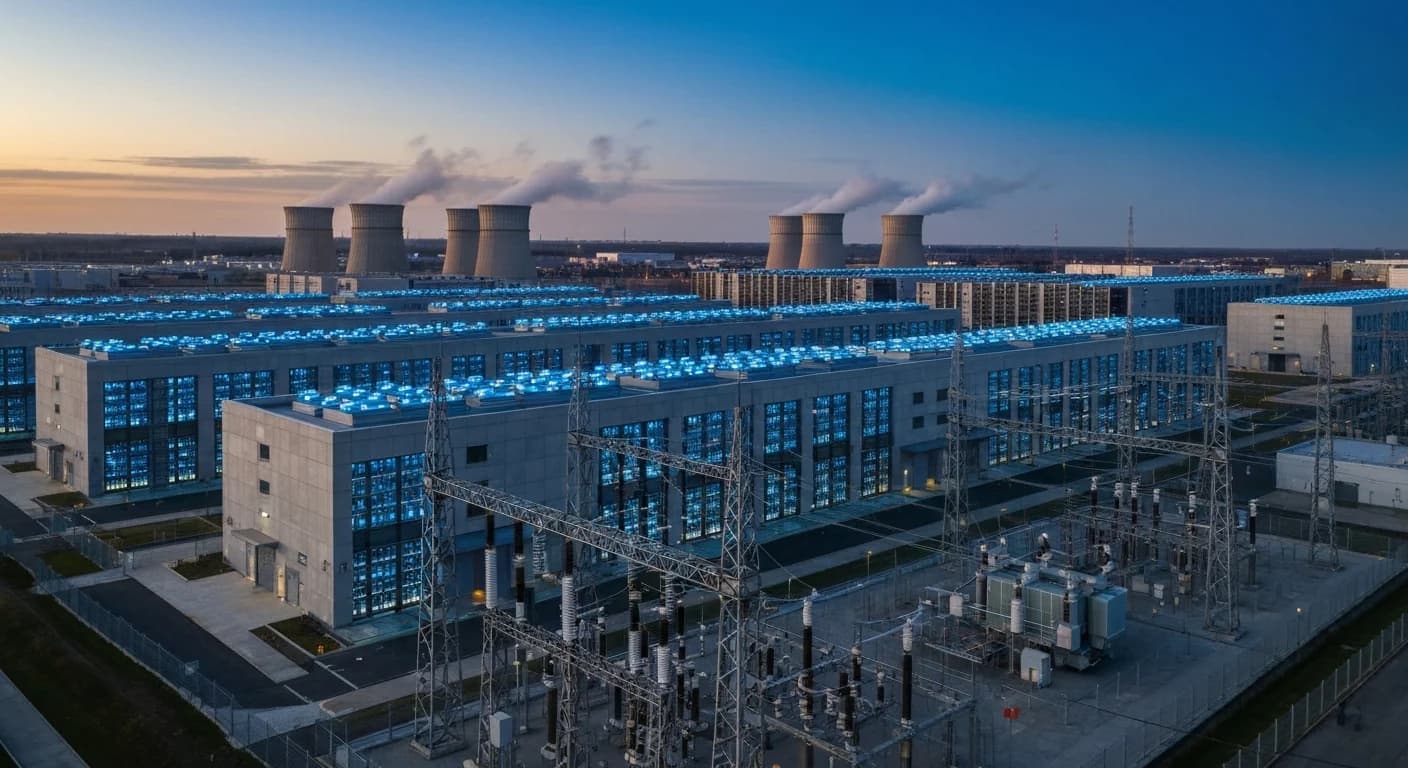
Helix's pitch is simple and unusually broad. Rather than focusing only on data center shells or power purchase agreements, the company plans to design, build, own, and operate the full stack that AI deployments depend on — land, power generation, transmission, fiber connectivity, and cooling. KKR is positioning Helix as a partner for hyperscalers that are running into the limits of their own internal teams and conventional colocation providers as model training and inference workloads keep scaling.
The initial $10 billion-plus commitment includes capital from KKR's own funds alongside a sovereign wealth fund and strategic partners. KKR has signaled additional fundraising rounds are likely as projects move from planning into construction.
Why Selipsky Matters
Selipsky led AWS during a period of rapid expansion before stepping aside in 2024. His return is a notable signal because the constraints holding back AI today are not the ones AWS solved a decade ago. Compute capacity is now gated by gigawatts of power, multi-year interconnection queues, and supply chains for transformers, chillers, and high-bandwidth memory — none of which can be provisioned with a control plane.
KKR is betting that Selipsky's relationships across hyperscalers, chipmakers, and utilities translate into faster deal flow than a pure financial sponsor could achieve on its own.
A Crowded but Capital-Hungry Market
Helix joins a growing roster of AI-infrastructure pure plays competing for the same scarce inputs. KKR and Energy Capital Partners separately announced a $50 billion data center partnership in late 2024, and SoftBank is reportedly preparing to spin out a roughly $100 billion AI and robotics vehicle called Roze. Hyperscaler capex alone is projected to approach $700 billion in 2026.
Implications
The Helix launch reinforces a broader market shift: AI returns are increasingly flowing not to model labs but to whoever can deliver power, land, and cooling on time. For hyperscalers, an outsourced full-stack partner could relieve some balance-sheet pressure as Wall Street pushes back on capex guidance — Meta's stock dropped sharply this week after raising its 2026 capex range to as much as $145 billion. For everyone else, Helix is another reminder that the AI bottleneck has moved from silicon to substations.