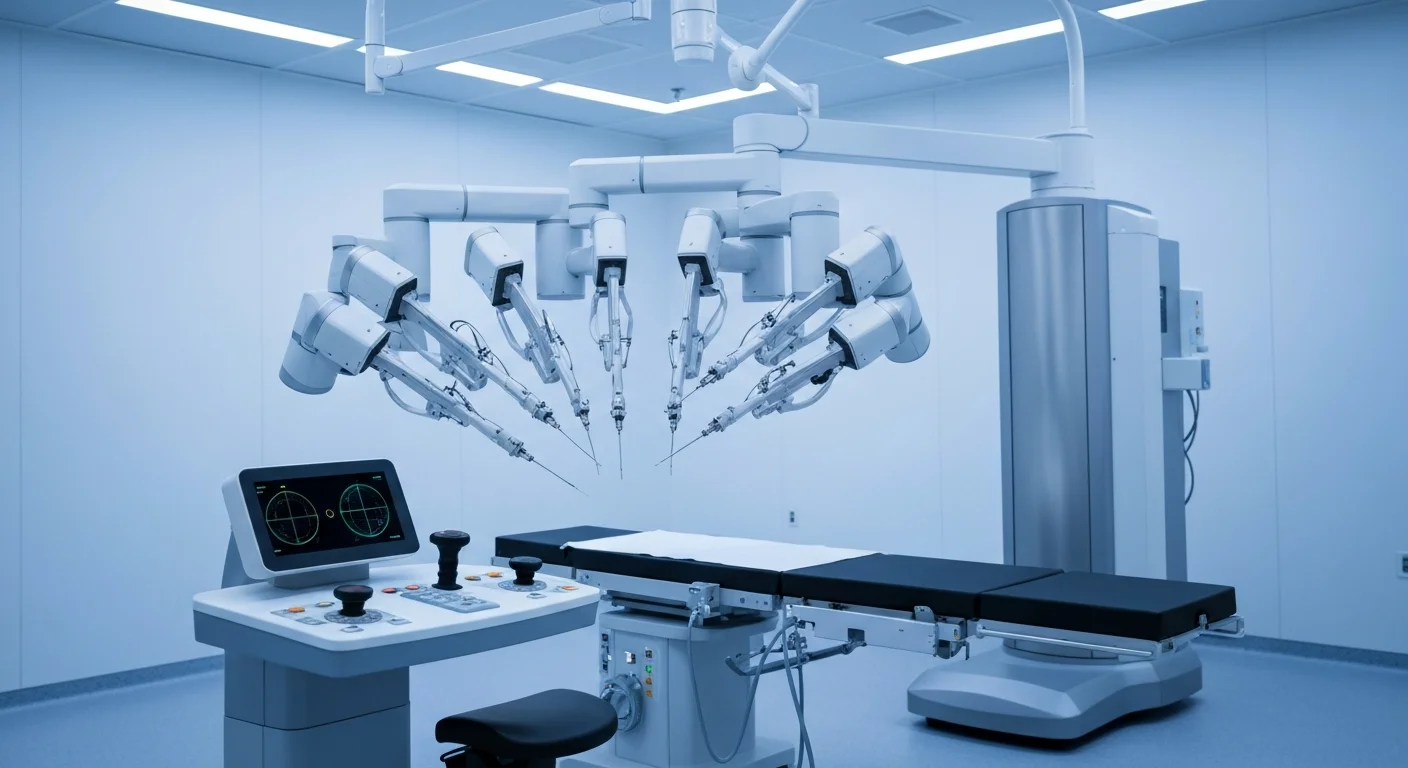
Cornerstone Robotics has secured EU CE Mark certification under the Medical Device Regulation (MDR) for its Sentire Endoscopic Surgical System, the Hong Kong-based company said on May 25 — a regulatory clearance that opens the European market to a surgical-robotics unicorn last valued above $1 billion and anchored by Hong Kong's sovereign wealth fund.
What cleared, and where Sentire can sell now
Sentire is a multi-specialty endoscopic robotic platform that combines instrument control, integrated imaging, and surgical software for minimally invasive procedures. The CE Mark covers general surgery, gynecology, thoracic, and urology indications. Europe now joins China — where the system holds National Medical Products Administration (NMPA) approval — and Singapore, giving Cornerstone commercial access to three of the world's most demanding regulatory regions for a single platform.
Founder and CEO Professor Samuel Au framed the milestone as a stage shift: "Receiving CE Certification marks a major milestone in Cornerstone Robotics' evolution from a technology innovator to a global clinical solutions provider."
The capital behind the rollout
The European approval lands roughly six months after Cornerstone closed an oversubscribed round of about $200 million in November 2025 at a valuation north of $1 billion. The cap table is the notable part: the lead is Hong Kong Investment Corporation (HKIC), the city government's sovereign investment arm, alongside Qiming Venture Partners, Bridgeone Capital, Gaorong Ventures, and K2VC. Au has said HKIC's check reflects a government push to help local deep-tech firms "go global."
Founded in 2019 out of the Chinese University of Hong Kong, the company runs operations and R&D across Hong Kong, Shenzhen, Beijing, Shanghai, London, and Portsmouth, plus a 30,000-square-meter manufacturing site in mainland China.
The da Vinci calculus
The target is explicit: Intuitive Surgical's da Vinci, which has held a near-monopoly on soft-tissue robotic surgery for two decades. Cornerstone is positioning Sentire as a lower-cost, multi-region alternative, and CE clearance removes the single biggest gate to selling against da Vinci in Europe. With a state investor underwriting the expansion, the move also carries an industrial-policy signal — China and Hong Kong backing a homegrown platform into markets long dominated by a US incumbent.
Why this matters beyond medtech
Robotic surgery is one of the most unforgiving embodied-AI categories: it demands real-time imaging, sub-millimeter motion scaling, and software-defined instrument control under hard safety constraints. The hardware base for that stack is no longer a single-vendor, single-country affair. As more CE- and FDA-cleared platforms reach the field, differentiation shifts up to the software and data layer — imaging, telemetry, and eventually AI-assisted guidance built on procedure data — which is also where the next wave of medical-device regulation will concentrate. For health systems and medtech buyers, a credible second-source robotic platform is the first real crack in da Vinci's pricing leverage.