Stord closed a $250 million Series F at a $3 billion valuation on May 26, roughly doubling the $1.5 billion valuation it carried twelve months ago and routing the capital into Stord Labs — a new physical-AI and robotics group that will train automation against the company's live order flow rather than in simulation.
The round was backed by existing investors including Strike Capital, Kleiner Perkins, Founders Fund, Franklin Templeton, Baillie Gifford, G Squared, Bond, and Lux. It nearly doubles the $200 million-plus Series E that Strike Capital led in May 2025, and the company says revenue has grown roughly tenfold over four years, with its software business tripling in 2025 and new bookings more than doubling quarter over quarter in Q1 2026.
The data moat, not the robots
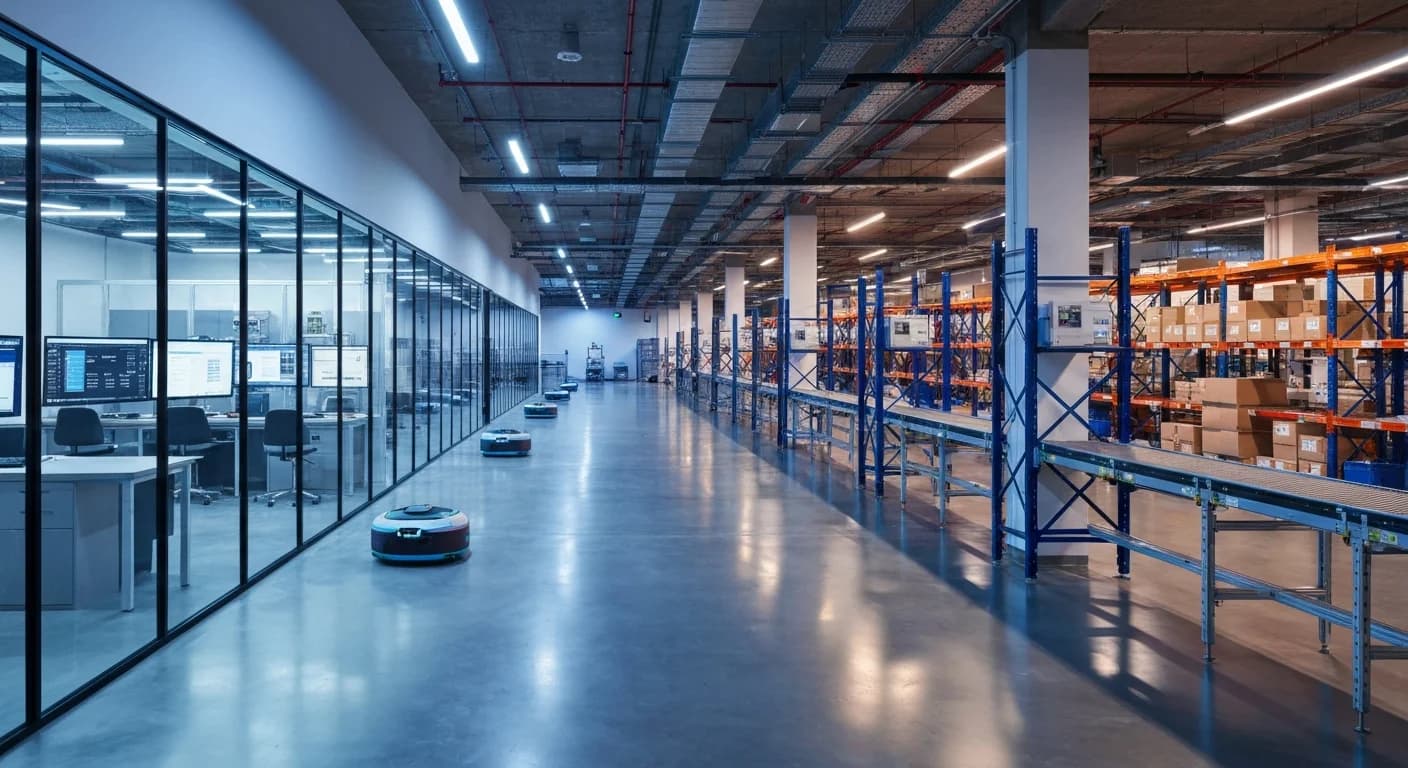
Stord Labs sits at the company's Atlanta headquarters and will build agentic AI and robotics that are validated against real orders before deployment across nearly 100 fulfillment facilities. The differentiator Stord is selling investors is not the hardware — it's the closed loop. The company reports it captures roughly 8 billion data points a year across more than 1,000 customers and over $15 billion in annual gross merchandise volume, a proprietary operational dataset that generic warehouse-robotics vendors don't have access to.
That framing — what Stord calls the "physical intelligence layer for commerce" — treats fulfillment as a model-training surface instead of a cost center. With 4,000-plus employees, including 200-plus in software, engineering, and data science, the bet is that live throughput data plus an in-house lab compounds faster than buying automation off the shelf.
Pointed at Amazon
CEO Sean Henry was blunt about the target: "By every measure, independent brands have been losing. Stord exists to level that playing field." The company positions its stack as giving brands a consumer experience that "surpasses Prime" — direct-to-consumer fulfillment, software, and logistics bundled so merchants control the post-purchase relationship instead of renting it from Amazon.
What changes for builders
The interesting signal here is architectural. Stord is wiring a research lab directly into a production logistics network, using real orders as the evaluation set before automation ships network-wide. For anyone deploying agentic systems against physical operations, that validate-on-live-data-then-fan-out pattern is the defensible part — the proprietary feedback loop, not the model weights. The funding also reads as a vote that vertically integrated operators with their own data pipelines, rather than pure-play robotics suppliers, are where physical-AI value accrues in commerce. Expect rivals to chase the same loop, and expect the data advantage to widen for whoever already moves the most volume.