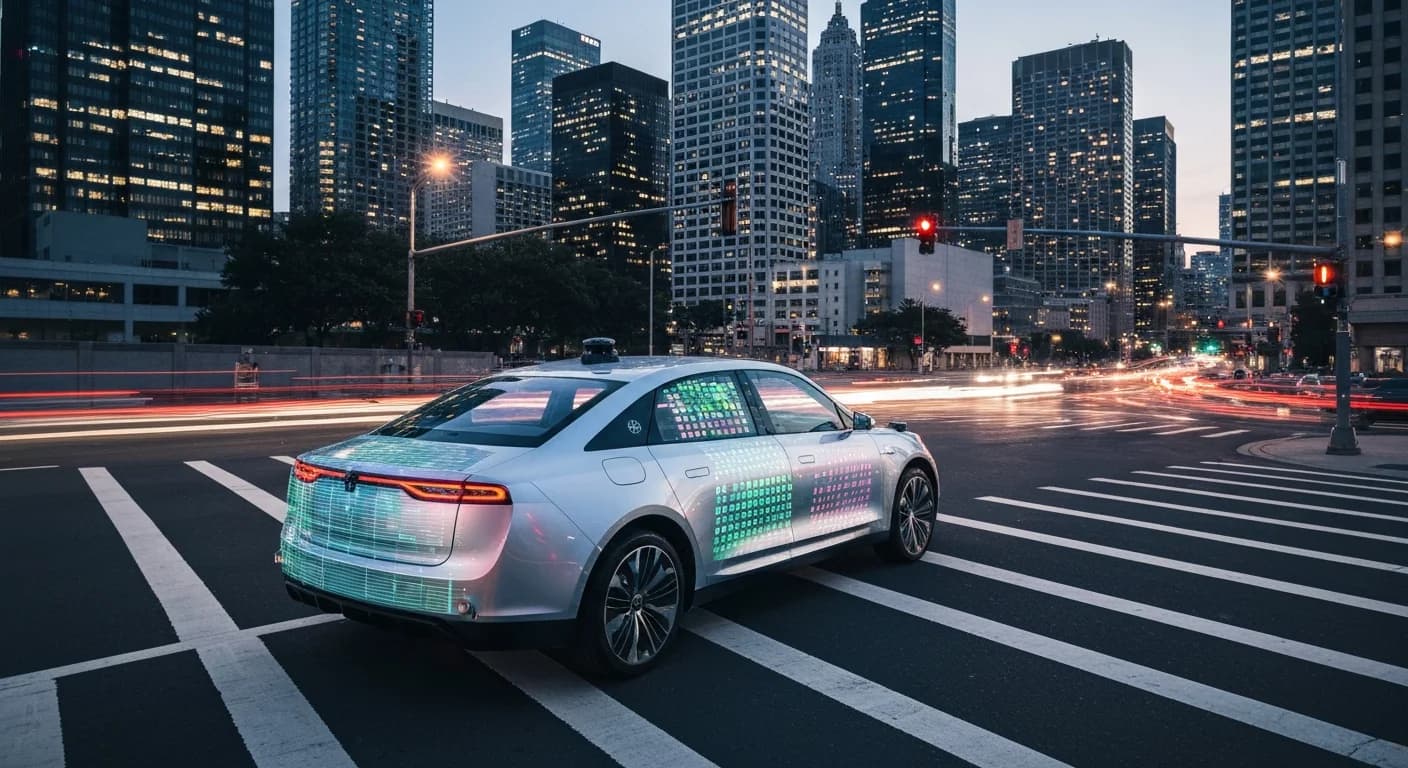
NVIDIA used its GTC 2026 conference to make its biggest push yet into autonomous driving, announcing a partnership with Uber to deploy fully driverless Level 4 robotaxis across 28 cities by 2028. The rollout will begin in Los Angeles and San Francisco in the first half of 2027 before expanding across North America, Europe, Australia, and Asia.
A Phased Approach
Rather than rushing to launch, NVIDIA and Uber outlined a phased deployment strategy for each new city. The process begins with a fleet of data-collection vehicles that map city-specific driving conditions and train the system on local nuances. That phase is followed by an operator-led launch with safety drivers, before transitioning to fully driverless Level 4 operations.
Central to the deployment is NVIDIA Alpamayo, a next-generation reasoning-based AI model designed specifically for autonomous vehicles. Unlike earlier perception-only systems, Alpamayo uses chain-of-thought logic to handle complex "long-tail" scenarios — unpredictable construction zones, erratic pedestrian behavior, and ambiguous traffic situations that have historically tripped up self-driving systems.
NVIDIA also introduced Halos OS, a unified safety architecture for AI-driven vehicles that provides a production-ready safety foundation for Level 4 autonomy on the DRIVE Hyperion platform.
Automakers Go All-In on DRIVE Hyperion
Alongside the Uber partnership, NVIDIA announced that BYD, Geely, Isuzu, and Nissan have adopted NVIDIA DRIVE Hyperion for Level 4 vehicle development. These four manufacturers collectively build 18 million cars per year, joining existing DRIVE Hyperion partners such as Mercedes.
The DRIVE Hyperion platform provides a full-stack solution for developing and deploying both driver-assist and fully autonomous capabilities. Isuzu and Tier IV are also using the platform to build autonomous buses, pointing to commercial vehicle applications beyond passenger cars.
Hyundai Enters the Race
Hyundai also announced a partnership with NVIDIA targeting the robotaxi market, with reports indicating the South Korean automaker sees the collaboration as a way to compete directly with Tesla's autonomous ambitions.
The Bigger Picture
The announcements represent a significant scaling of NVIDIA's physical AI strategy. By combining its AI computing dominance with a ride-hailing distribution network through Uber, NVIDIA is positioning itself not just as a chip supplier but as the platform layer for autonomous transportation. With major automakers now committed to DRIVE Hyperion and a concrete timeline for driverless deployment, the long-promised robotaxi era appears to be moving from prototype to production.