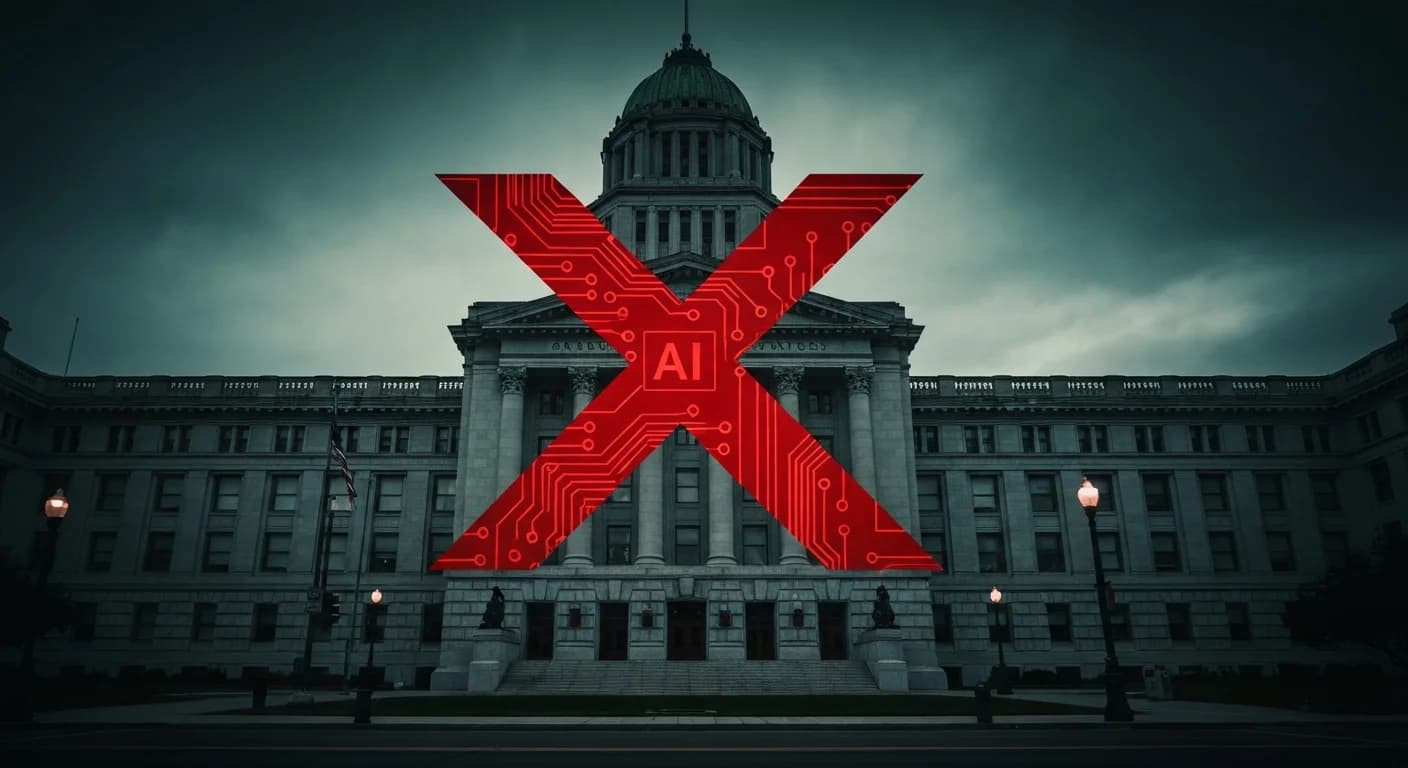
The White House has escalated its dispute with Anthropic to a full federal ban. President Trump ordered all U.S. government agencies to cease using Anthropic's technology after the company refused the Pentagon's demand to make Claude available for "all lawful purposes" — including mass surveillance and autonomous weapons development.
What Anthropic Refused
The dispute centers on two specific red lines Anthropic would not cross: allowing Claude to be used for mass surveillance of American citizens, and enabling fully autonomous weapons systems. The Pentagon's revised contract language required Anthropic to remove these restrictions. Anthropic declined, publicly stating that some applications fall outside its acceptable use policy regardless of their legal status.
This follows the Pentagon's earlier move to fast-track Grok for classified military systems — a decision that now looks less like a parallel procurement and more like a deliberate pressure campaign.
Musk's Role
Elon Musk has been publicly attacking Anthropic on X for weeks, writing that the company "hates Western civilization." His AI company xAI signed an agreement accepting the Pentagon's "all lawful use" standard without reservation, and Grok is now authorized for classified military networks through March 2027.
The timing raises obvious conflict-of-interest questions. Musk's company directly benefits from Anthropic's exclusion from government contracts — a point that OpenAI CEO Sam Altman made publicly when he sided with Anthropic and called the Pentagon's approach "threatening."
Industry Reaction
The response from the AI industry has been unusually unified. Employees from Google and OpenAI publicly backed Anthropic's position. Altman told CNBC that OpenAI shares the same red lines on surveillance and autonomous weapons, and sent an internal letter saying the precedent "should concern every AI company."
The split is now clear: companies willing to accept unrestricted government use of their models (xAI) versus those insisting on safety boundaries (Anthropic, OpenAI). The question is whether the federal ban creates enough financial pressure to force Anthropic to reconsider — or whether it becomes a selling point for the company's enterprise and international customers.
What Happens Next
Anthropic is reportedly exploring legal challenges to the executive order. Meanwhile, China's open-source AI ecosystem stands to benefit if Western AI companies are divided between government compliance and safety commitments. For developers building on Claude, the immediate impact is limited — the ban applies to federal procurement, not commercial or consumer use. But the signal it sends about the relationship between AI companies and government power is hard to ignore.