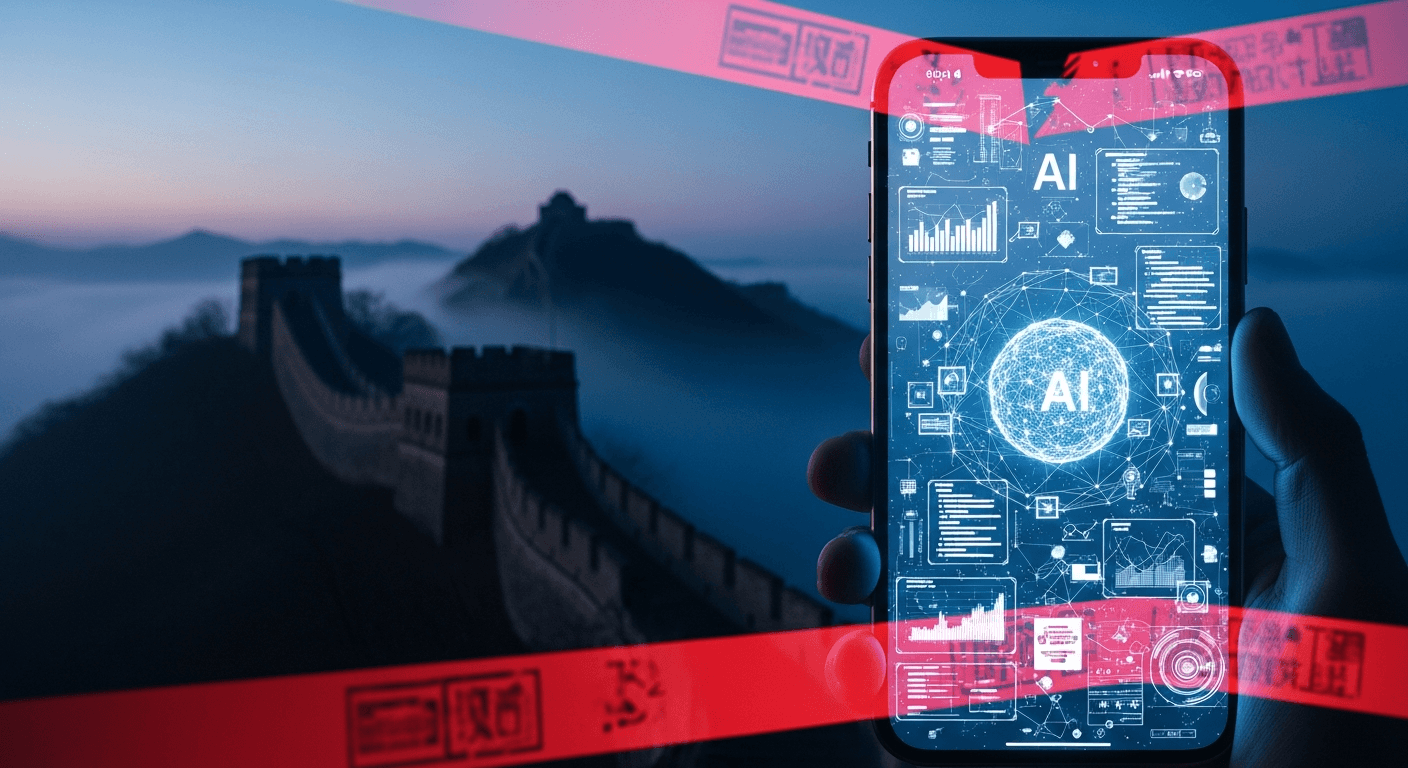
Apple had one job: don't ship Apple Intelligence in China until regulators say yes. On March 30, 2026, it apparently forgot.
Chinese iPhone users briefly gained access to Apple Intelligence features — the same AI writing tools, Siri enhancements, and notification summaries that have been available in the United States since October 2024. The catch: Apple hadn't received regulatory approval from China's Cyberspace Administration of China (CAC), the government body that must greenlight generative AI products before they can be offered to Chinese consumers.
Bloomberg's Mark Gurman, who first reported the accidental rollout, confirmed the features were live "in error" and that Apple pulled them offline the same day. Users who caught a glimpse of the features lost access within hours.
18 Months of Waiting, Ended by a Glitch
Apple Intelligence launched in the United States in October 2024. Since then, it has expanded to the European Union, the United Kingdom, Japan, South Korea, and dozens of other markets. China — Apple's second-largest revenue market — has remained conspicuously absent from that list.
The delay isn't technical. It's regulatory and commercial. China requires companies offering generative AI services to obtain a security assessment clearance from the CAC, a process that involves submitting model details, safety measures, and compliance documentation. Apple must also structure its China AI product through a local partner — a requirement the company has approached through a deal with Alibaba.
Under the Alibaba arrangement, Alibaba's AI models would provide the backbone for Siri features and writing tools in China, replacing the OpenAI integration that powers the same features in Western markets. That's not a simple technical swap: it involves model evaluation, integration testing, and regulatory approval for the Alibaba-powered version specifically.
None of that process was complete when the features briefly appeared on Chinese iPhones.
What Chinese Users Saw
Reports from Chinese users, surfaced by 9to5Mac, showed the Apple Intelligence onboarding screen appearing on Chinese iPhones — the same initial setup flow that international users saw when the features first rolled out. Screenshots circulated on Chinese social media before Apple shut the rollout down.
It's unclear whether the accidental launch was caused by a configuration error, a server-side flag being set prematurely, or some other mechanism in Apple's rollout infrastructure. Apple has not publicly commented beyond the Bloomberg report confirming the error.
The Competitive Cost of Delay
The accident underscores how much ground Apple has ceded in China's AI smartphone race.
Huawei relaunched its AI-powered Mate series last year with its own large language model integration, positioning Huawei as a premium AI phone brand specifically for Chinese consumers who can't — or won't — use Western AI services. Xiaomi has followed with its own AI features built into MIUI, including the MiMo reasoning model the company developed in-house.
Both companies have benefited from the simple fact that they don't need CAC approval for AI features built on Chinese models designed specifically for domestic deployment. Apple, as a foreign company using foreign AI infrastructure, faces a fundamentally different regulatory burden.
Every quarter that Apple Intelligence remains unavailable in China is a quarter where Huawei and Xiaomi can market AI differentiation against Apple's premium hardware. And for a company that has seen its China market share erode under pressure from domestic brands, the delay isn't just a regulatory inconvenience — it's a product gap that competitors are actively exploiting.
What Happens Next
Apple's deal with Alibaba suggests the company has a clear path to regulatory approval — it's a question of when, not if. The CAC has approved AI features from domestic providers including Baidu, Tencent, and Alibaba itself, which means Apple's Alibaba-powered product would be using already-approved underlying infrastructure.
The accidental launch doesn't appear to have damaged those regulatory negotiations, but it's unlikely to have helped. Regulators who are deciding whether to approve a foreign company's AI product probably don't love seeing that company accidentally ship the product before approval is granted.
Apple has not confirmed a launch timeline for Apple Intelligence in China. Given the 18-month gap that has already elapsed, the regulatory and commercial machinery is clearly moving — just not as fast as a misconfigured server.
For more on the regulatory fallout and what penalties Apple may face, see our follow-up analysis of the accidental rollout. Apple's broader AI roadmap — including the 3-billion parameter on-device LLM announced at WWDC 2026 — offers context on the features Chinese users briefly accessed.
This story will be updated as Apple provides further comment.