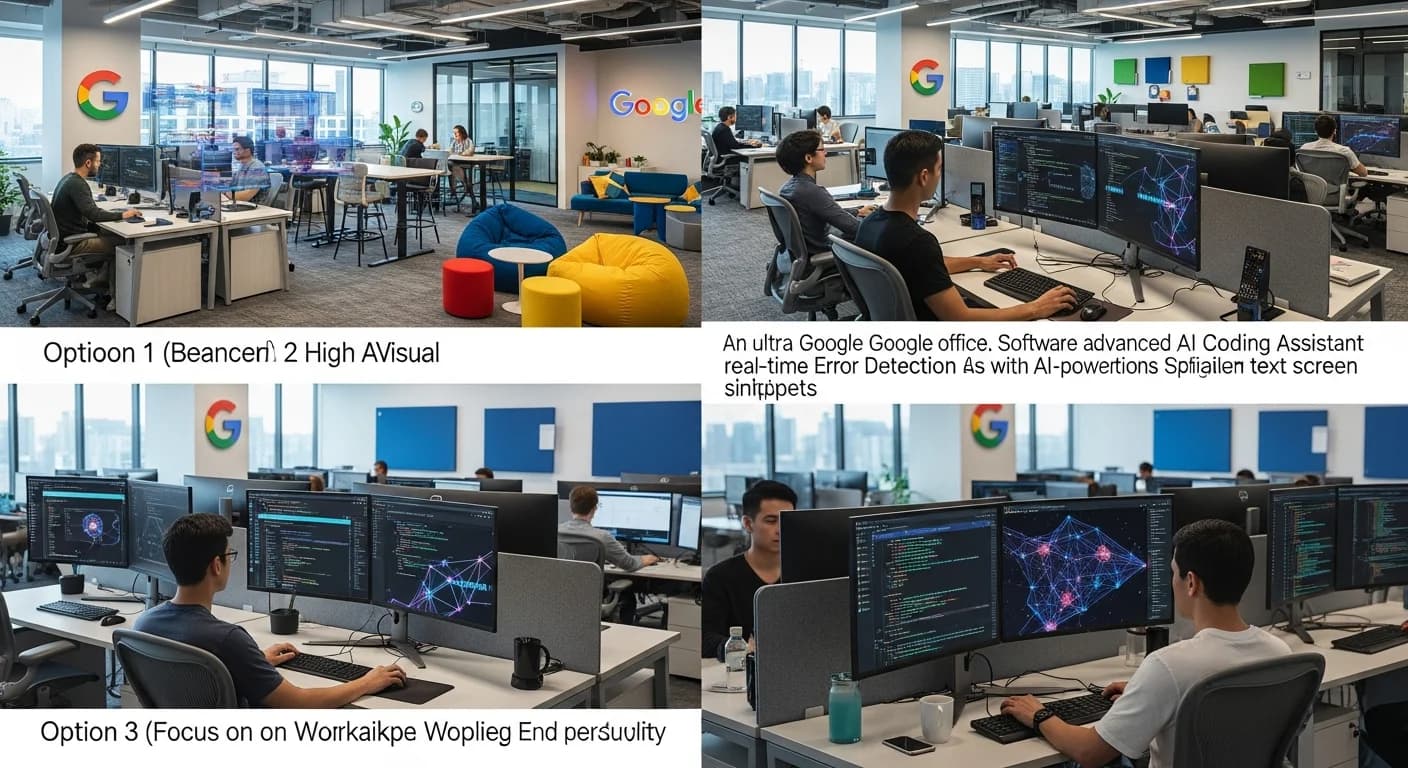
Google's internal AI coding agent has become so popular among the company's engineers that Google was forced to restrict access to manage overwhelming demand — a stark indicator of just how quickly agentic AI tools are becoming essential to software development.
Demand Exceeds Capacity
The internal tool, details of which remain largely confidential, allows Google engineers to leverage AI for coding tasks in ways that go beyond simple code completion. The agent can apparently handle more complex, multi-step development workflows that engineers have found genuinely useful.
The popularity surge forced Google to implement access controls, a notable development for a company that typically has infrastructure capacity to spare. When Google has to ration access to an internal tool, it's a signal that something significant is happening.
The Agentic AI Shift
The news comes as "agentic AI" — systems that can take autonomous actions rather than just generate responses — has become the defining trend in enterprise AI. Companies across the tech industry are racing to build and deploy AI agents that can actually do work, not just assist with it.
Google's internal success story adds weight to the thesis that AI coding agents represent a genuine productivity multiplier. If Google's own engineers are clamoring for access, it suggests the technology has crossed a threshold from "interesting experiment" to "indispensable tool."
Competitive Implications
The demand signal matters beyond Google's walls. It suggests that:
- AI coding agents work: If they didn't deliver value, Google engineers wouldn't be fighting for access
- Enterprise demand is real: Companies that can deploy effective AI coding tools internally may gain significant productivity advantages
- The race is accelerating: Every major tech company is now racing to build or acquire AI development tools
For competitors like Microsoft (GitHub Copilot), Anthropic (Claude Code), and OpenAI, Google's internal success is both validation and a warning. The company that masters AI-assisted development may gain compounding advantages in shipping software faster.
What's Not Public
Google hasn't disclosed what specifically makes its internal tool so popular. Possibilities include:
- Deep integration with Google's internal development environment
- Access to proprietary models or training data
- Capabilities that go beyond what's available in public tools
- Enterprise-grade reliability and security features
Whatever the secret sauce, the demand signal is clear: developers want AI agents that can genuinely accelerate their work, and they're willing to compete for access when they find one that works.
The Broader Picture
The Google story is part of a larger pattern this week in agentic AI. Anthropic launched computer use for Claude Code CLI. Microsoft expanded Copilot's multi-model capabilities. And companies across the industry are betting that AI agents — not just chatbots — represent the next major platform shift.
For enterprise software development, the future appears to be agentic, autonomous, and highly sought after.