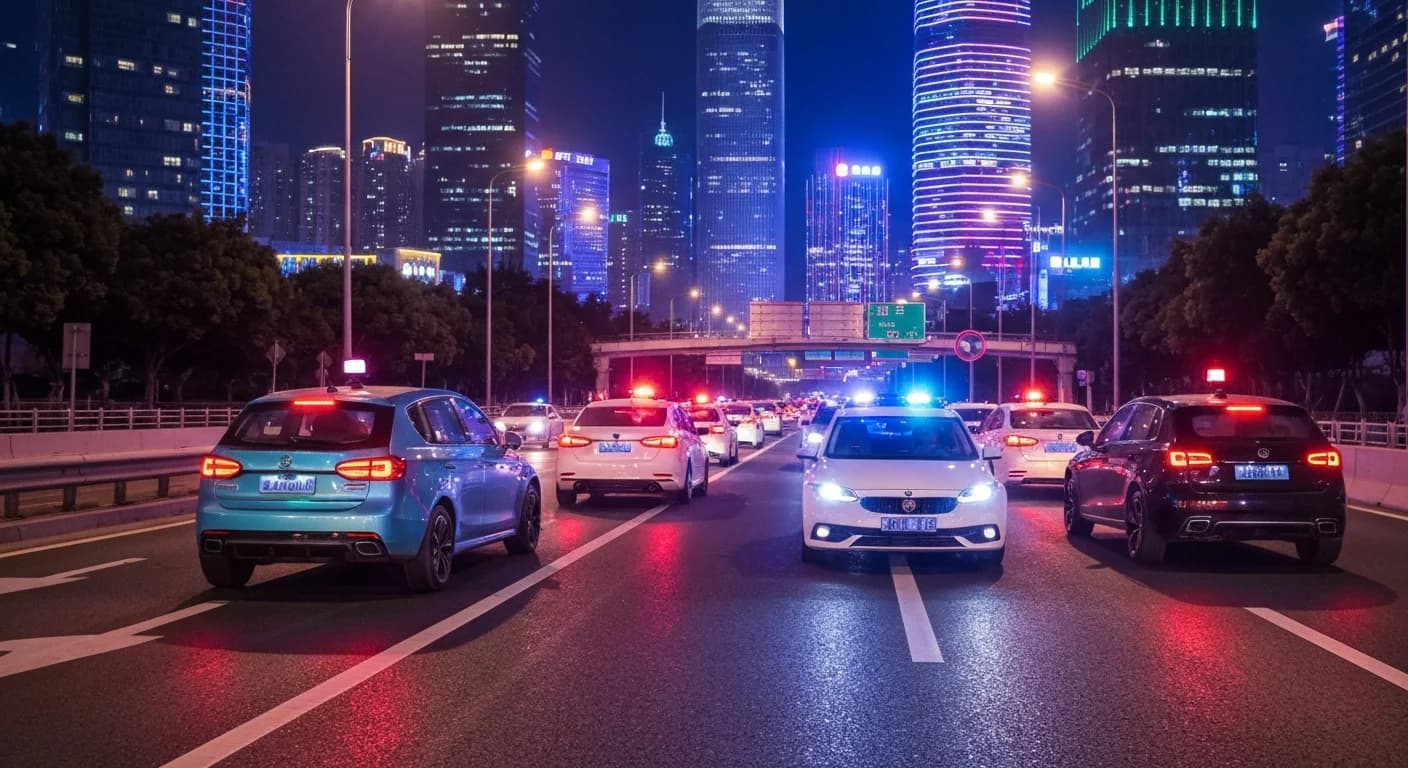
Scores of Baidu's driverless cars came to a halt simultaneously in Wuhan on Tuesday, trapping passengers inside, stranding vehicles on highways, and causing at least one accident — an incident that will be difficult for proponents of autonomous vehicles to ignore.
What Happened
Wuhan police confirmed receiving multiple reports of Baidu Apollo Go robotaxis stopping in the middle of streets and becoming unable to move. Preliminary investigations point to an unspecified "system failure," though the specific cause — whether a software bug, server outage, connectivity loss, or something else — has not been disclosed.
Local news reports cited by Reuters suggest at least 100 vehicles were affected. Wuhan is Baidu's most densely deployed robotaxi market, with more than 500 driverless Apollo Go cars operating on its roads.
Passengers reported being stuck inside the vehicles. Others were stranded on highways. At least one accident occurred as frozen cars created bottlenecks in traffic. Baidu did not immediately respond to requests for comment.
The Scale of Baidu's Deployment
The incident highlights both how far Baidu has pushed autonomous vehicle deployment and the risks that come with it. The company operates robotaxis in 26 cities globally, and has moved aggressively to expand internationally — partnering with Uber to provide autonomous rides in both London and Dubai.
Wuhan has been central to that push. The city has served as a testing ground for Baidu's most ambitious driverless ambitions, and it's where hundreds of Apollo Go vehicles operate daily without safety drivers.
The Safety Debate Reignites
Tuesday's incident will reopen debates that the robotaxi industry has been carefully trying to contain since Waymo's expansion into multiple US cities and Baidu's parallel growth in China.
The core question is whether simultaneous fleet-wide failures are an acceptable risk in a technology that's now operating at scale in dense urban environments. A single vehicle malfunction is a road incident. A hundred vehicles freezing at once is a potential public safety crisis.
Unlike a traditional car breakdown, an autonomous vehicle that stops mid-operation can't be managed by a driver who steps out to push it to the curb. Passengers are, literally, stuck — waiting for remote operators or physical recovery crews to reach them.
Connectivity as a Single Point of Failure
The apparent simultaneous nature of the outage — with vehicles across the city stopping at roughly the same time — points toward a central infrastructure failure rather than individual vehicle malfunctions. If Apollo Go's vehicles rely on cloud connectivity for core decision-making functions, a server or network outage could, in theory, affect every vehicle in a region at once.
That architecture — which many robotaxi operators use for fleet management, routing, and remote oversight — creates a single point of failure that doesn't exist in human-driven vehicles. A traffic jam caused by a software outage affecting a hundred cars simultaneously is categorically different from the ordinary breakdowns that human drivers experience.
What Happens Next
Baidu will need to explain what failed and why. Regulators in Wuhan and potentially the Chinese national government will want answers — the Chinese government has been broadly supportive of autonomous vehicle deployment but has also shown willingness to pause or restrict it when incidents occur.
For the global robotaxi industry, the Wuhan freeze is a reminder that scaling autonomous vehicles is not just a technical achievement but a reliability engineering challenge. Waymo, Cruise (when it was operating), and now Baidu have all faced moments where the gap between "works most of the time" and "safe enough to deploy at scale" becomes publicly visible.
The debate over that gap isn't going away.