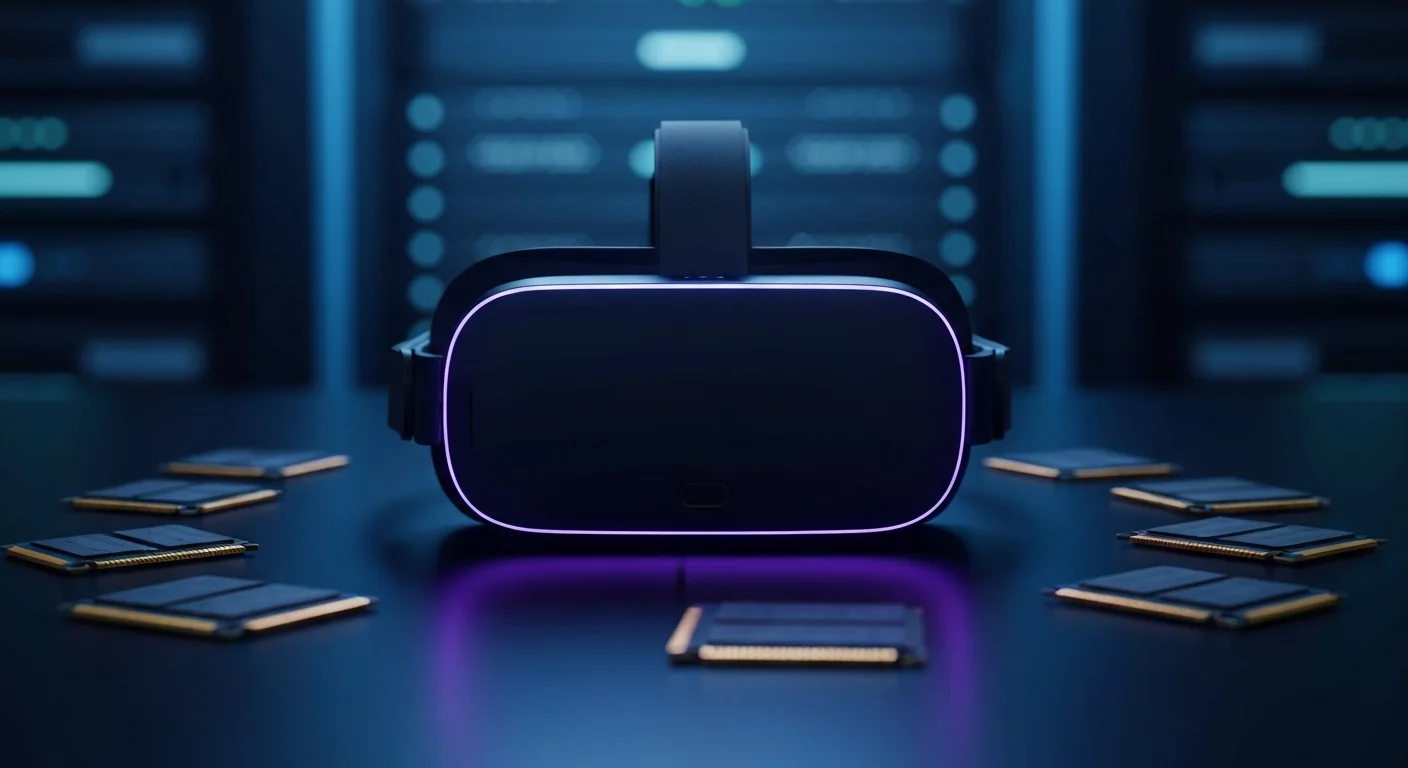
Meta is raising the price of its Quest 3 and Quest 3S virtual-reality headsets by $50 to $100 starting April 19, 2026, citing a global memory-chip shortage driven by surging AI data-center demand. It is the clearest signal yet that the AI build-out is now spilling out of the enterprise supply chain and into the prices consumers pay for phones, PCs and VR gear.
What's changing
According to Meta, the flagship Quest 3 (512GB) will rise by $100 to $599.99, while the more affordable Quest 3S will jump by $50 across both configurations, landing at $349.99 for the 128GB model and $449.99 for the 256GB model. Refurbished units sold through Meta's own storefront are also being repriced, though accessories such as controllers, facial interfaces and charging docks will hold at current levels.
Meta framed the move as unavoidable rather than strategic, pointing to what it called a "global surge in the price of critical components" — specifically DRAM memory chips, which are used in almost every category of consumer electronics.
Why AI is the real villain
The DRAM market has flipped from oversupply to acute scarcity over the past year. Hyperscalers including OpenAI, Google, Microsoft and Amazon are absorbing staggering volumes of high-bandwidth memory (HBM) and server-grade DDR5 to feed their AI training and inference clusters. Because HBM is made on the same production lines as the DRAM that ends up in headsets and laptops, every wafer diverted to Nvidia-class accelerators is a wafer not going into consumer devices.
TrendForce is forecasting another 45-50% jump in DRAM contract prices during the second quarter of 2026, on top of rises already seen earlier in the year. Lead times for high-end memory have stretched, and smaller buyers — VR makers, mid-tier PC OEMs, smart-home device vendors — are increasingly being pushed to the back of the allocation queue.
The broader signal
For Meta, the timing stings. The Quest 3S was originally positioned as a mainstream entry point designed to pull VR into the sub-$300 price band, and the price hike risks pushing headsets back toward the premium bracket just as competitors like Apple's Vision Pro and Samsung's Galaxy XR (formerly Project Moohan) are fighting for mindshare.
More importantly, the move illustrates how AI's infrastructure appetite is leaking into the wider economy. Data-center electrical components, backup generators, GPUs, skilled labor and now commodity memory are all being re-rated by AI demand. Consumer hardware makers that spent the last decade assuming memory was a deflationary input now have to price in a structural squeeze — and pass that cost directly to buyers.
Implications
Expect more announcements like this before summer. Smartphone OEMs, gaming console makers and Windows laptop vendors are all reporting tighter memory allocations, and several analysts have warned that holiday 2026 pricing could be materially higher than a year ago. The AI build-out promised productivity gains; it is also quietly delivering a memory-price tax on everyone else.