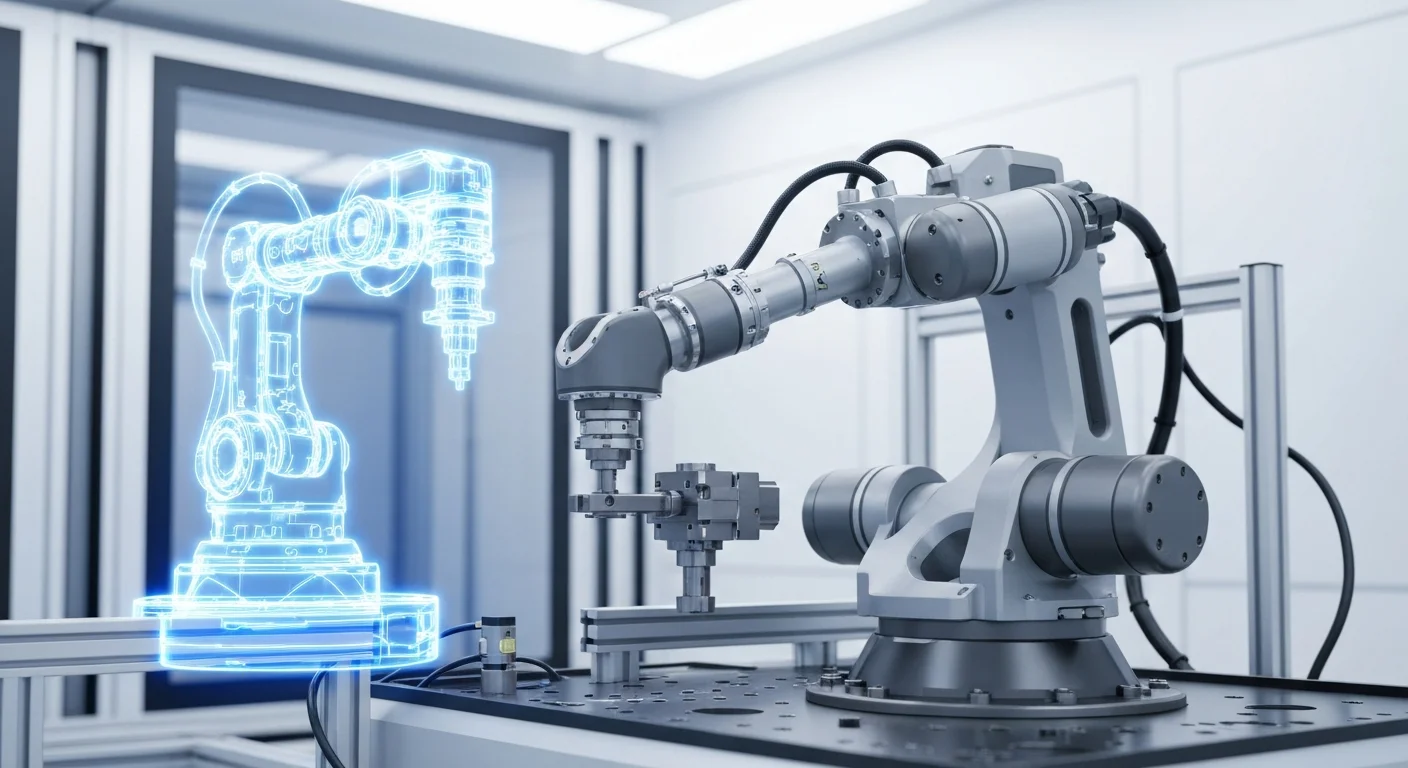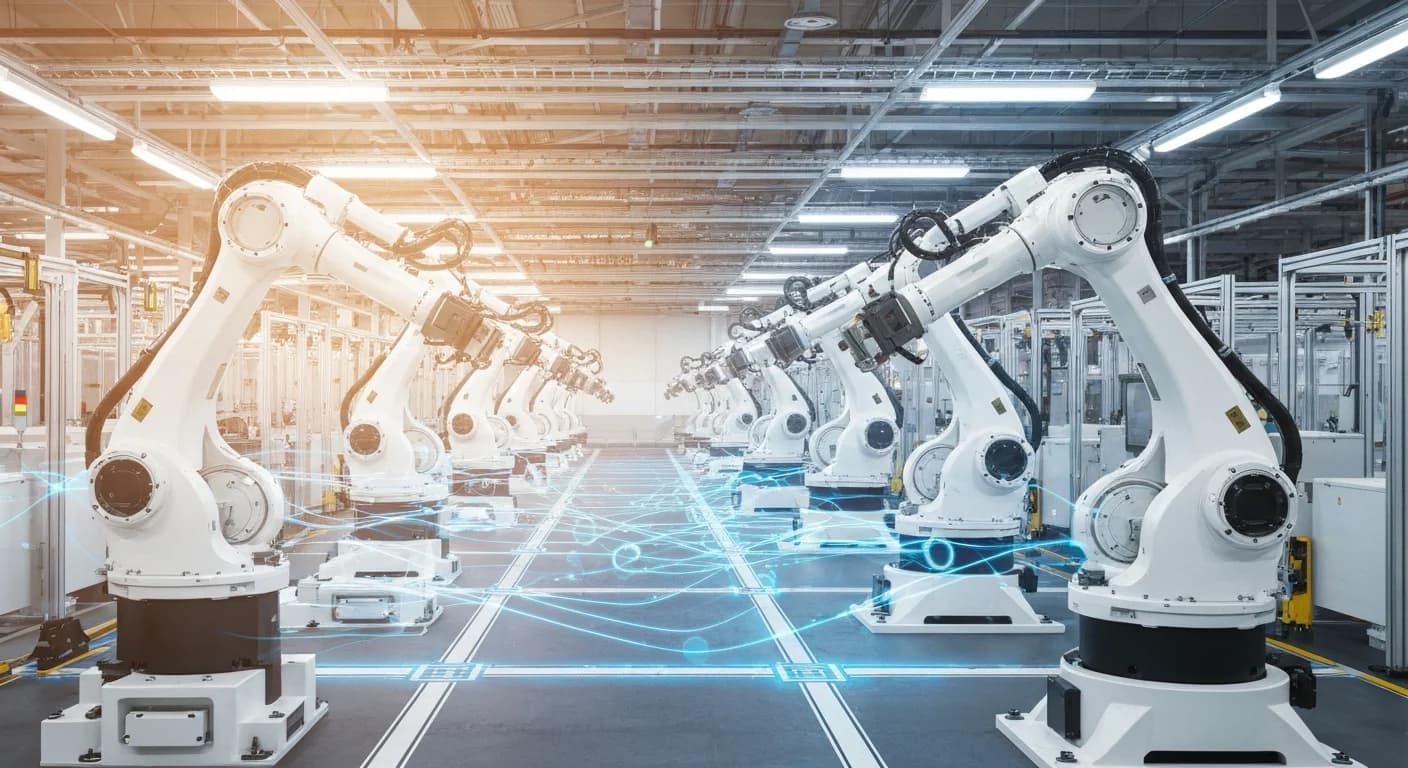
Toyota has unveiled a fleet of AI-powered manufacturing robots at its Motomachi plant in Toyota City, Japan, that share learned skills across the entire factory floor in real time. The system, called Woven Robotics, cuts new task programming time by 90% and represents the largest deployment of collaborative learning robots in manufacturing history.
How It Works
Traditional industrial robots are programmed individually — each arm gets its own motion plan for each task, requiring weeks of engineering per production line. Woven Robotics flips this model.
A human operator demonstrates a new task to a single robot using physical guidance. The robot's onboard vision and force-sensing systems learn the manipulation, then compress the skill into a transferable policy. That policy is broadcast to every robot in the fleet within minutes.
Toyota demonstrated this live at the Motomachi plant: an engineer taught one robot to handle a new door panel variant. Within 12 minutes, 47 other robots on the line had absorbed the skill and began performing the same task with zero additional programming.
The Numbers
| Metric | Traditional | Woven Robotics |
|---|---|---|
| New task deployment | 3-4 weeks | 1-2 days |
| Programming hours per task | 200+ | ~20 |
| Model changeover downtime | 2-3 days | 4 hours |
| Robot-to-robot skill transfer | Manual | Automatic |
Toyota says the system is currently operational across three assembly lines at Motomachi, with plans to expand to all 14 Japanese plants by the end of 2026.
Why This Is Different
Robot learning isn't new — Boston Dynamics, Covariant, and others have demonstrated learned manipulation for years. What Toyota has achieved is scale. Woven Robotics runs 340 robots on a shared skill mesh, with automatic safety validation that tests each transferred skill against collision, force limit, and quality constraints before deploying it to production.
"The bottleneck in factory automation has never been the robots," said Koji Toyoshima, head of Toyota's Woven Robotics division. "It's been the programming. We've removed that bottleneck."
Implications for the Industry
The ripple effects could be significant. Hyundai and Volkswagen have both confirmed they are evaluating similar shared-learning architectures for their own factories. If the approach generalizes, the economics of manufacturing automation shift dramatically — smaller production runs become viable for robotic assembly when reprogramming costs drop to near zero.
Toyota has not announced plans to license the technology but said it would publish a technical paper at ICRA 2026 in May.