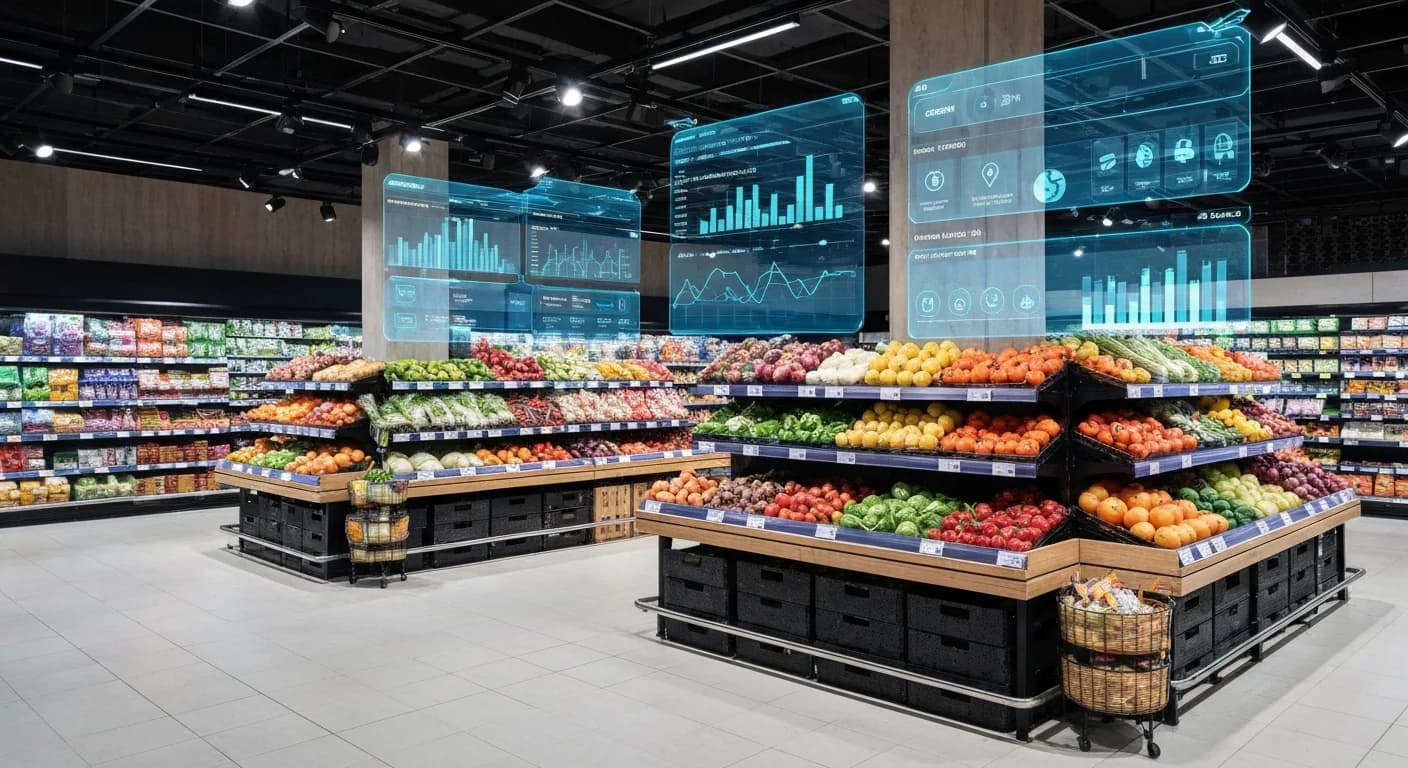
Walmart has completed the rollout of FreshFlow, an AI-powered demand forecasting and inventory management system, across all 4,700 US stores. The system has cut food waste by 40% and is saving an estimated $2.1 billion annually, making it one of the largest successful deployments of AI in retail supply chain management.
How FreshFlow Works
The system generates store-level demand predictions for perishable goods by combining multiple data streams that traditional inventory systems ignore. Each store receives its own forecast based on:
- Weather patterns — temperature and precipitation shifts that influence buying behavior
- Local events — sports games, concerts, festivals, and school schedules that drive demand spikes
- Social media trends — emerging food trends and viral recipes that create sudden surges in ingredient purchases
- Historical purchase data — years of transaction records at the individual store level, including seasonal patterns and day-of-week variations
The predictions feed directly into automated ordering systems, adjusting quantities for produce, dairy, meat, bakery, and deli departments. Orders are recalculated every six hours rather than once daily, giving the system the ability to respond to rapid shifts in demand.
The 18-Month Rollout
Walmart began piloting FreshFlow in 200 stores across the Southeast in September 2024. The company spent six months training the system on regional variations before expanding to the full fleet. The phased approach allowed Walmart to calibrate the models for climate differences, demographic variations, and store format discrepancies between Supercenters and Neighborhood Markets.
By the end of the pilot phase, participating stores had already demonstrated a 33% reduction in perishable waste. The remaining rollout, completed in February 2026, pushed that figure to 40% as the models benefited from a larger data pool.
Dual Impact on Waste and Availability
The reduction in waste has not come at the cost of empty shelves. Out-of-stock events for fresh produce dropped by 28% across the network — a metric that has historically moved in the opposite direction from waste reduction efforts. When stores order less to avoid spoilage, they typically risk running out of high-demand items. FreshFlow's granular, frequently updated predictions have broken that trade-off.
"We used to treat waste and availability as a zero-sum problem," said Darren Carithers, Walmart's SVP of supply chain technology. "FreshFlow proved it doesn't have to be."
Broader Implications
The $2.1 billion in annual savings represents roughly 0.3% of Walmart's total revenue, but the environmental impact may prove more significant. The USDA estimates that 30-40% of the US food supply is wasted annually. If competitors adopt similar systems, the aggregate reduction in retail food waste could be substantial.
Kroger and Albertsons have both confirmed they are developing comparable AI forecasting systems, though neither has disclosed deployment timelines. Amazon Fresh has been using machine learning for demand prediction since 2023 but has not published waste reduction figures at a similar scale.
Walmart said it plans to extend FreshFlow to its international operations beginning in the second half of 2026.